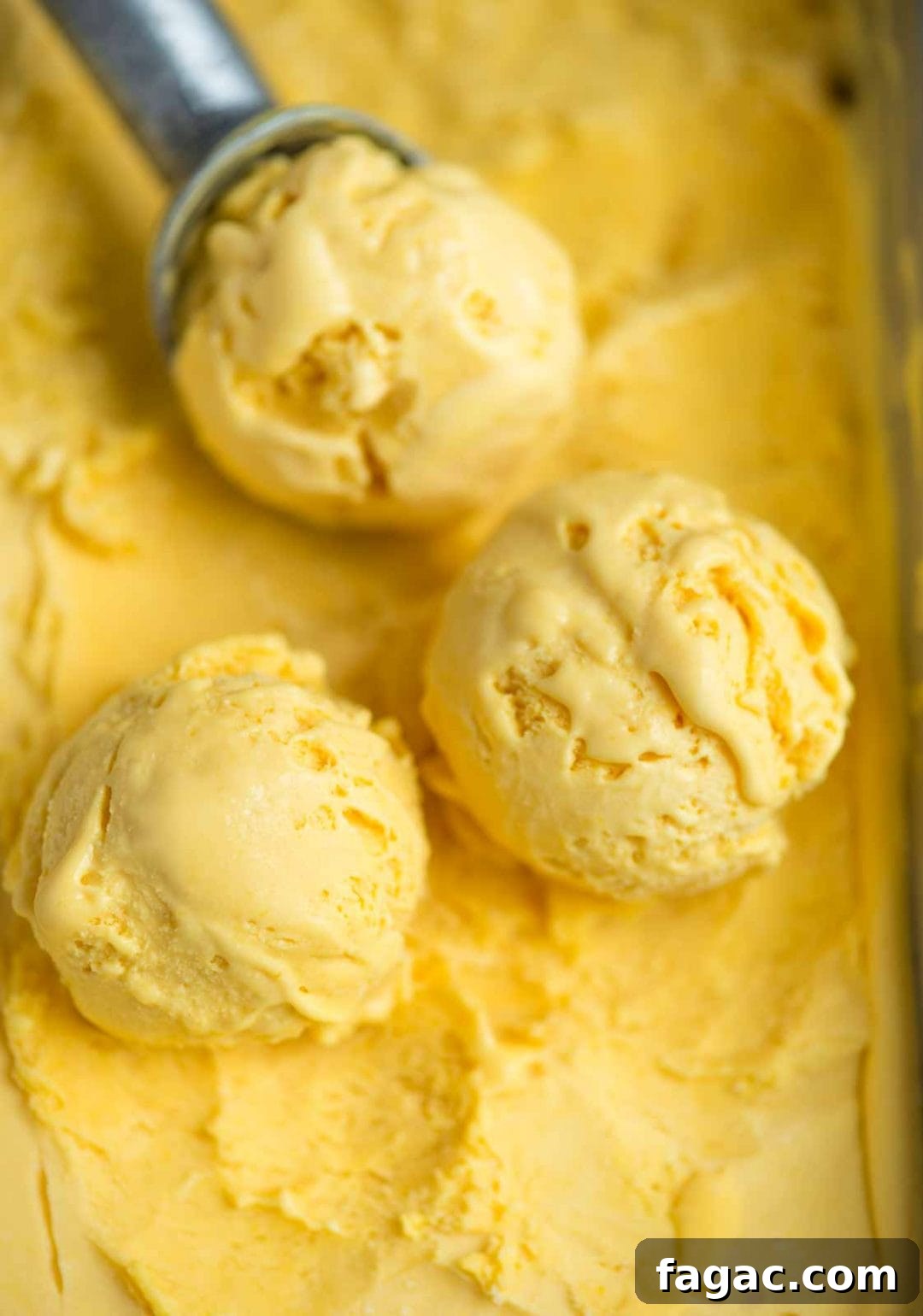
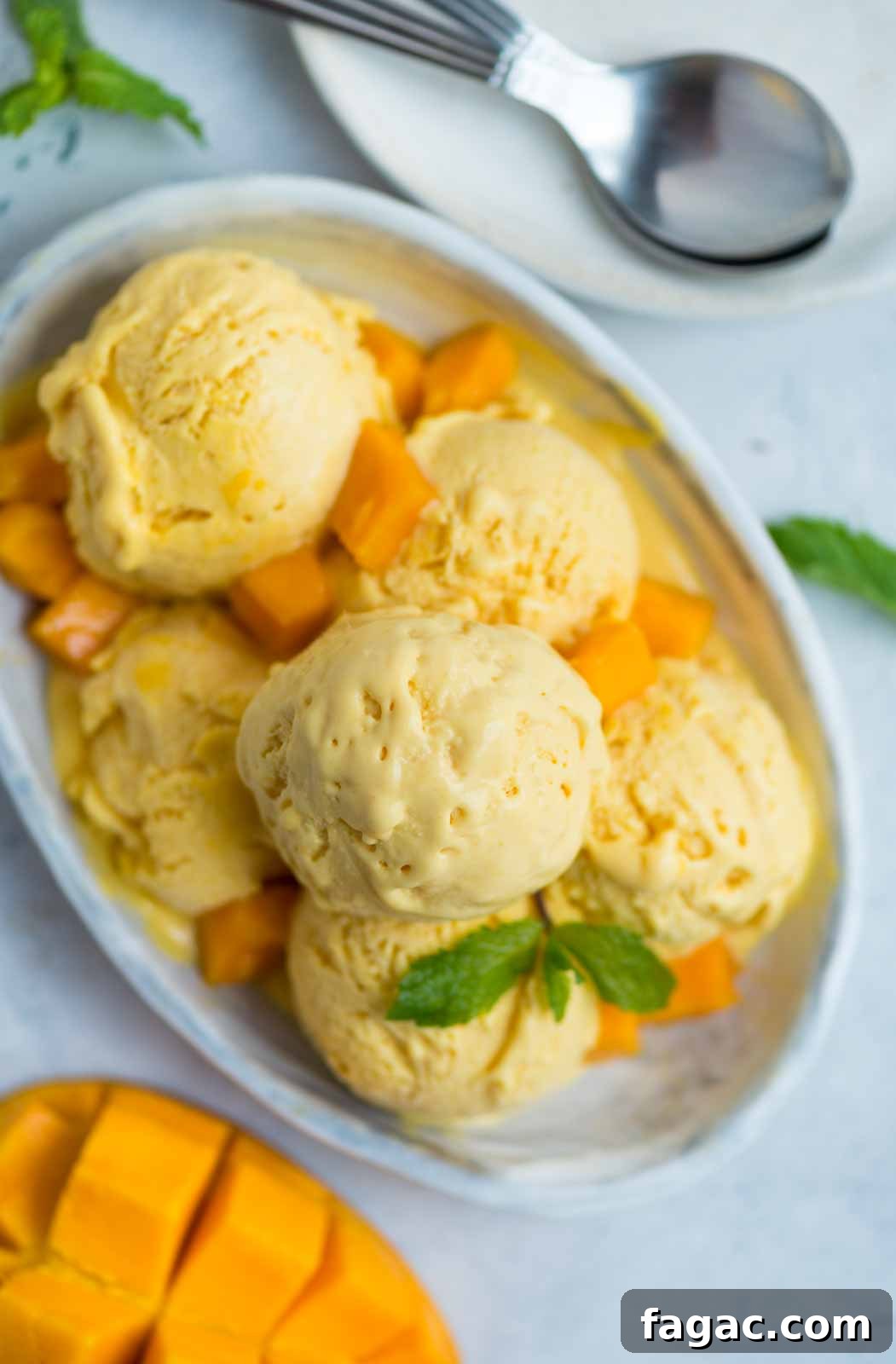
This mango ice cream is rich, creamy and far better than most store-bought tubs. It contains no artificial colors or flavors and doesn’t require an ice cream maker to prepare.
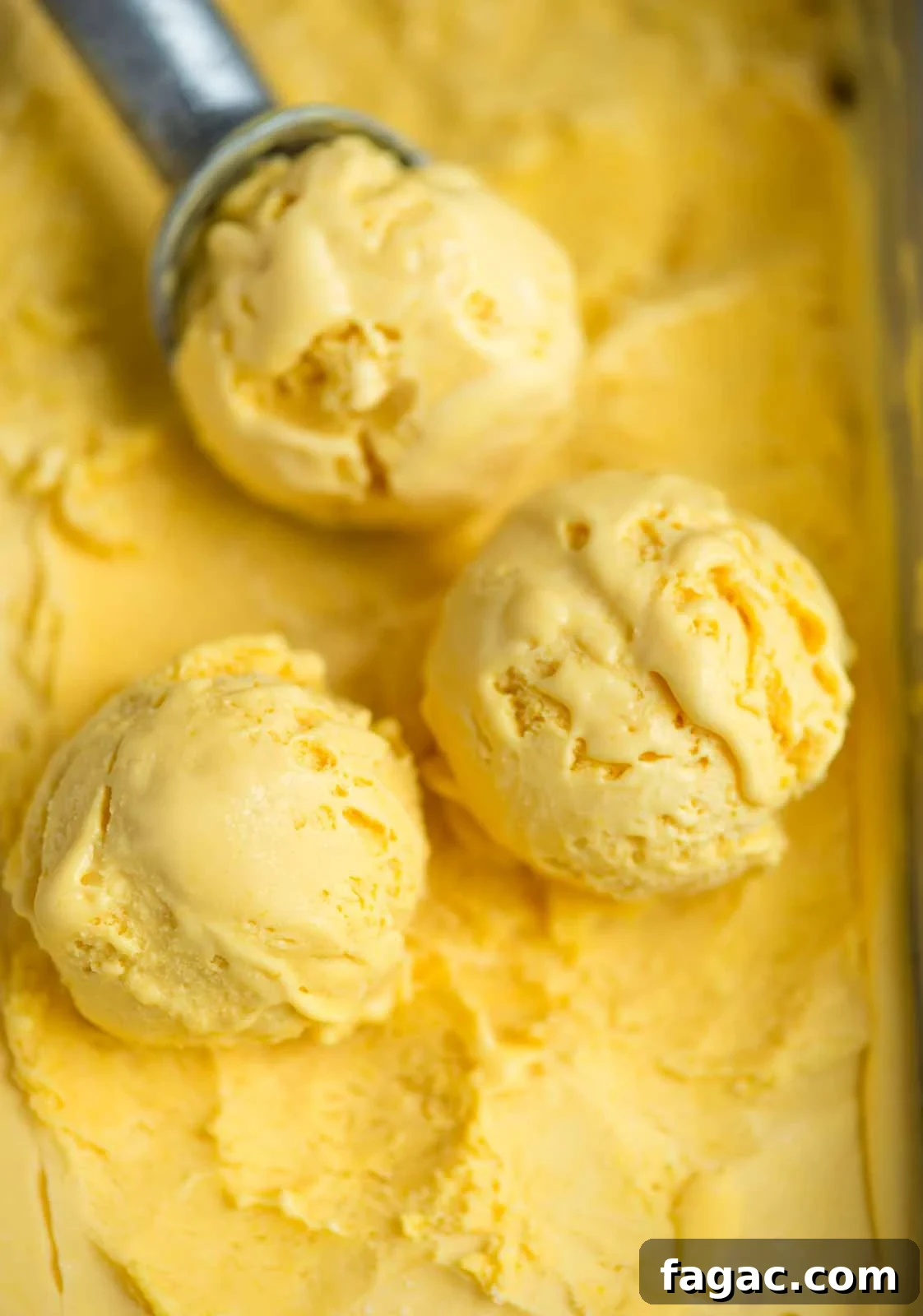
Creamy and light, this no-churn mango ice cream is made with real mango puree, sweetened condensed milk, dry milk powder and heavy cream. The result is a scoopable, fluffy dessert that’s perfect for hot days.
I’ve been making ice cream at home for a few years. While an ice cream machine can produce excellent results, you don’t need one to make delicious, smooth ice cream. With a few simple techniques you can avoid icy texture and enjoy a creamy homemade treat — and without adding another gadget to the kitchen.
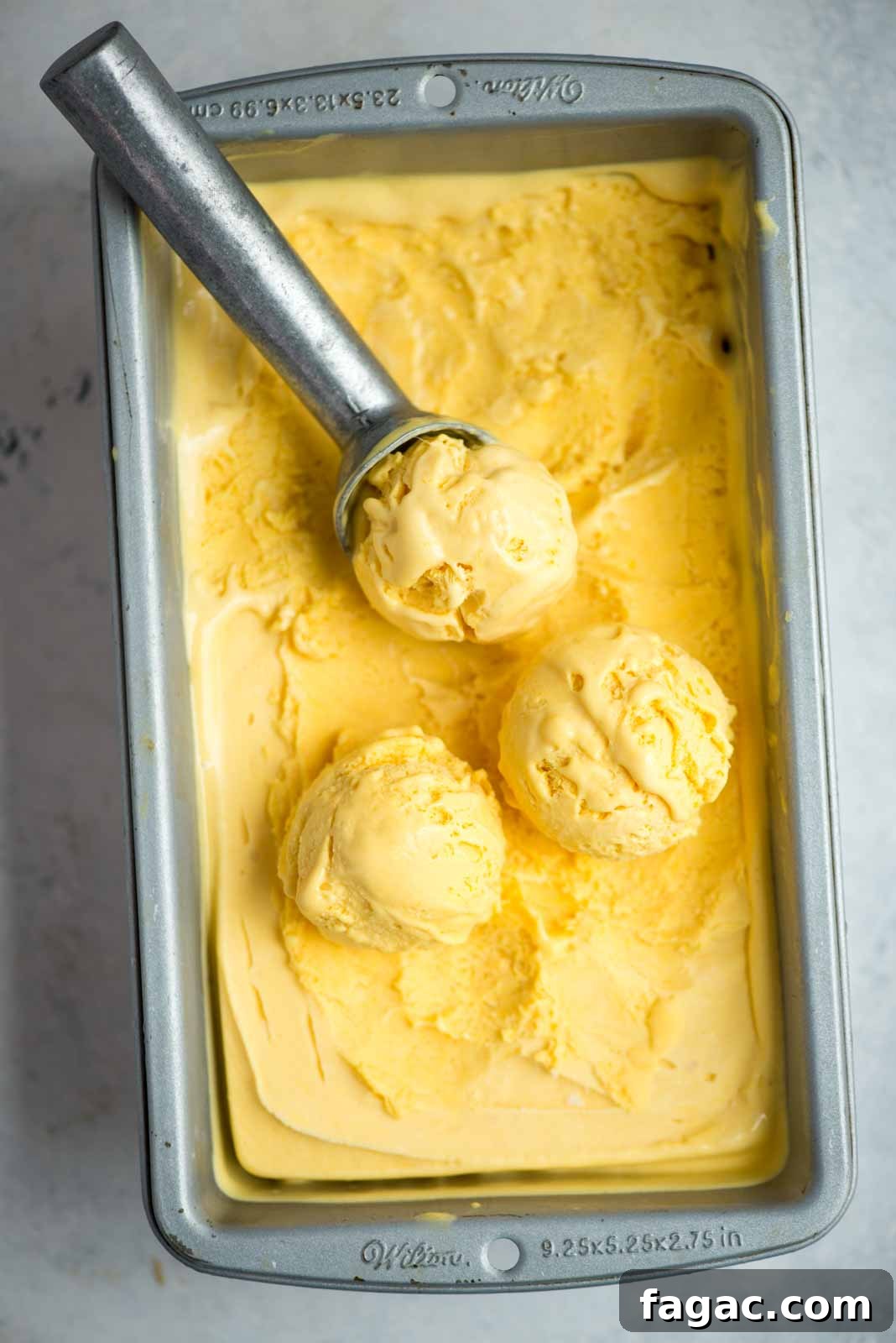
Why homemade ice cream gets ice crystals
The most common issue with homemade ice cream is a grainy or icy texture caused by water crystallization. The slower the mixture freezes, the larger the ice crystals become. Home freezers generally freeze more slowly than commercial equipment, so ice crystals tend to form more easily.
Commercial ice cream is frozen rapidly, which keeps crystal size small. When recipes recommend stirring or churning the mixture periodically during freezing, that helps break up crystals and maintain a smooth texture.
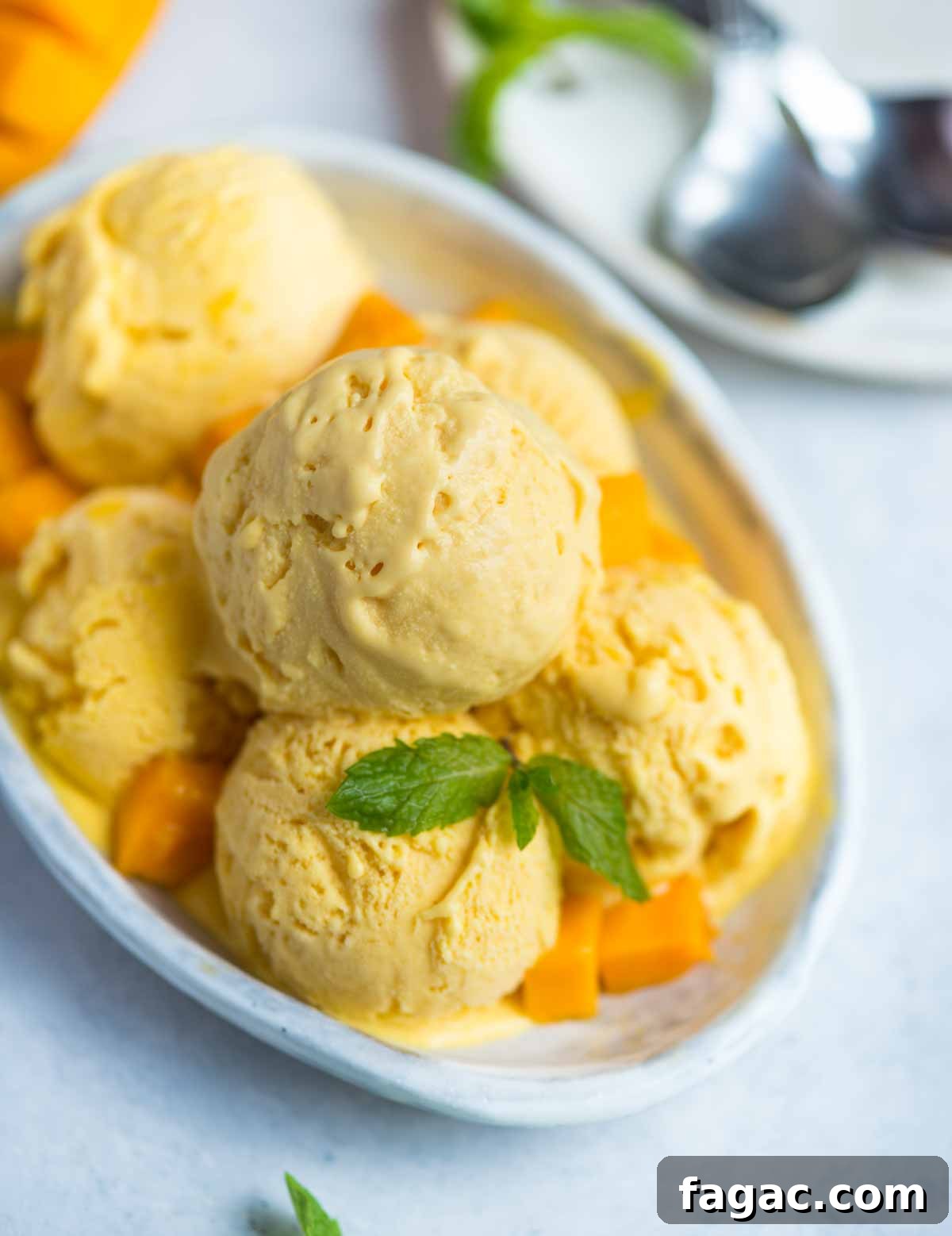
What makes this homemade mango ice cream creamy
This recipe yields a creamy, fluffy ice cream thanks to a few key factors:
- Reduced water, concentrated flavor: Cooking the mango puree intensifies the mango taste and reduces its water content, lowering the risk of large ice crystals.
- High fat content: Using full-fat cream and sweetened condensed milk provides the fat that contributes to a smooth mouthfeel.
- Dry milk powder: Acts as a stabilizer — adding protein, improving texture, and absorbing extra water.
- Incorporated air: Whipping the cream and folding in the mango mixture adds lightness and boosts scoopability.
Helpful tips
1. Most rich ice creams use a custard base or a stabilizer like cornflour or dry milk powder; some include egg yolks for extra richness. If you want a very smooth, luxurious texture, ensure the base has enough fat — don’t substitute full-fat cream with low-fat versions.
2. Chill everything: bowls, containers and the prepared mixture. A colder starting temperature shortens freezing time and helps keep ice crystals small.
3. Use very ripe, sweet mangoes for the best flavor. If the mangoes are not sweet enough, add a little sugar while cooking the puree.
4. If you prefer a brighter yellow color, a few drops of yellow food coloring will alter the shade without affecting taste.
You can also use canned mango puree if fresh mangoes aren’t available.
More homemade ice cream recipes
Try other frozen treats like coconut ice cream or pineapple soft serve for variety.
Mango Ice Cream
Ingredients
- 2 cups Fresh mango puree (ref note 1)
- 1 can Sweetened Condensed milk 400gms
- 2 tablespoon Dry milk powder
- 1.5 cups Heavy whipping Cream
Instructions
-
Pour mango puree into a saucepan, add dry milk powder and whisk until smooth with no lumps.
-
Cook over low heat, stirring occasionally, until the mixture reduces by half. The final cooked puree should be about 1 cup.
-
Near the end of cooking, stir in the sweetened condensed milk until fully combined, then remove from heat.
-
Allow the mango mixture to cool to room temperature, then chill in an airtight container in the refrigerator for at least 1 hour.
Ice cream
-
Whip the chilled heavy cream to soft peaks.
-
Fold the chilled mango mixture into the whipped cream in two to three batches, gently folding to keep the mixture airy.
-
Transfer the combined mixture to a 9-inch loaf pan and tap the pan to release air bubbles.
-
Cover the surface with cling film or parchment paper, then seal with a lid or foil.
-
Freeze overnight for best texture.
-
Remove the cling film and let the ice cream sit at room temperature for 5–6 minutes before scooping to soften slightly.
Video
Notes
- Use very ripe, sweet mangoes. If the puree isn’t sweet enough, add 1–2 tablespoons of sugar while cooking the mango puree.