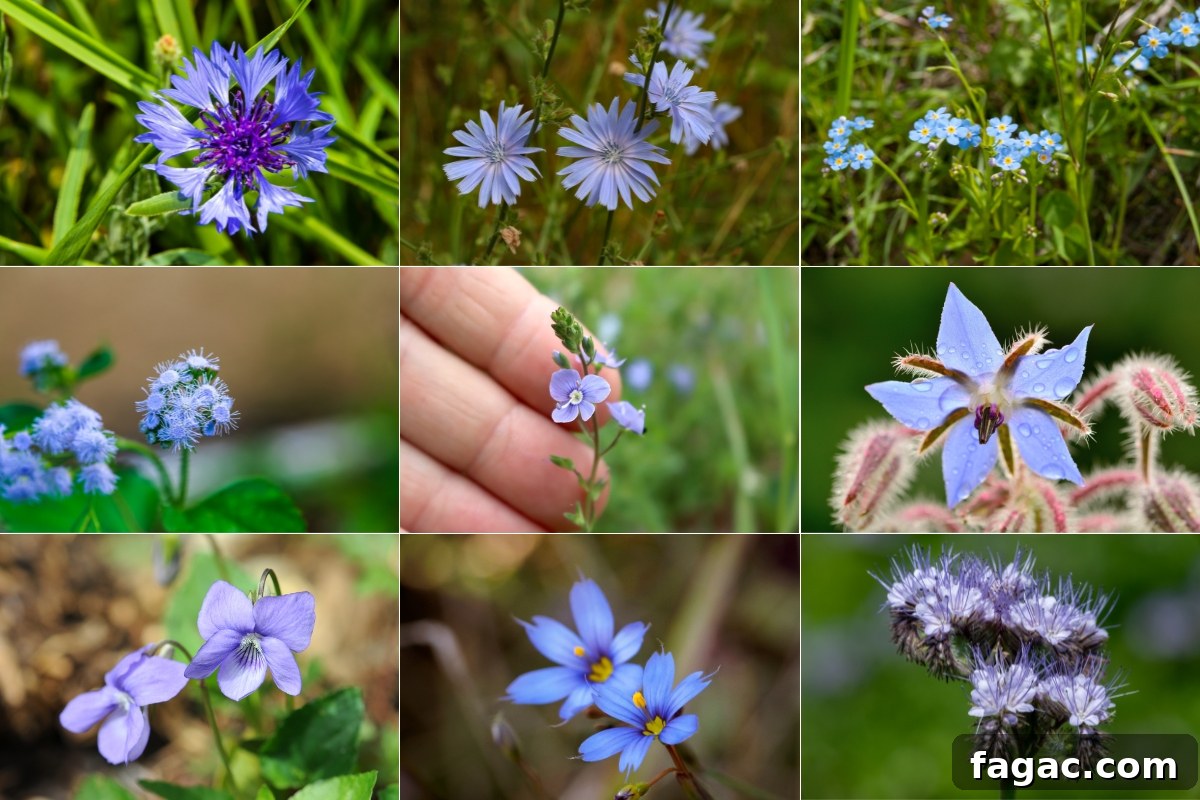
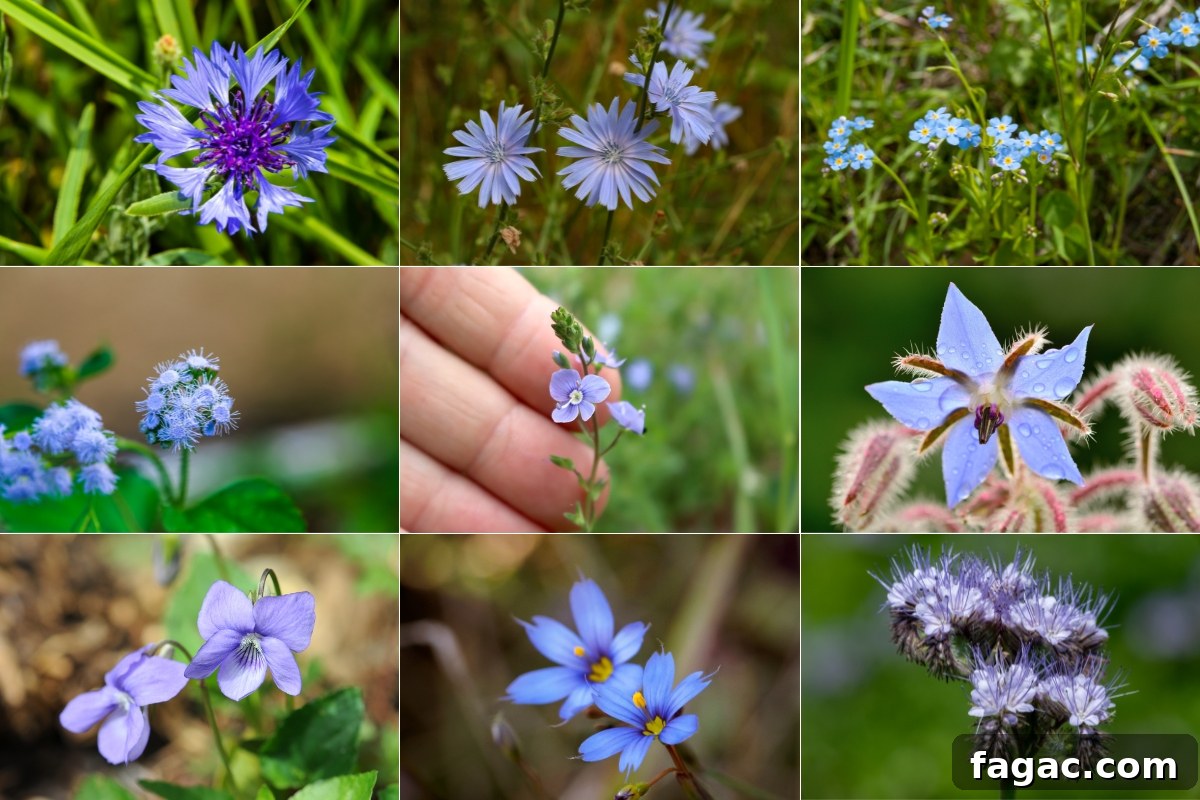
From soft sky-blue to deep indigo, many common “weeds” display striking blue flowers that brighten gardens, roadsides, and wild places.
Article by Morgan Hyde, reference librarian from Arizona. Her background in research and curiosity about wild plants informs this overview.
The term “weed” often refers to a plant that grows vigorously or where it’s not wanted. Many plants listed here are common, spread easily, and can be difficult to remove. Yet several have long histories of use as food, medicine, dye, or garden companions. Blue flowers are especially attractive to pollinators, so many of these species support bees, butterflies, and hummingbirds. Remember that pollinator value does not automatically mean a plant is safe to eat.
Some blue-flowered weeds are edible or useful, while others are toxic. Take care around highly poisonous species like Blue False Indigo, Columbian Monkshood, False Forget-me-nots, Larkspurs, and Lobelias.
WEEDS WITH BLUE FLOWERS
Blue-flowered plants appear at many heights and in many habitats in spring and summer. Some prefer shade and moisture; others need full sun. Many species on this list are non-native introductions that escaped cultivation, while others are native plants that have become weedy under certain conditions. Even when labeled weeds, many of these species provide ecological or human uses—pollinator forage, erosion control, edible parts, or traditional remedies.
Asiatic Dayflower (Commelina communis)
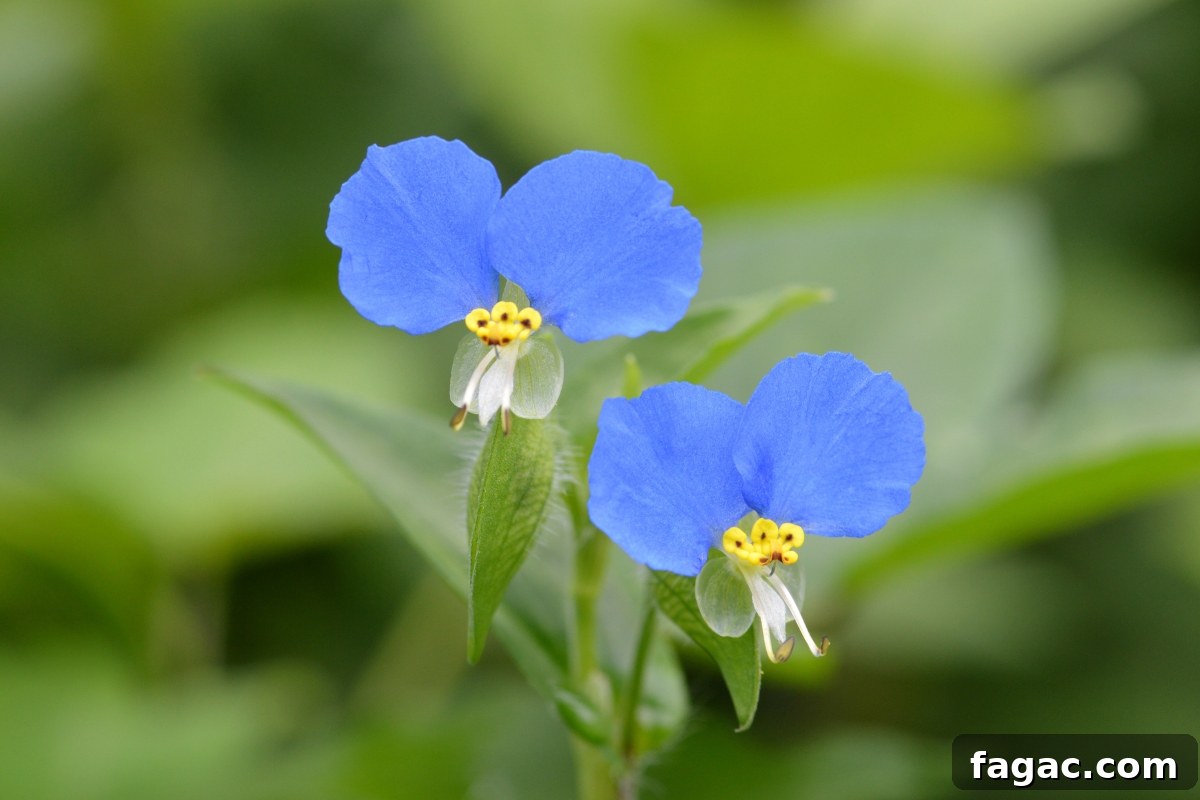
Asiatic Dayflower produces delicate three-petaled blue blooms in shady areas. It is considered invasive in some regions and can spread rapidly unless contained. The leaves, shoots, and flowers are edible raw or cooked, and the plant has historically been used as a blue dye (though the color can fade in sunlight).
Key identification features
Flowers:
- Two large blue petals above and one small white petal below
- Held on long stalks
Leaves:
- Lance-shaped, 2–4 in long with parallel veins
General:
- Stems often grow in a zig-zag pattern
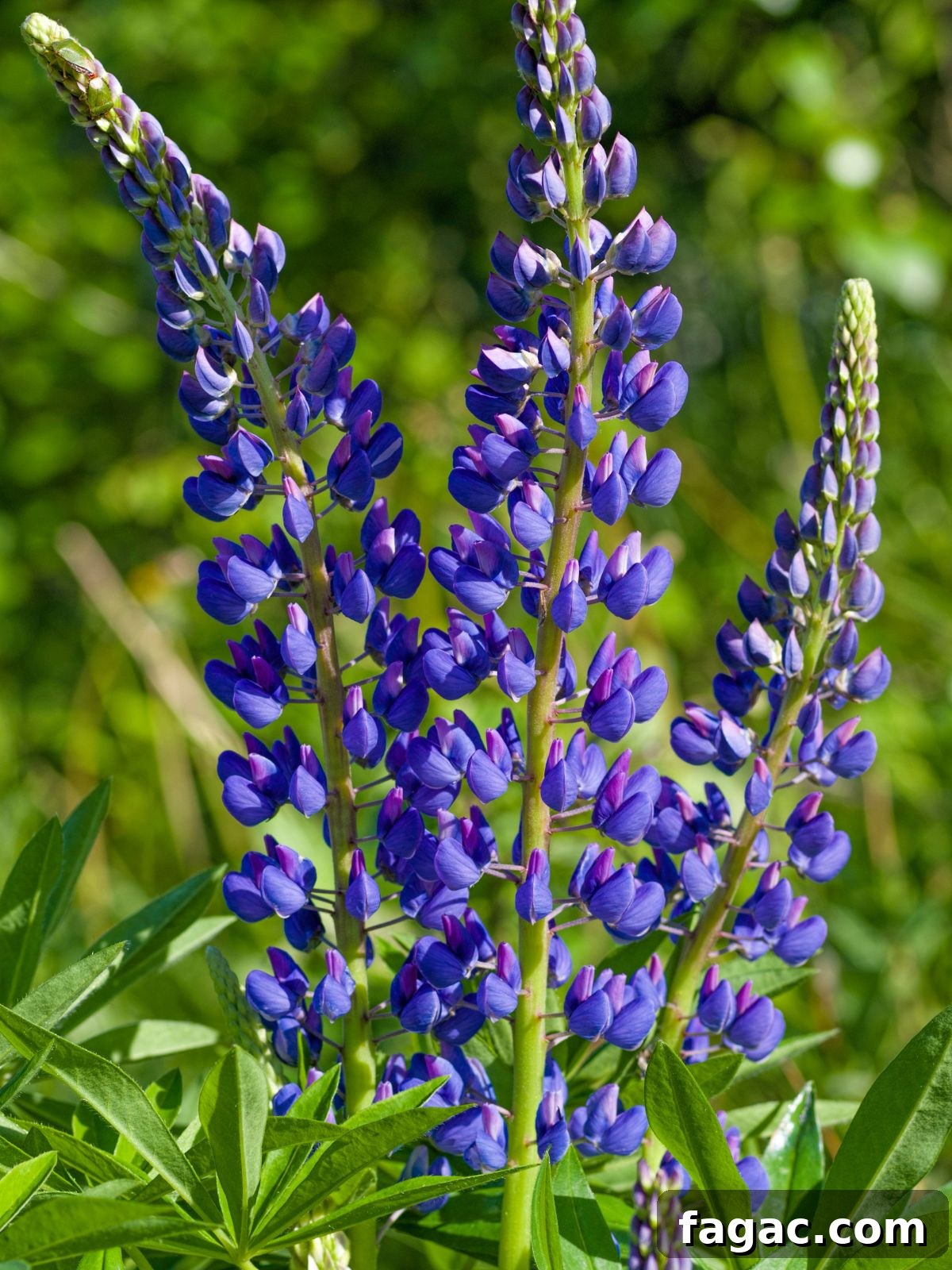
Bigleaf Lupine (Lupinus polyphyllus)
Bigleaf Lupine produces showy spikes of many pea-like blue flowers that attract bees and hummingbirds from mid-spring to mid-summer. Native to the western U.S., it has become invasive in some eastern regions and can hybridize with other lupines. Leaves are palmate with multiple narrow leaflets; seed pods are hairy and contain several seeds.
Key identification features
Flowers:
- Pea-shaped, clustered in long racemes
Leaves:
- Palmate with 9–14 narrow leaflets
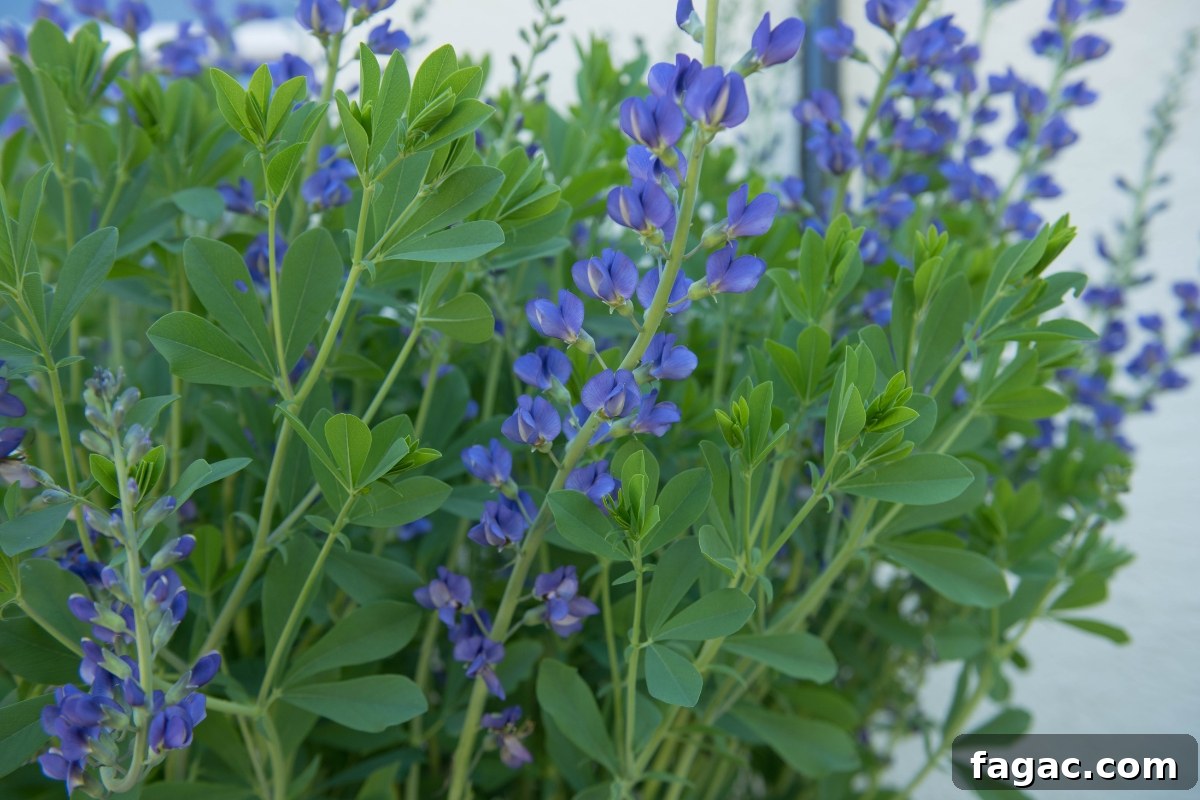
Blue False Indigo (Baptisia australis)
Blue False Indigo, sometimes called Rattleweed because its dry seed pods rattle, is a sturdy perennial with deep blue pea-like flowers on upright spikes. It was once used as a dye substitute for indigo. The plant is considered toxic and should not be consumed.
Key identification features
Flowers:
- Deep blue, pea-flower shaped on erect spikes
Leaves:
- Clusters of three leaflets, soft green and ovate
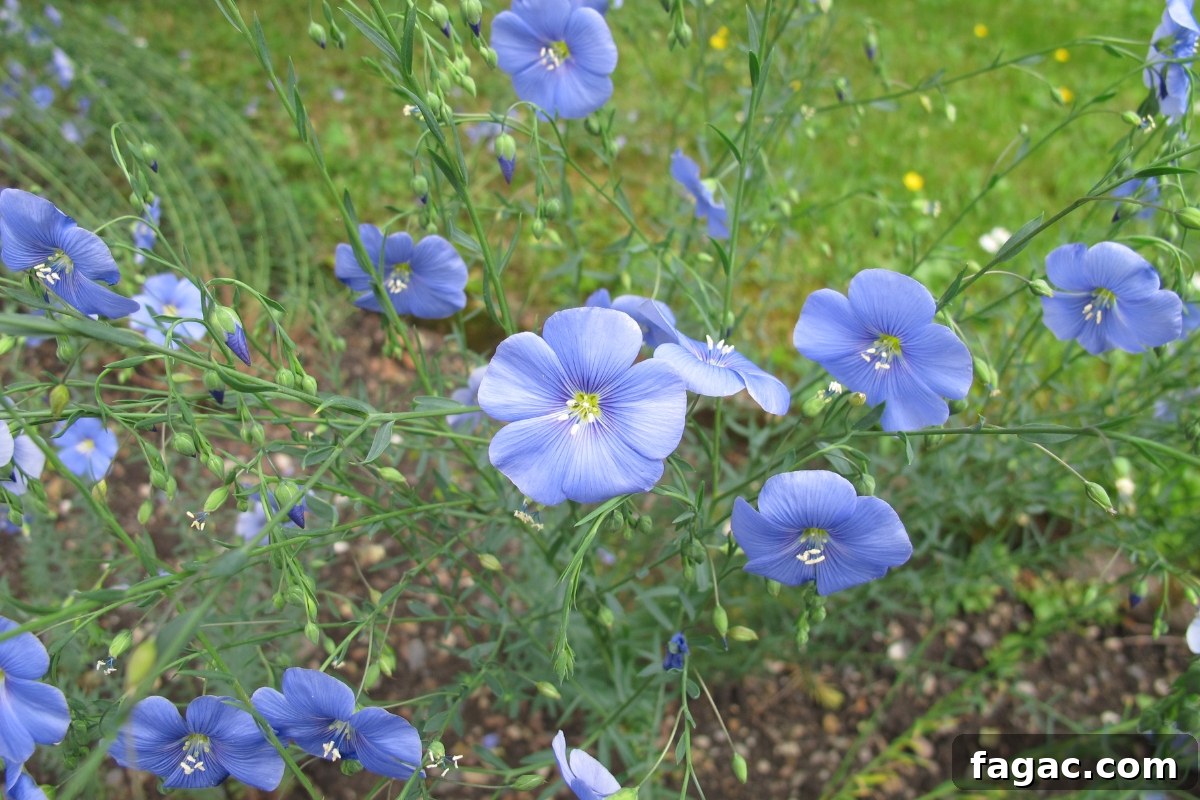
Blue Flax (Linum perenne)
Blue Flax, introduced from Eurasia, is found in wild and garden settings where it offers delicate five-petaled blue flowers. It has useful fibers and seeds used for oil; it also helps stabilize soil in disturbed areas.
Key identification features
Flowers:
- Five petals, borne in clusters; blooms for several weeks
Leaves:
- Narrow, blue-green, forming tufts
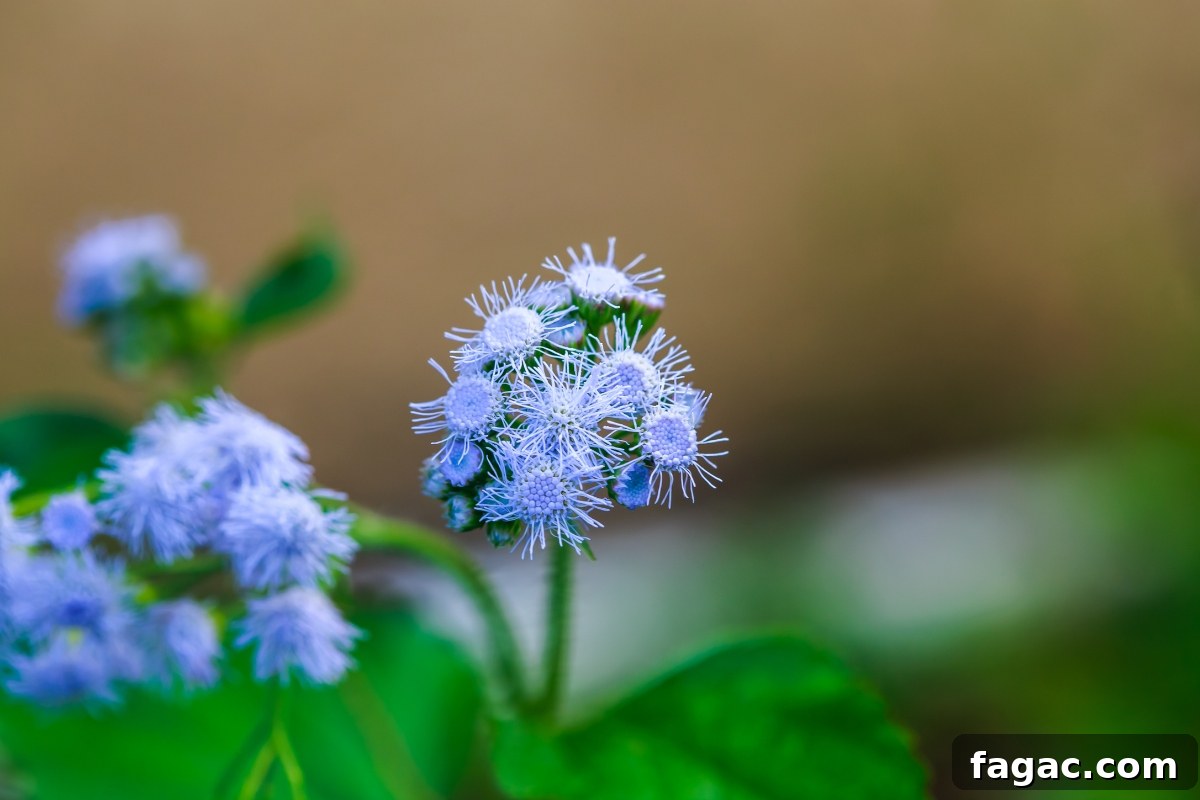
Blue Mistflower (Conoclinium coelestinum)
Blue Mistflower has shaggy, pom-pom like blue blooms that persist from late summer into fall. It forms dense groundcover and spreads aggressively, making it useful for pollinators late in the season but sometimes problematic in small gardens.
Key identification features
Flowers:
- Fluffy clusters of tubular disc florets, no ray flowers
Leaves:
- Opposite, triangular with blunt teeth
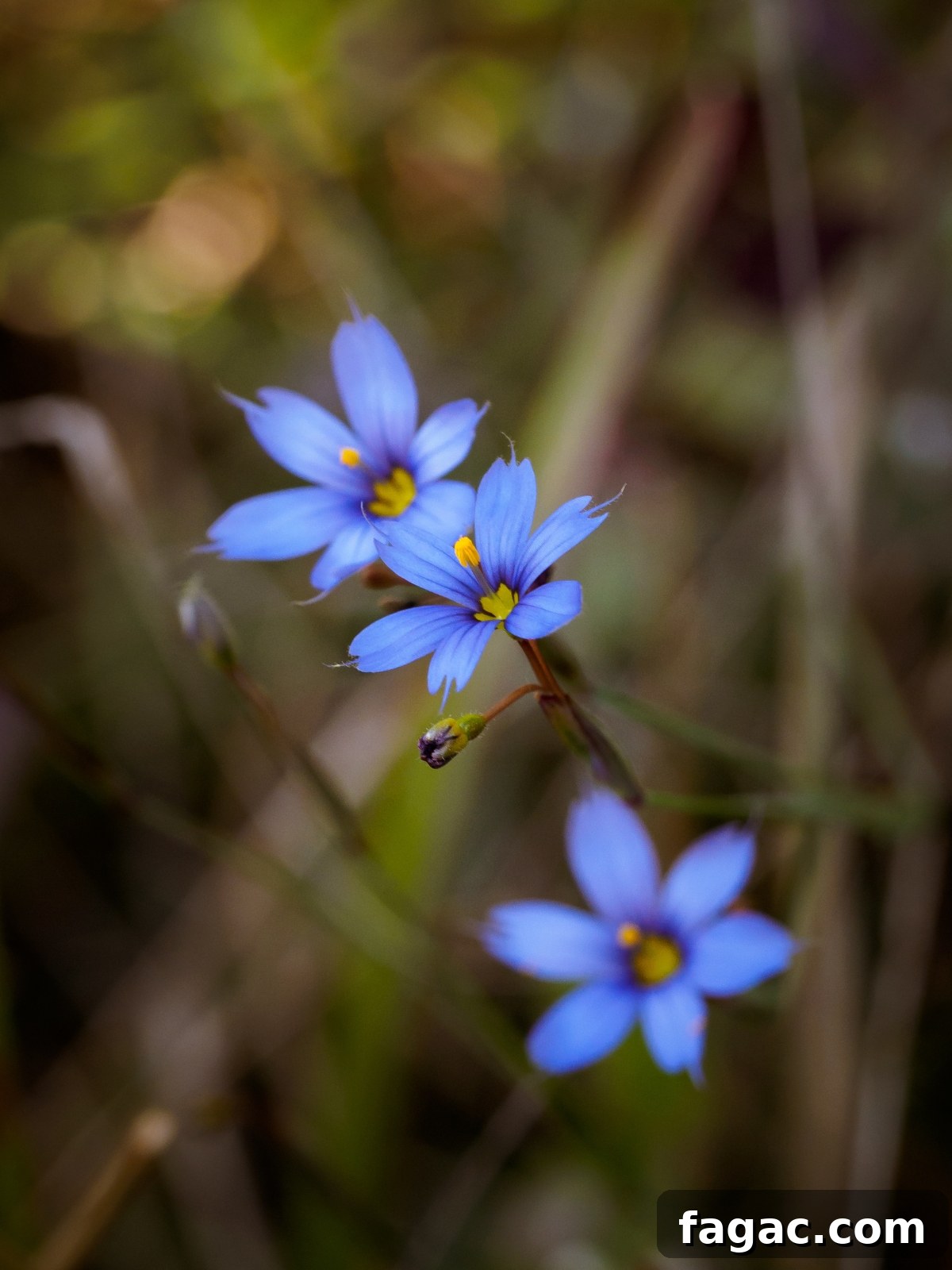
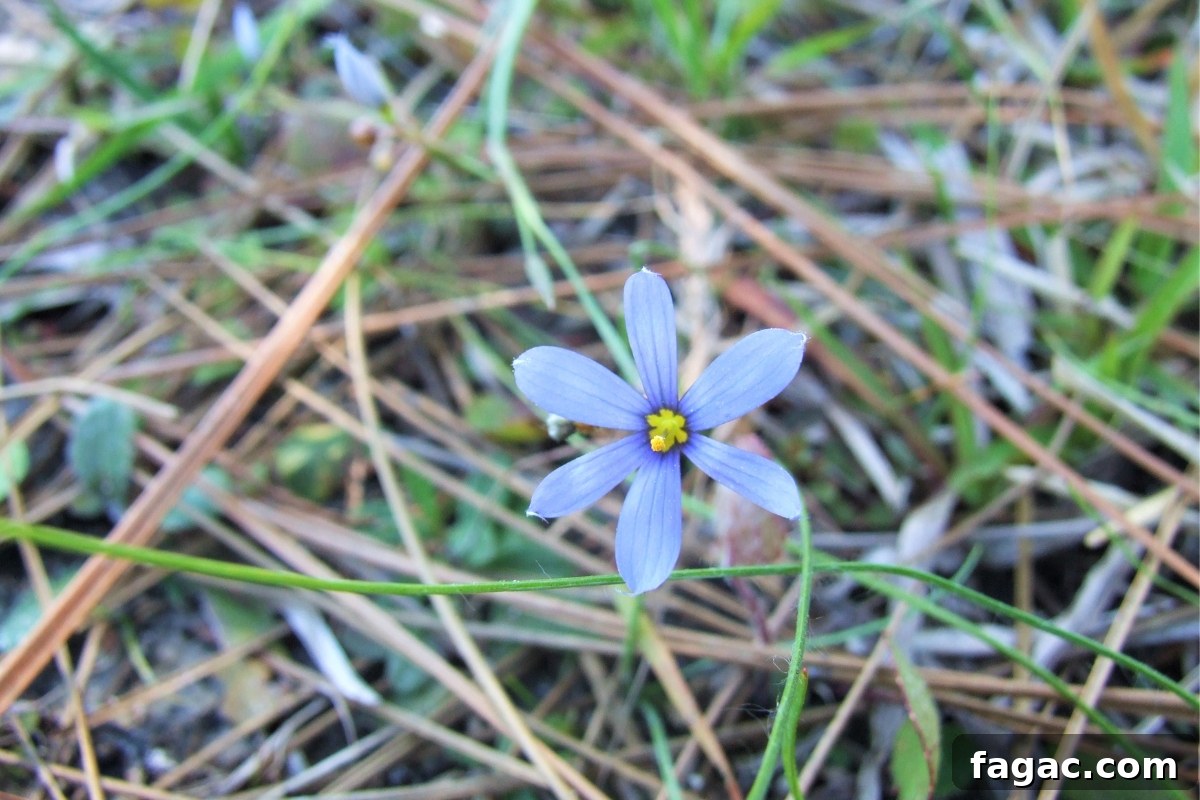
Blue-eyed Grass (Sisyrinchium sp.)
Often called a weed when it appears in lawns, Blue-eyed Grass is a native meadow plant valued for its star-shaped blue flowers and grass-like foliage. Leaves form fan-shaped rosettes and the small, starry blooms have yellow centers.
Key identification features
Flowers:
- Star-shaped with yellow center; three petals and three sepals
Leaves:
- Sword-shaped, upright, forming fan-like clumps
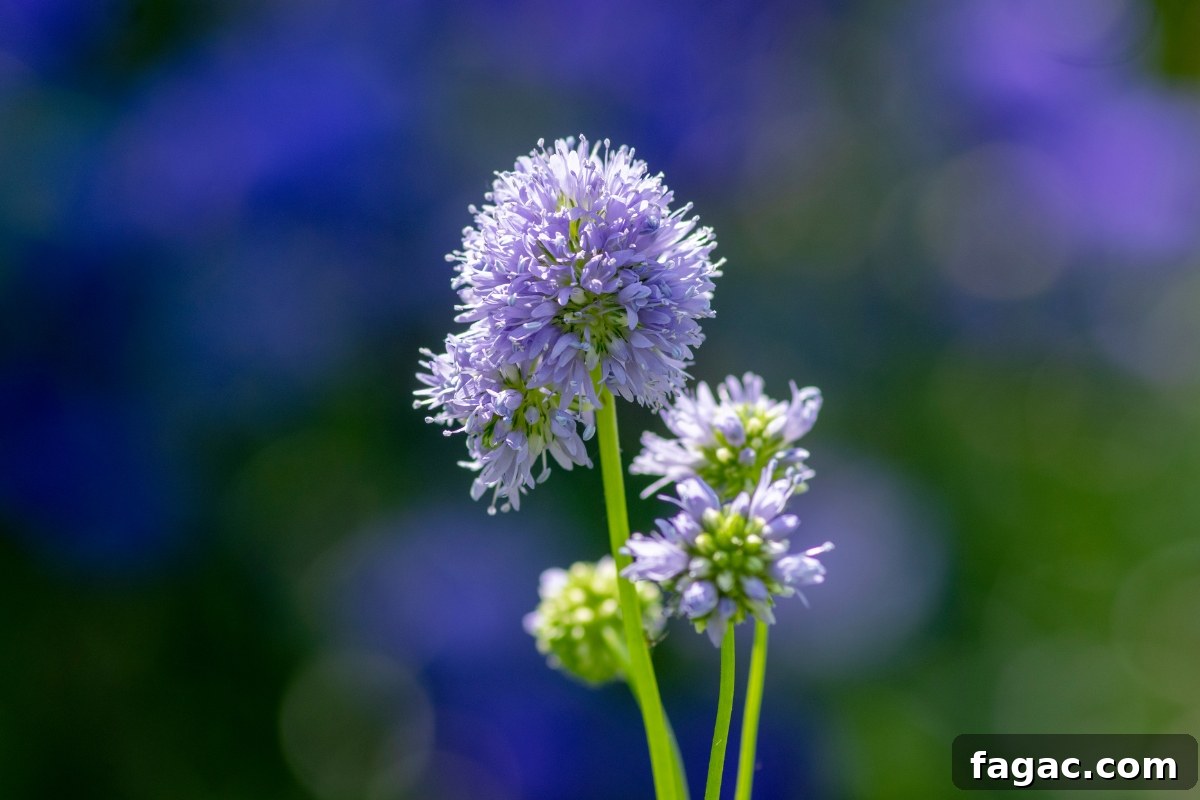
Bluehead Gilia (Gilia capitata)
Bluehead Gilia forms globe-shaped clusters of tiny flowers in shades of blue, white, or pink. It attracts native bees, tolerates drought, and self-seeds readily—sometimes spreading where competition is low.
Key identification features
Flowers:
- Globe-shaped heads made of many small flowers
Leaves:
- Small, fern-like, bluish-green
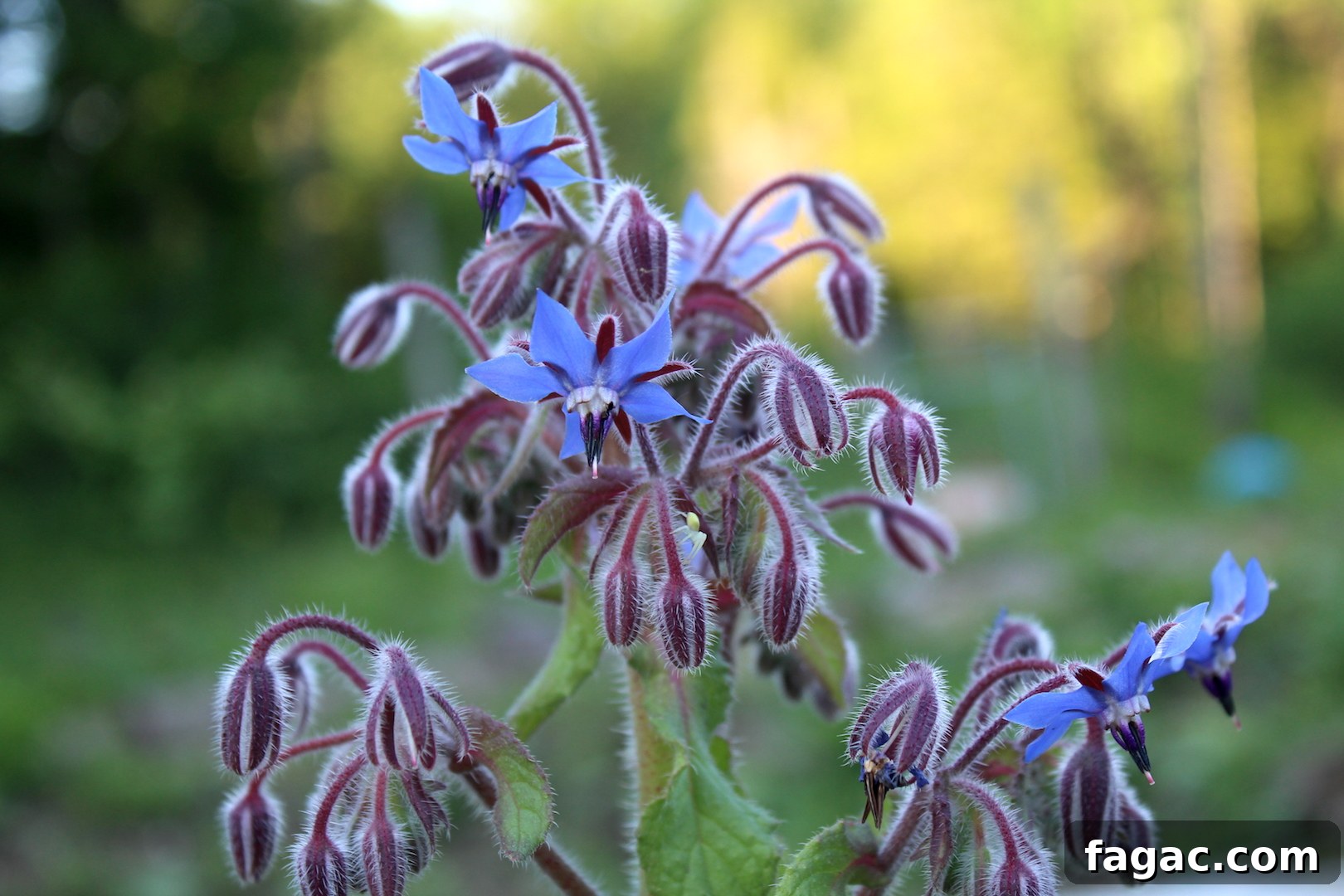
Borage (Borago officinalis)
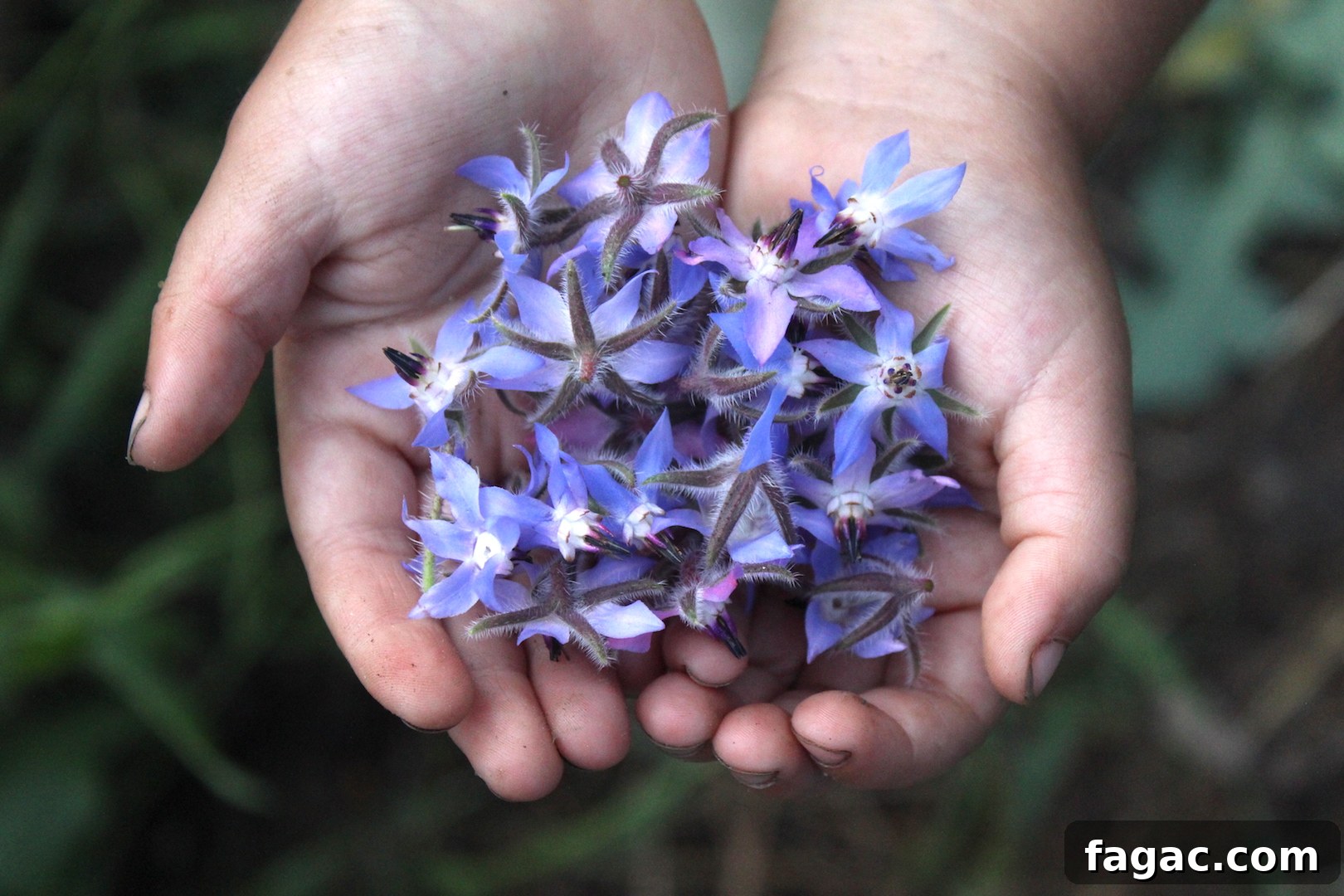
Borage is well known for edible star-shaped blue flowers with a mild honey flavor and cucumber-like leaves. It self-seeds and can naturalize; seeds are used for oil. Consume borage sparingly due to reports of liver toxicity with high intake.
Key identification features
Flowers:
- Blue, star-shaped, borne in clusters
Leaves:
- Wrinkled, gray-green, and covered in bristly hairs
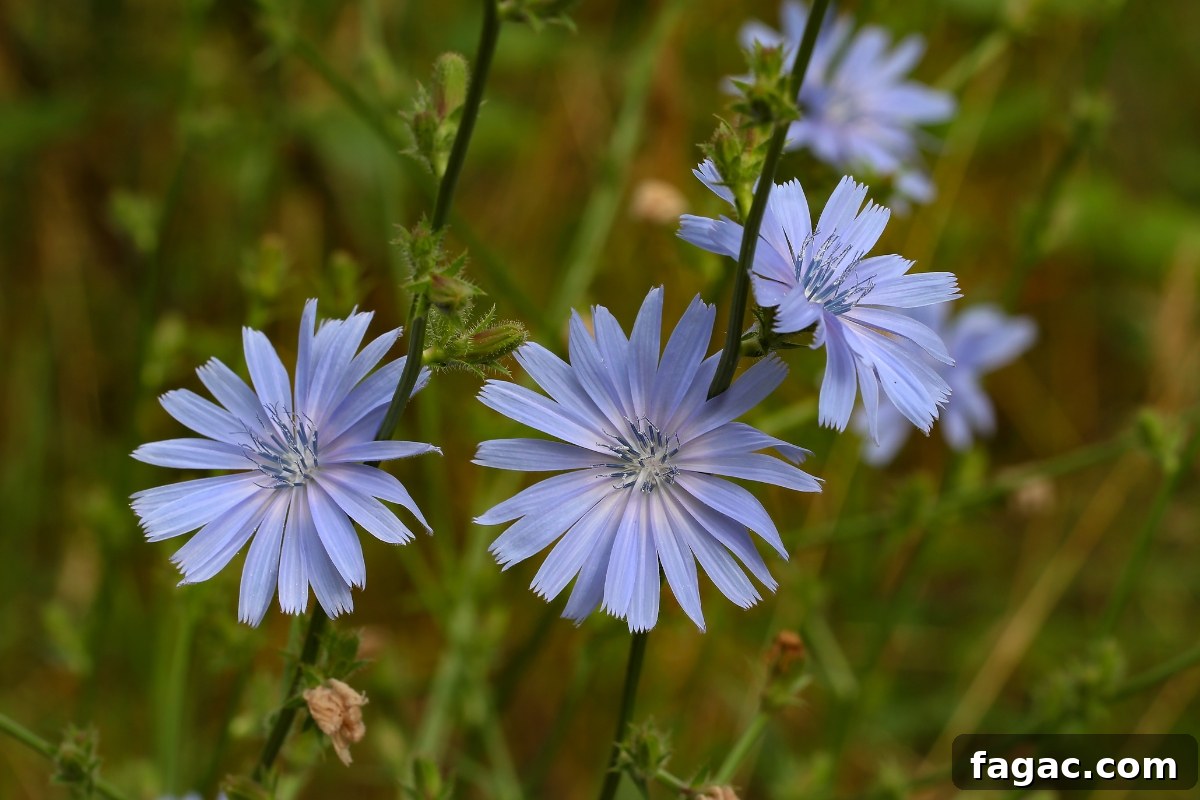
Chicory (Cichorium intybus)
Chicory displays bright blue, daisy-like blooms (each lasting a day) and commonly grows along roadsides. Leaves can be harvested young for salads or cooked when older; roots have been used as a coffee substitute and the plant has a long history of medicinal use.
Key identification features
Flowers:
- Strap-shaped petals with toothed tips; numerous petals per flower
Leaves:
- Lanceolate, 3–10 in long, often toothed or lobed
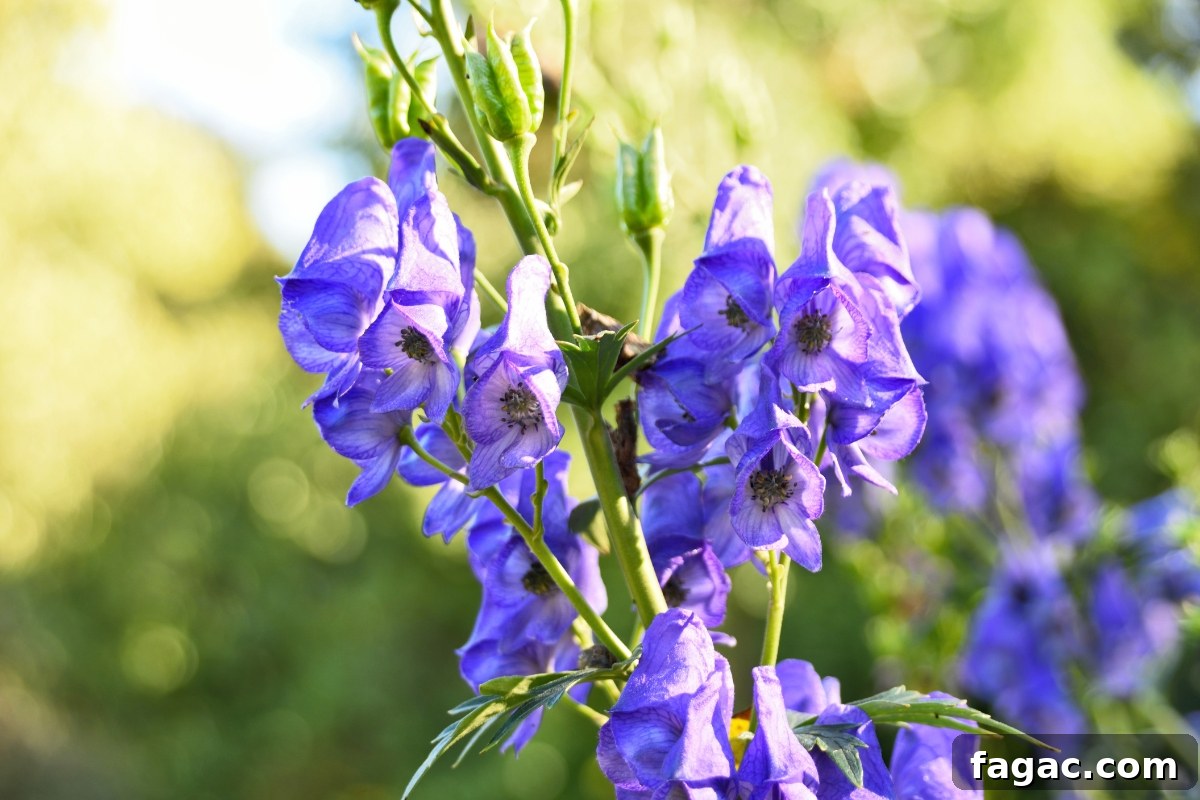
Columbian Monkshood (Aconitum columbianum)
Columbian Monkshood is among the most poisonous plants listed here; all parts are dangerous if ingested. It grows in shady, moist habitats on tall stems and should be removed from areas where children or pets might encounter it.
Key identification features
Flowers:
- Distinctive hooded upper petal with two lower petals tucked beneath
Leaves:
- Deeply lobed with toothed margins
Common Blue Violet (Viola sp.)
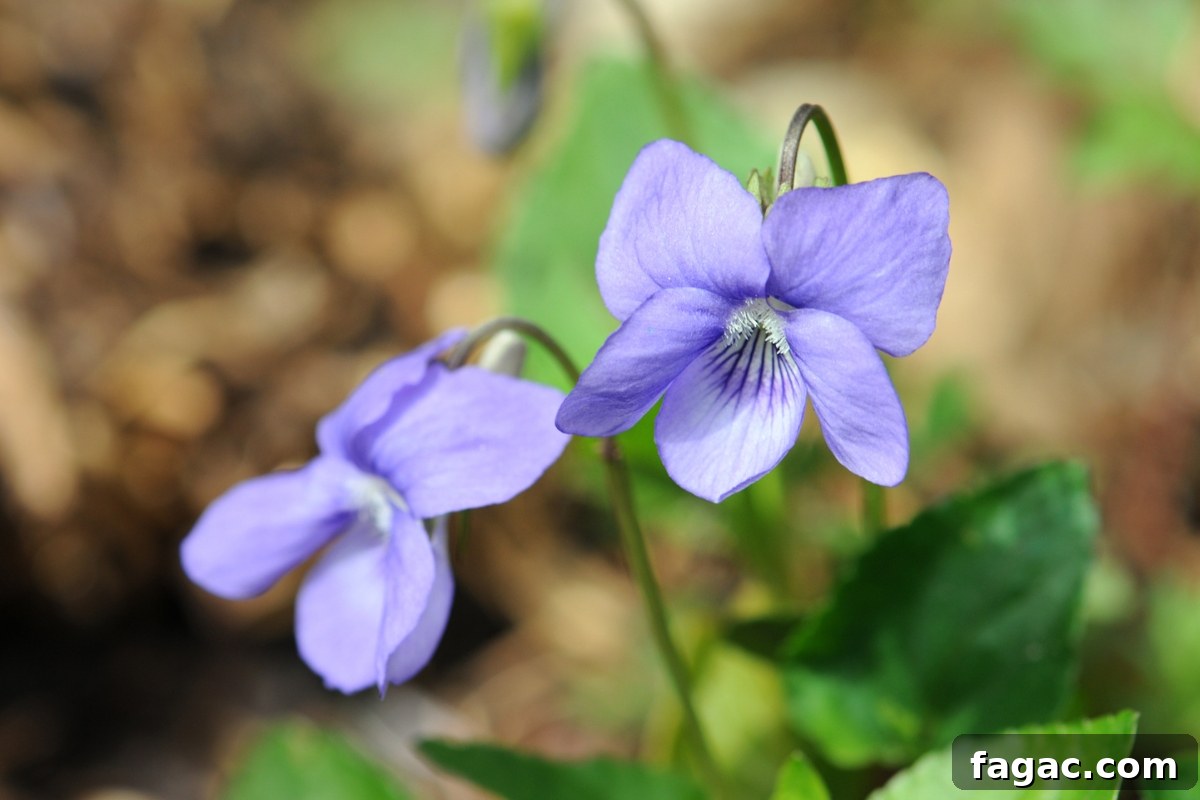
Blue Violets form low-growing patches in moist soils and are often considered lawn weeds. Both flowers and leaves are edible; the flowers are commonly used fresh or to make syrups and jellies. Violets are persistent and can be difficult to eradicate from lawns.
Key identification features
Flowers:
- Five petals forming a rounded star, often with a downward-pointing upper petal
Leaves:
- Heart-shaped, smooth, usually not on flower stalks
Common Periwinkle (Vinca sp.)
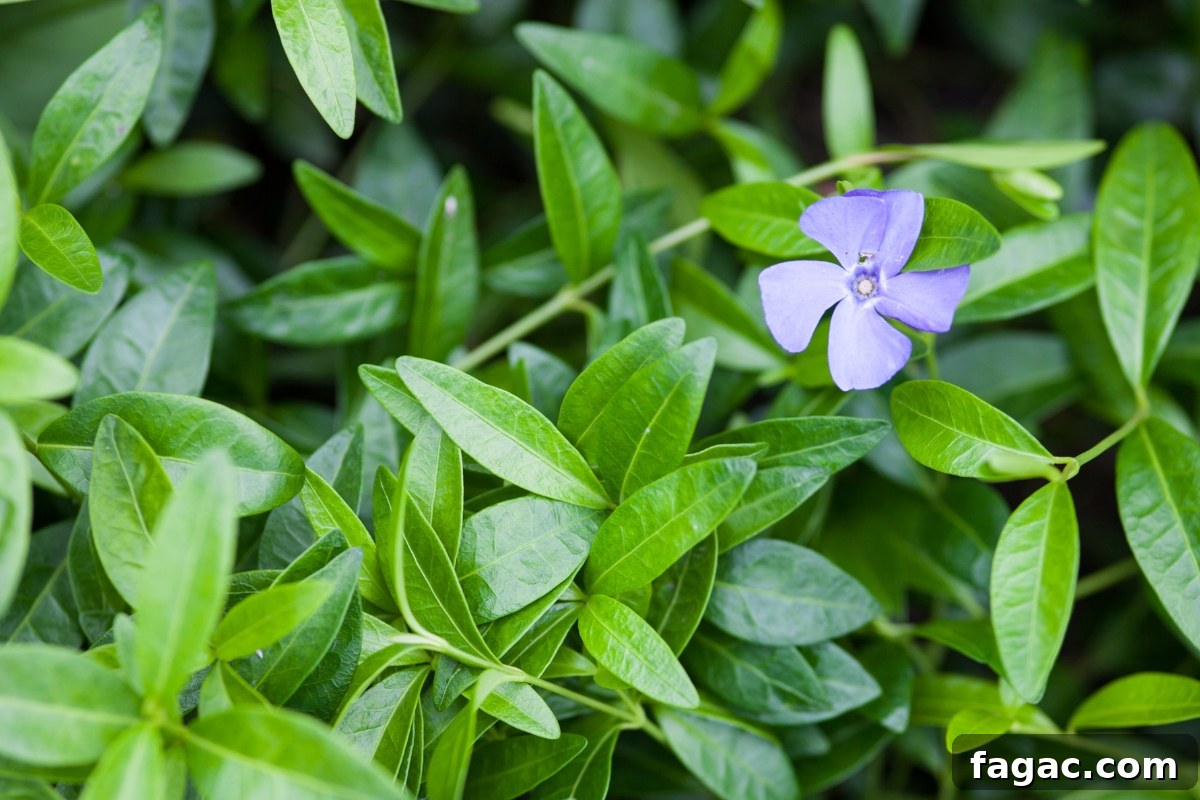
Common Periwinkle forms dense mats of glossy leaves and windmill-shaped blue flowers. It is an aggressive groundcover and invasive in many areas, but its flowers and foliage are unmistakable in the landscape.
Key identification features
Flowers:
- Five petals arranged in a flat, rotating (windmill) shape
Leaves:
- Dark green, glossy, elliptical leaves with lighter veins
Common Speedwells (Veronica arvensis)
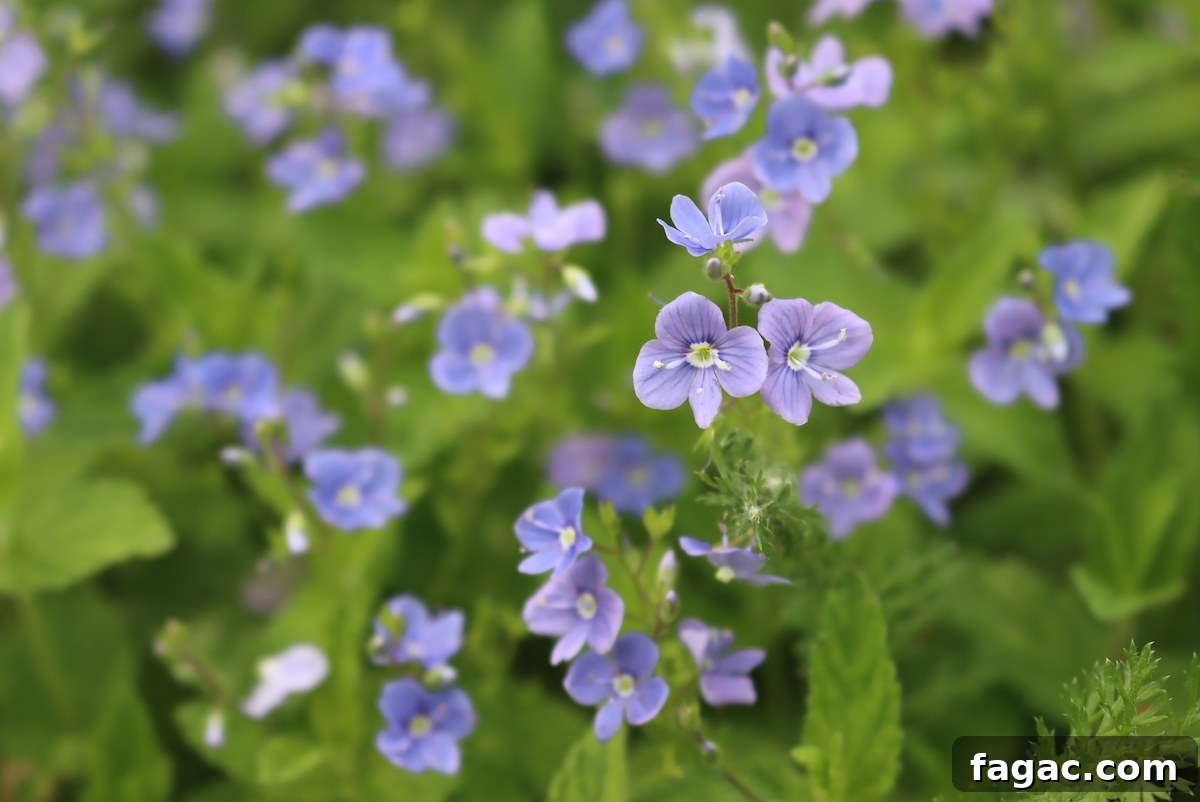
Speedwells include many similar-looking species; Common Speedwell is a non-native that has naturalized widely. Leaves and flowers have been used traditionally, and the plants are small, low-growing, and often hairy.
Key identification features
Flowers:
- Four or five blue petals with hairy green sepals
Leaves:
- Ovate, toothed, hairy, and about 2 in long
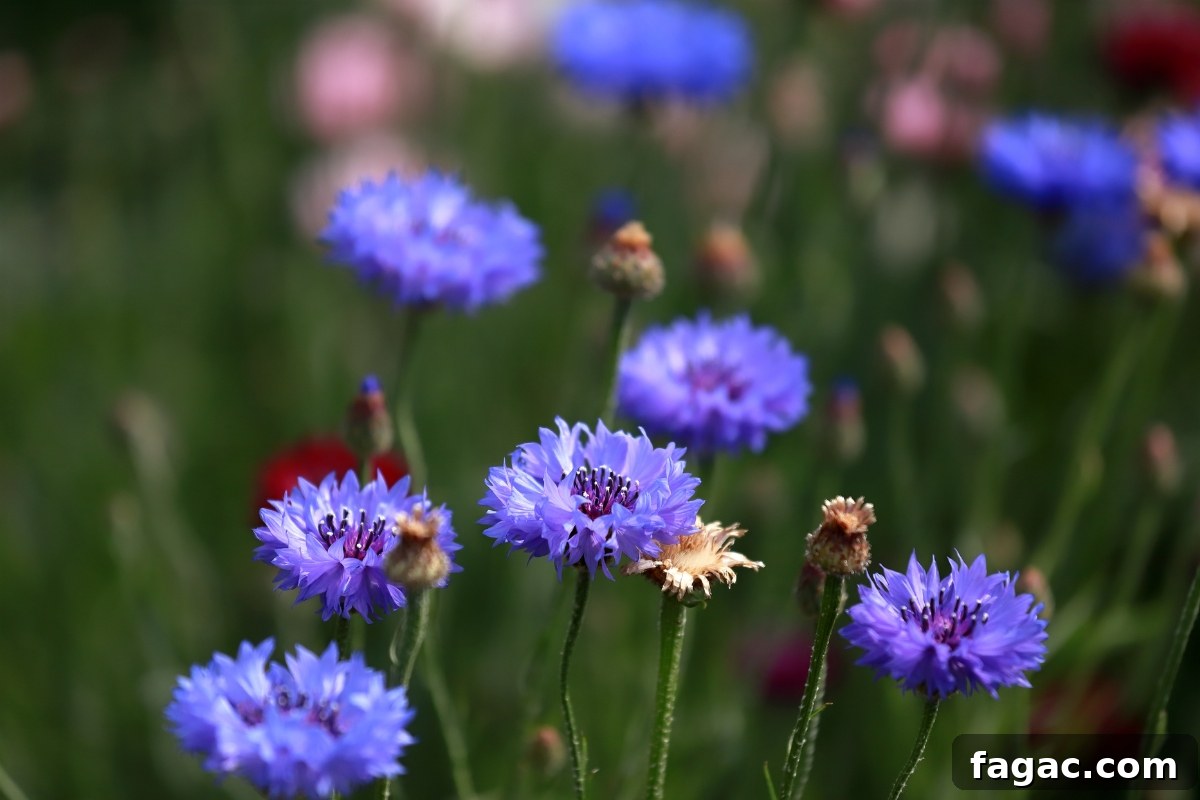
Cornflowers (Centaurea cyanus)
Cornflowers produce intensely blue, shaggy blooms and are often grown for cut or dried flowers. Native to Europe, they naturalize in cooler U.S. regions and offer edible petals with a spicy, clove-like flavor used sparingly in salads and garnishes.
Key identification features
Flowers:
- Single flower heads with layered bracts and inner furrowed petals
Leaves:
- Simple, often with matted hairs; upper stem leaves narrower than basal leaves
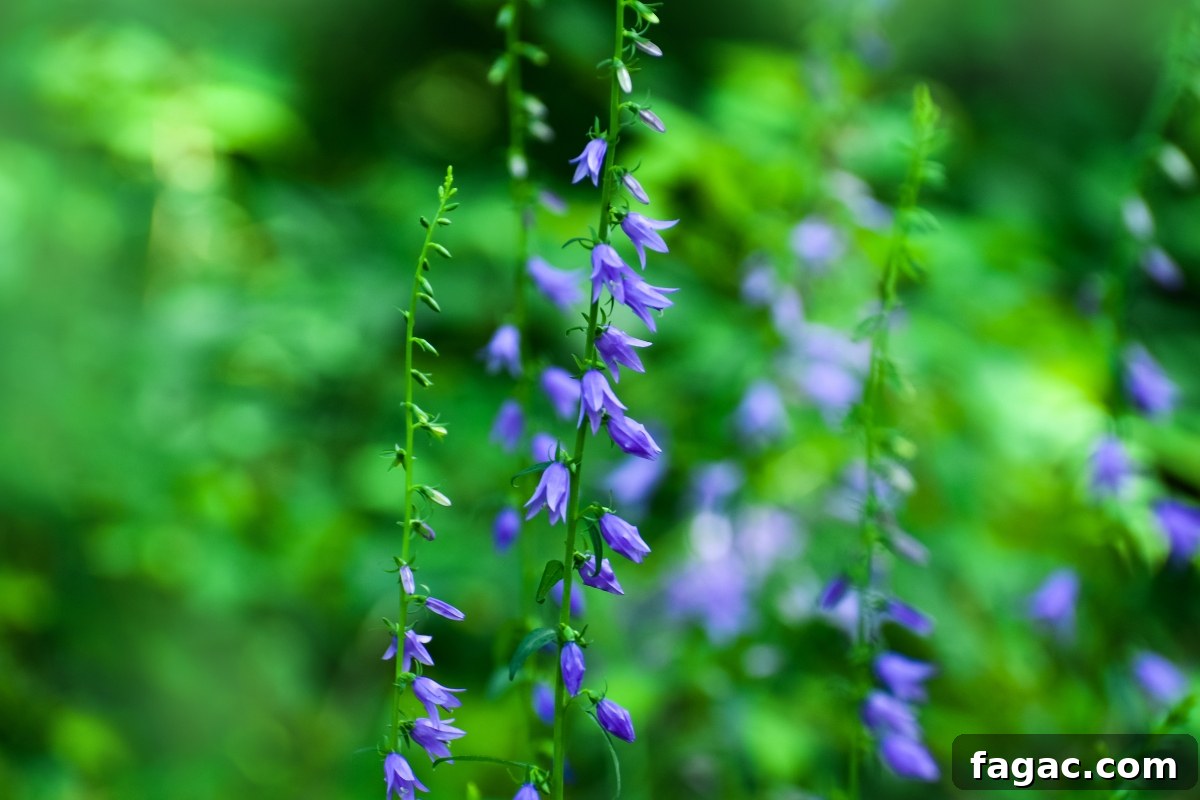
Creeping Bellflowers (Campanula rapunculoides)
Creeping Bellflower produces upturned, cup-shaped blue blooms along wiry stems and spreads by tuberous roots. It is edible (root taste similar to parsnip) but highly invasive in many regions; digging up roots helps control it.
Key identification features
Flowers:
- Upturned bell shape with pointed, even lobes
Leaves:
- Multiple shapes on a single plant; upper leaves narrower than basal leaves
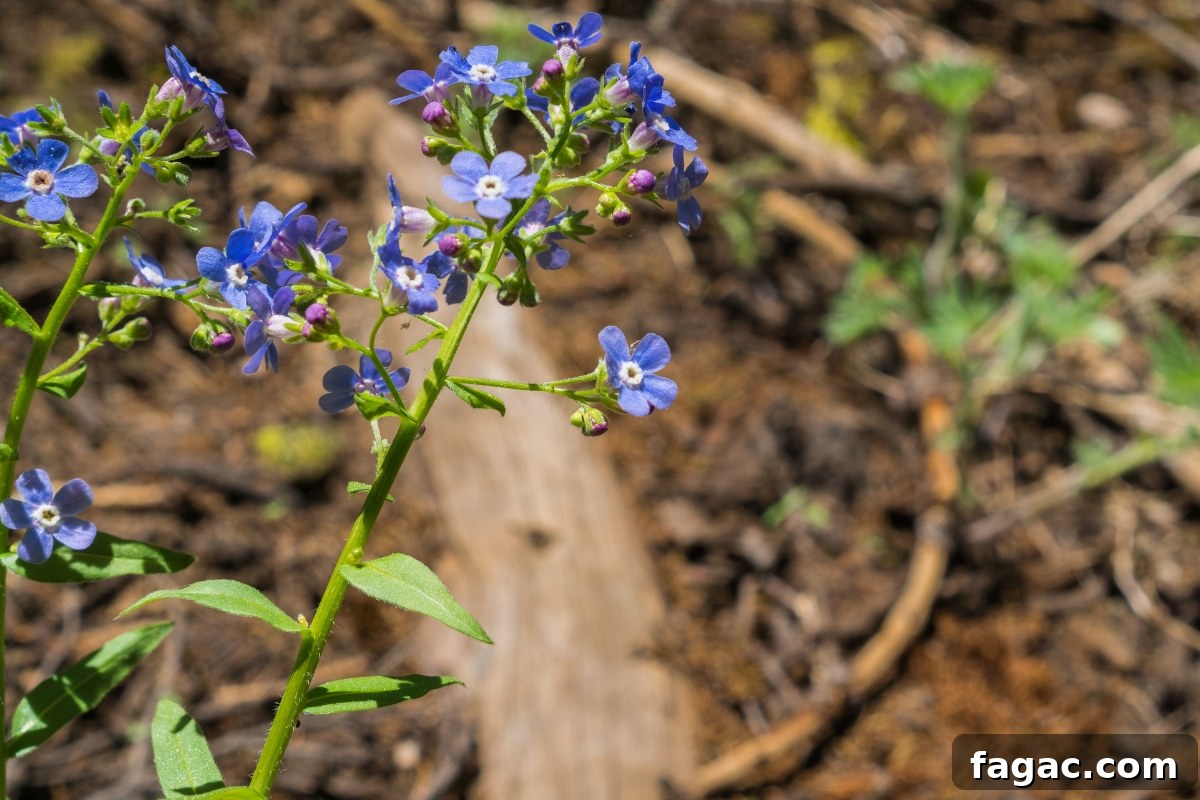
False Forget-me-not (Hackelia floribunda)
False Forget-me-not resembles true forget-me-nots but is an erect plant whose seeds and other parts can cause irritation; the plant is considered poisonous. Historically, roots were used in traditional remedies, but contact can cause skin reactions, so caution is advised.
Key identification features
Flowers:
- Small, funnel-shaped, pale blue with five lobes
Seeds:
- Flattened nutlets with a line of tiny prickles
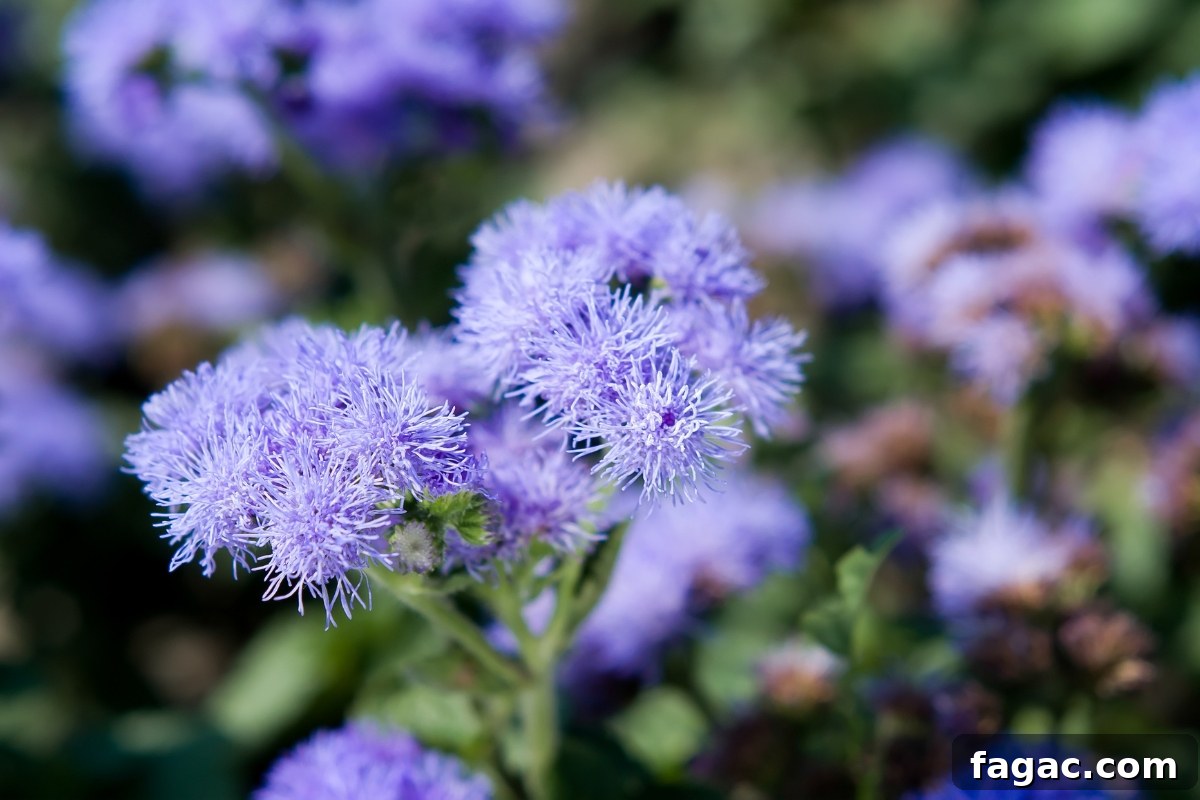
Flossflower (Ageratum houstonianum)
Flossflower forms low mounds of fluffy, feathery blue blooms. It is attractive to pollinators but can be invasive in some regions and is toxic to livestock. Historically used to staunch bleeding and for its oils with antimicrobial properties, it remains popular as an ornamental.
Key identification features
Flowers:
- Feathery, slightly rounded clusters of tubular florets
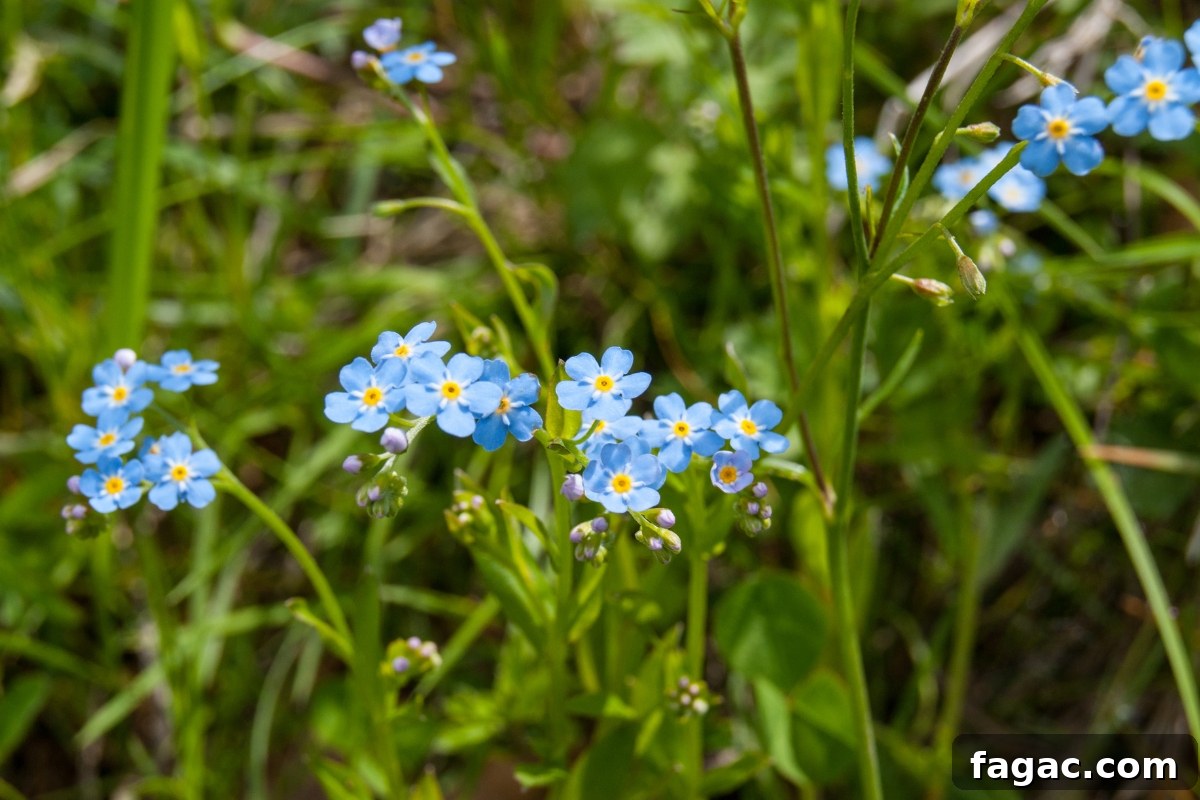
Forget-me-not (Myosotis scorpioides)
Forget-me-nots thrive in wet habitats—pond edges, marshes, and damp soils—and produce clusters of sky-blue flowers with yellow centers. They can naturalize aggressively in water features and are considered mildly toxic if consumed in quantity.
Key identification features
Flowers:
- Sky-blue with a yellow center, five petals around a short tube
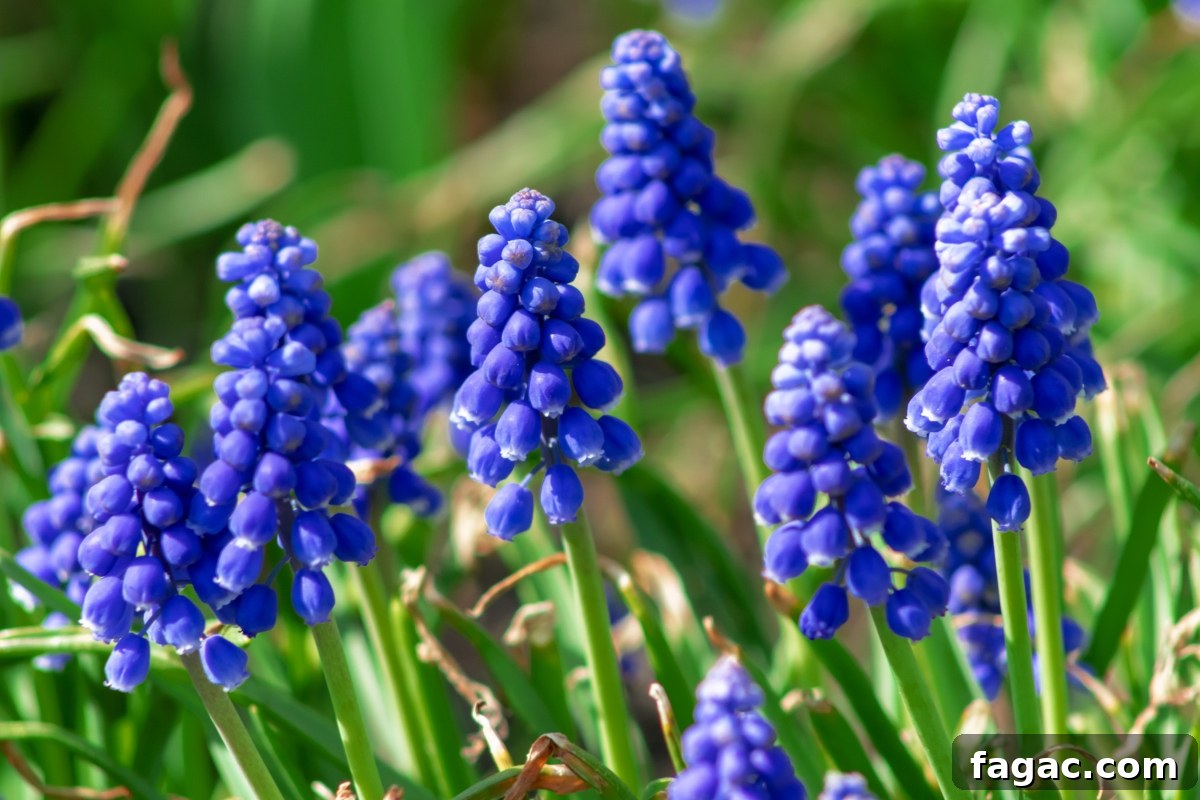
Grape Hyacinth (Muscari armeniacum)
Grape Hyacinth produces tightly packed bell-shaped blue flowers with a distinctive scent. It naturalizes easily and can be invasive. Bulbs and young shoots are edible and have been used historically as a flavoring or starch source.
Key identification features
Flowers:
- Small, bell-shaped, borne in dense clusters atop short stalks
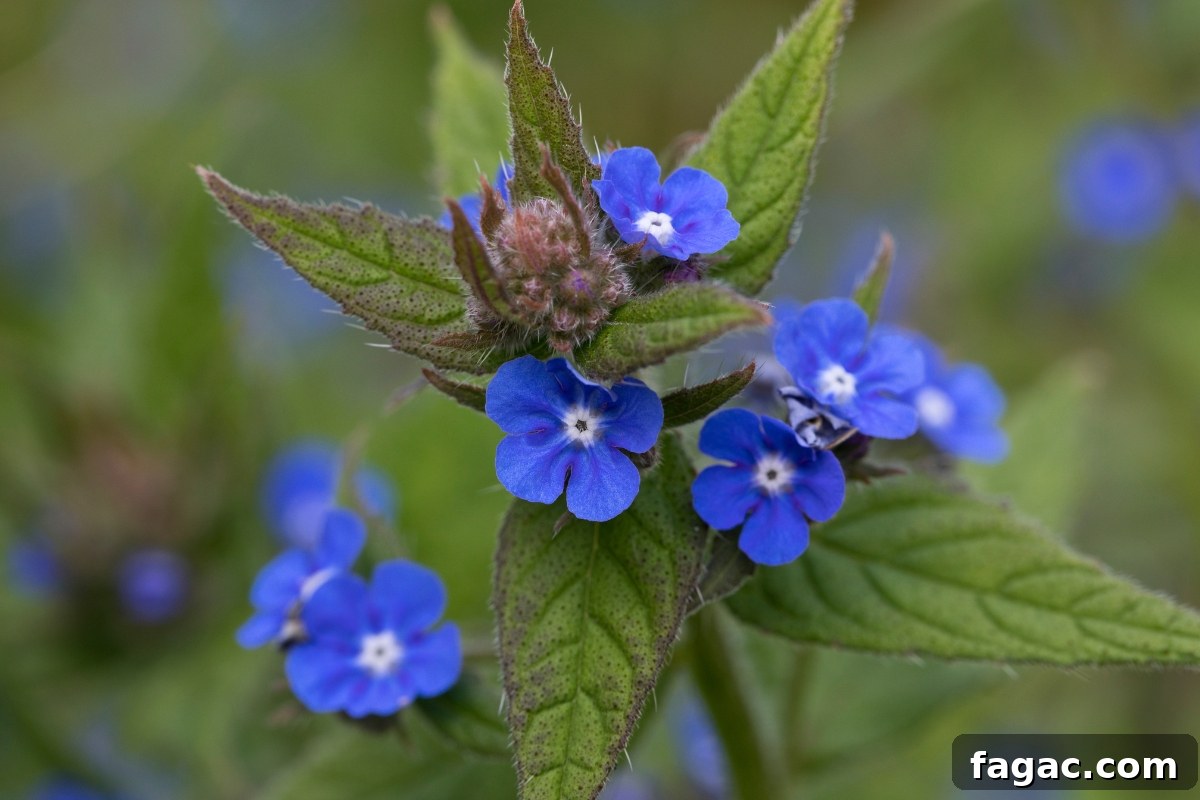
Green Alkanet (Pentaglottis sempervirens)
Green Alkanet bears bright blue flowers with white centers and rough, hairy leaves on long petioles. It is a deep-rooted, persistent non-native that supports pollinators and has been used historically for dye and other purposes, though only the flowers are commonly eaten.
Key identification features
Flowers:
- Blue with white centers, five fused petals forming a tube
Leaves:
- Broad, ovate leaves on long stems, often hairy
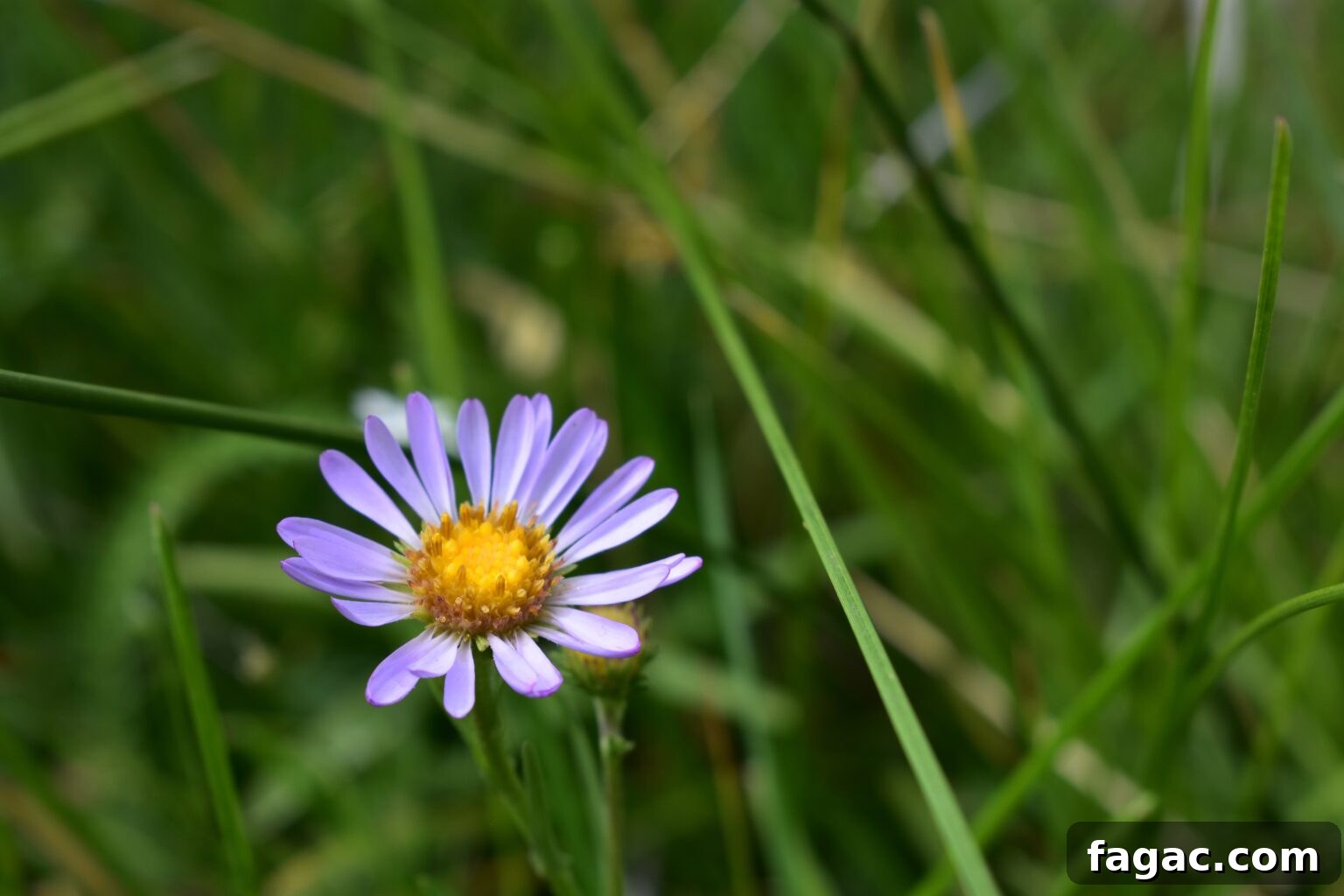
Hoary Aster (Dieteria canescens)
Hoary Aster, or Hoary Tansyaster, can spread vigorously and provides food and shelter for wildlife. Its daisy-like blooms have central yellow discs and simple petals. Native uses include powdered plant for various traditional remedies.
Key identification features
Flowers:
- Daisy-like heads with smooth petals and yellow disc florets
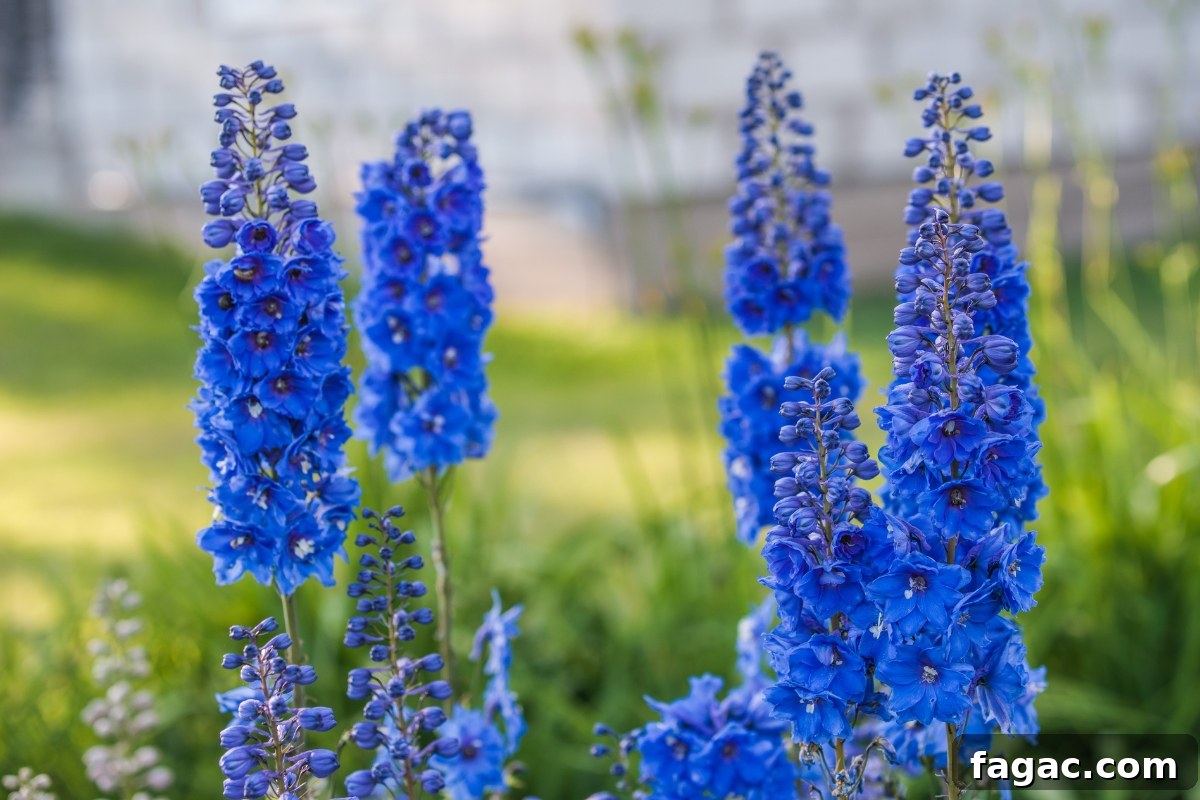
Larkspurs (Delphinium sp.)
Larkspurs often show distinctive spurred flowers that resemble small dolphins or pouches. They attract pollinators but the entire plant is poisonous and should not be ingested by people or livestock.
Key identification features
Flowers:
- Spurred, with sepals fused into a pouch and petals inside
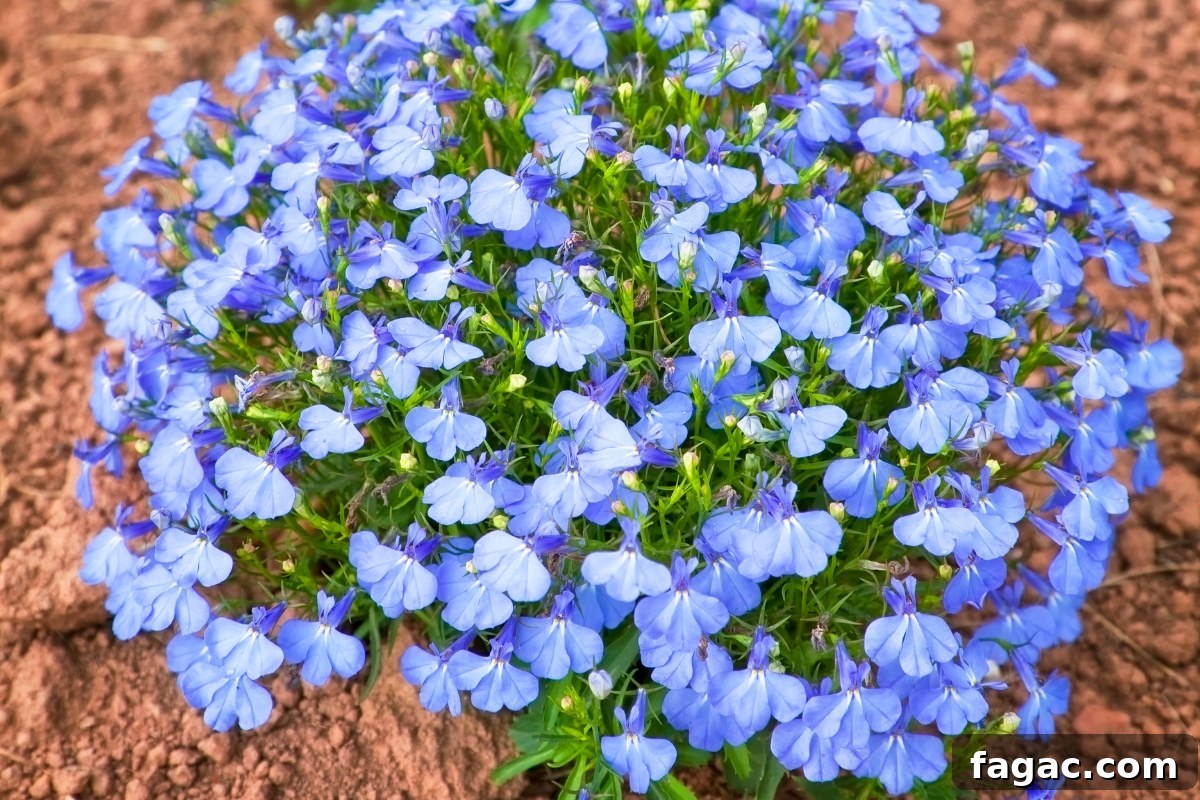
Lobelia (Lobelia sp.)
Lobelia species produce tubular blue flowers that benefit native bees but are toxic if eaten. Lobelia contains compounds used in smoking-cessation aids and has a history of traditional medicinal use—but do not ingest wild Lobelia without expert guidance.
Key identification features
Flowers:
- Tubular with two main lips; often crowded along stems
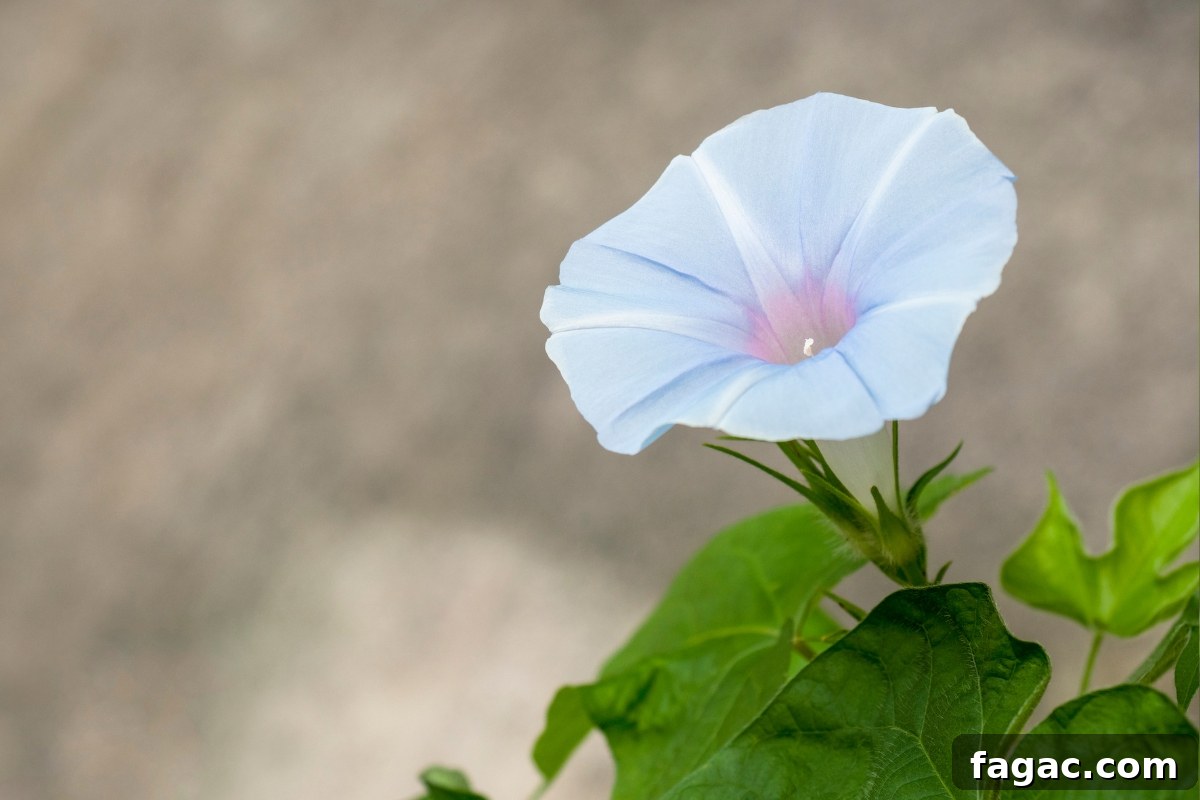
Morning Glory (Ipomoea hederacea)
Morning Glories are fast-growing vines with trumpet-shaped flowers that open each morning. Varieties differ widely, and some are invasive. While parts of some species have traditional medicinal uses, many contain toxic compounds—identify your species before any use.
Key identification features
Flowers:
- Trumpet-shaped, often with a star-shaped pattern at the throat
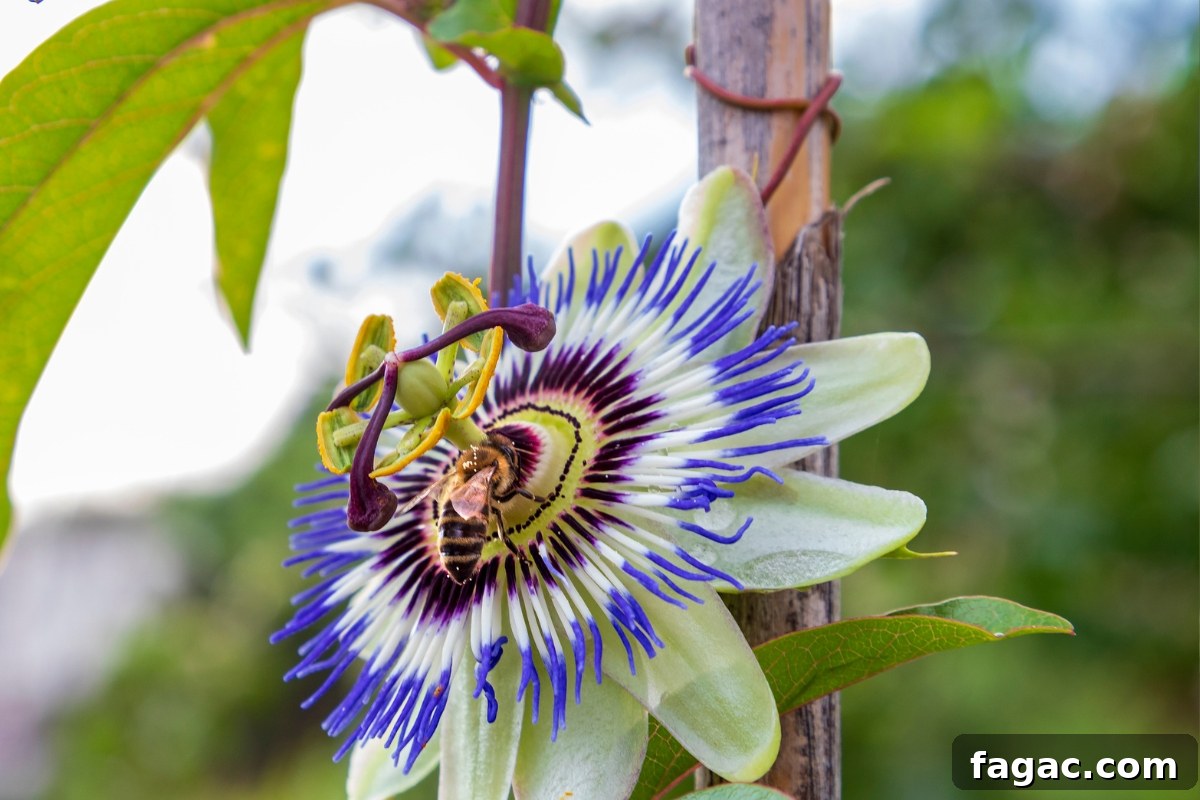
Passion Flower (Passiflora incarnata)
Passion Flower is a vining plant with distinctive flowers and edible orange fruits (passionfruit) that are used fresh or cooked. It attracts pollinators and is valued for its fruit and traditional calming properties.
Key identification features
Flowers:
- Complex, filamentous inner structures with showy petals
Fruits:
- Large orange, egg-sized berries when ripe
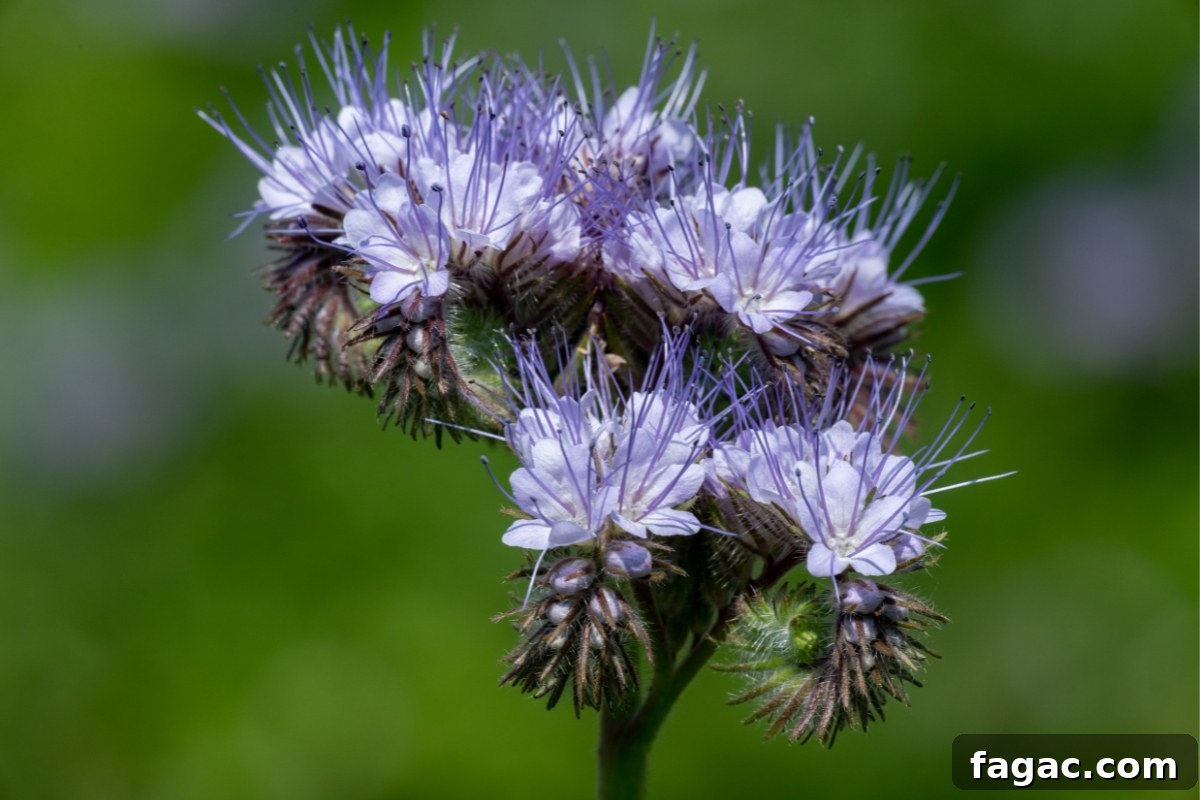
Lacy Phacelia (Phacelia tanacetifolia)
Lacy Phacelia tolerates dry, rocky soils and is widely used as a cover crop and pollinator plant. It produces coiled inflorescences of bell-shaped blue flowers that open gradually along one side of the stem.
Key identification features
Flowers:
- Bell-shaped, opening sequentially along a coiled stem
Venus’ Looking-glass (Triodanis perfoliata)
Venus’ Looking-glass is a delicate native that often appears in disturbed sites and sidewalk cracks. Small star-shaped blue flowers and compact foliage make it an attractive tiny wildflower that supports pollinators.
Key identification features
Flowers:
- Star-shaped, five-petaled and under 1 inch across
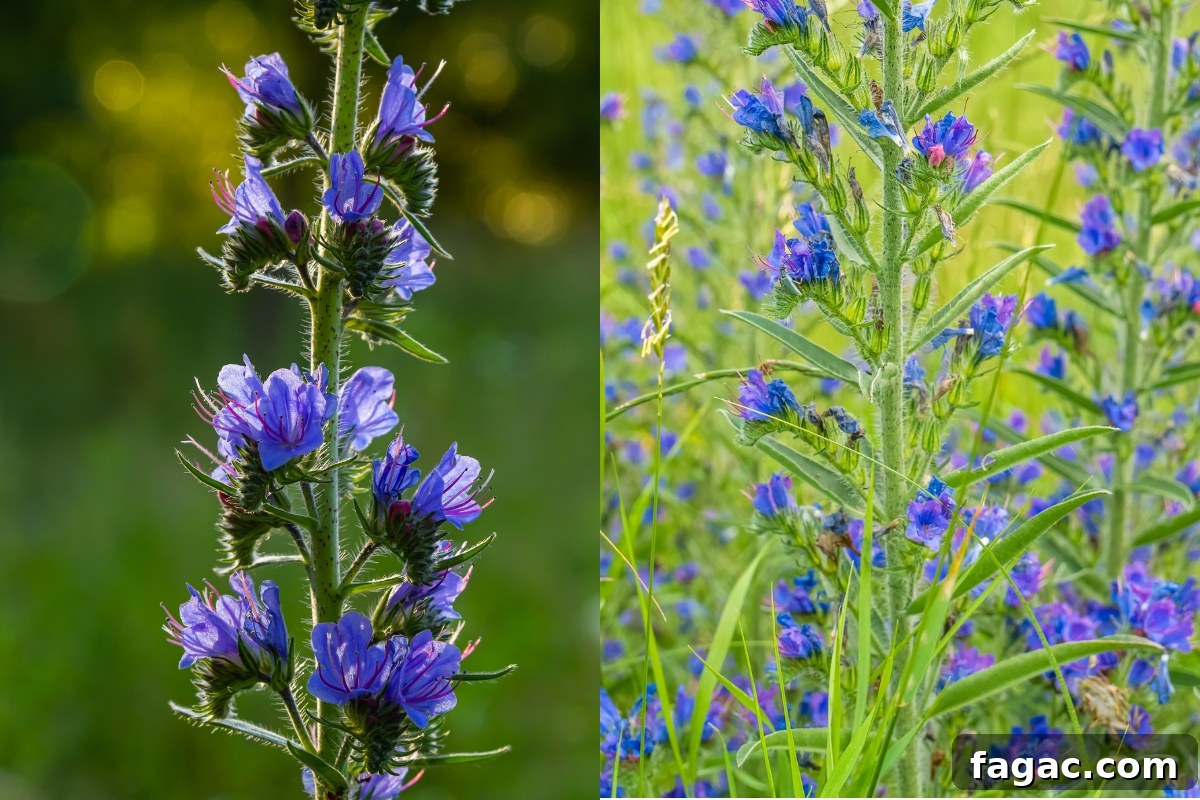
Viper’s Bugloss (Echium vulgare)
Viper’s Bugloss has funnel-shaped blue flowers with conspicuous pink stamens and bristly, spotted hairs on stems. It is valuable to bees but considered invasive where introduced. Young leaves can be used in small amounts in salads after careful preparation.
Key identification features
Flowers:
- Funnel-shaped with 4–5 lobes and long pink stamens
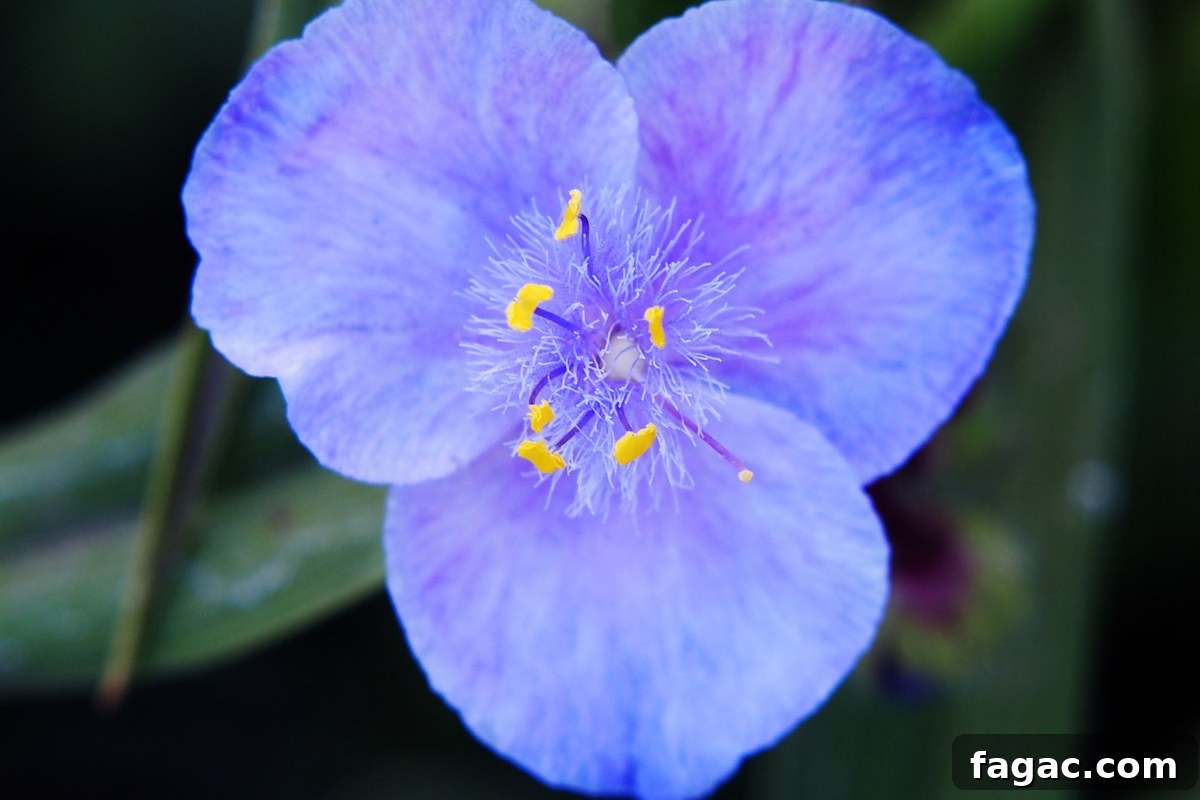
Virginia Spiderwort (Tradescantia virginiana)
Virginia Spiderwort forms clumps of grassy leaves and clusters of three-petaled blue flowers that open and are replaced daily. Native Americans used parts of the plant for food and various remedies; it also serves as a vigorous groundcover in moist sites.
Key identification features
Flowers:
- Three rounded petals, clustered and short-lived each day
Virginia Waterleaf (Hydrophyllum sp.)
Virginia Waterleaf spreads to form dense patches and is useful for filling bare ground. Flowers form spherical cymes and may be pale blue, pink, or white. The plant has brittle stems and deep roots that make removal challenging once established.
Key identification features
Flowers:
- Spherical clusters of tubular, five-lobed flowers
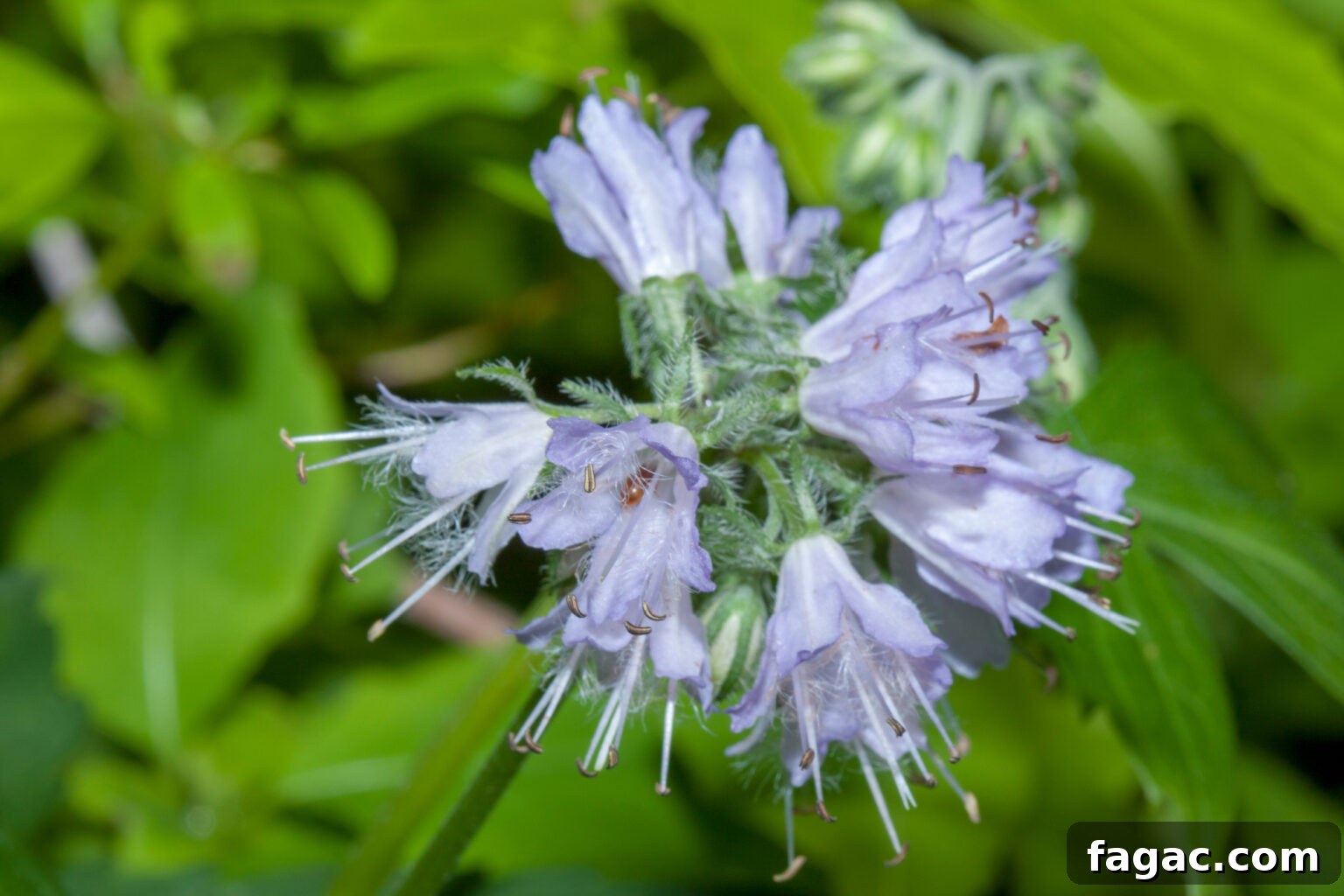
Wild Clary (Salvia verbenaca)
Wild Clary, a sage relative, bears lilac-blue flowers and aromatic leaves used to flavor food or make teas. It is recognized by its sage-like scent when leaves are bruised and hairy stems and leaves.
Key identification features
Flowers:
- Clusters of lilac-like blooms on bracts
Leaves:
- Ovate, toothed, and fragrant when crushed
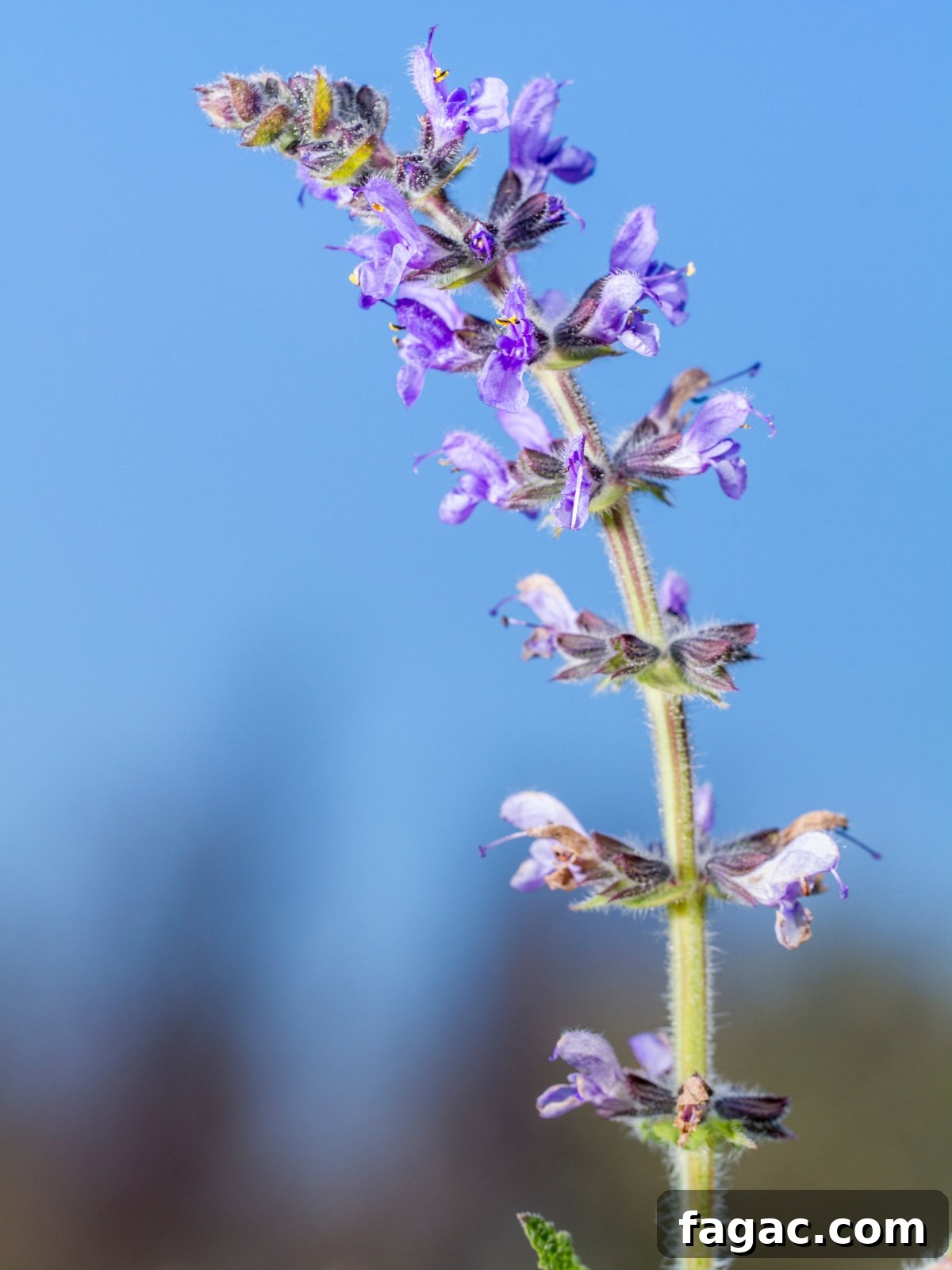
Woodland Lettuce (Lactuca floridana)
Woodland Lettuce offers edible young leaves and milky sap in stems. It grows readily in disturbed sites and gardens but is usually not aggressively invasive. Older leaves are better cooked for palatability.
Key identification features
Flowers:
- Radial, daisy-like heads with multiple thin petals
Leaves:
- Simple, lanceolate, often deeply lobed
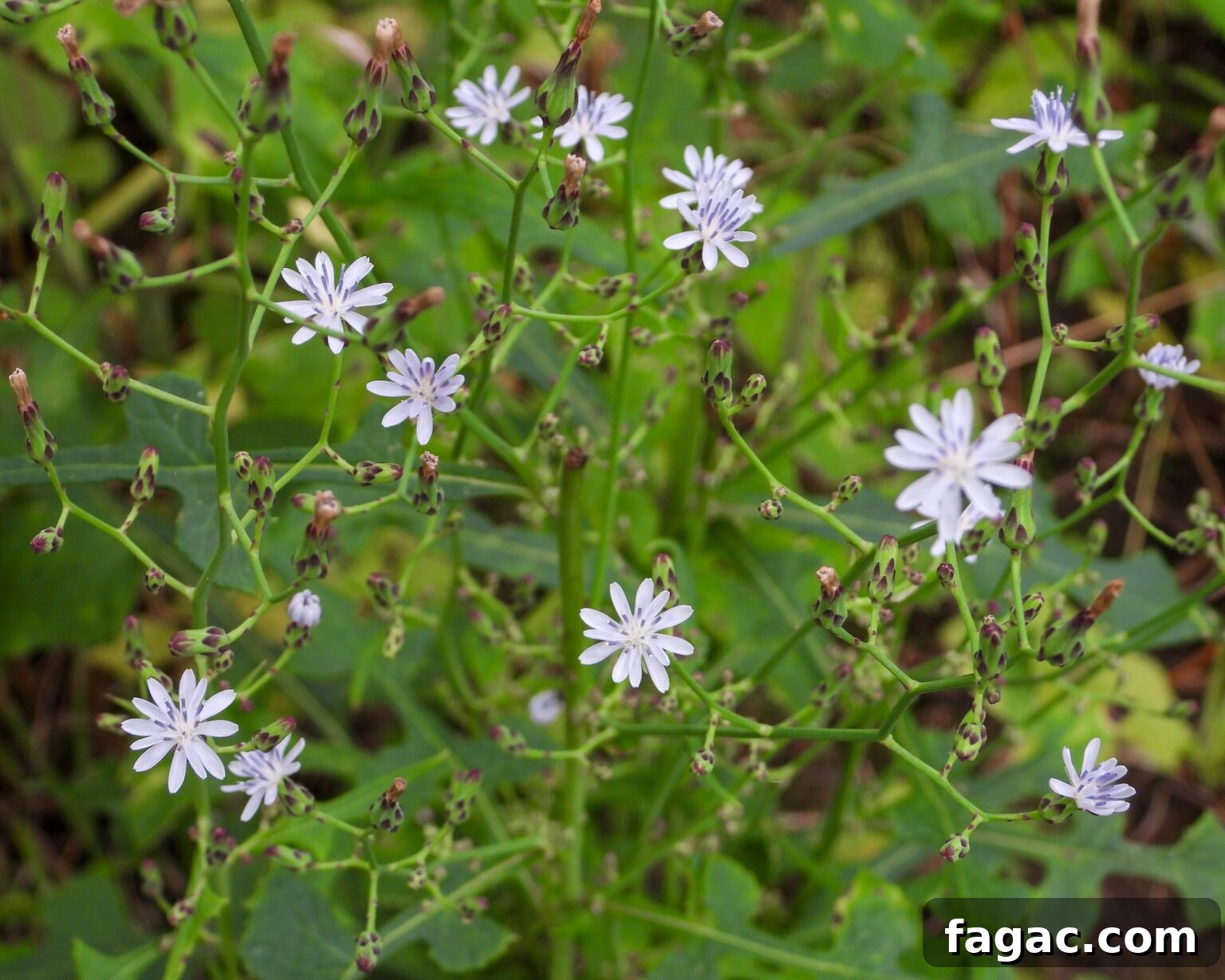
More plants with Blue flowers:
If you found a blue wildflower in your yard that isn’t on this list, many other native and naturalized species produce blue blooms. Below is a selection of additional wildflowers and less common species found across North America.
Wildflowers with Blue Flowers
- Blue Beardtongue (Penstemon sp.)
- Blue Curls (Trichostema dichotomum)
- Blue Hearts (Buchnera americana)
- Bluebells (Mertensia virginica)
- Bluet (Houstonia caerulea)
- California Harebell (Asyneuma prenanthoides)
- Colorado Blue Columbine (Aquilegia caerulea)
- Common Hepatica (Hepatica americana)
- Eastern Blue Star (Amsonia tabernaemontana)
- Gentians (Gentiana sp.)
- Irises (Iris sp.)
- Kittentails (Synthyris missurica)
- Large-leaved Aster (Eurybia macrophylla)
- Pasque Flower (Pulsatilla patens)
- Menzies’ Baby Blue Eyes (Nemophila menziesii)
- Monkeyflower (Mimulus alatus)
- Pickerelweed (Pontederia cordata)
- Prairie Pleat Leaf (Nemastylis geminiflora)
- Skullcap (Scutellaria sp.)
- Triplet-Lily (Triteleia grandiflora)
- Wild Blue Phlox (Phlox sp.)
- Wild Hyacinth (Camassia scilloides)
Rare to Endangered Blue Wildflower Species
- Blue-eyed Mary (Collinsia sp.)
- False Pennyroyal (Trichostema brachiatum)
- Jacob’s Ladder (Polemonium sp.)
- Wooly Stars (Eriastrum sp.)
Blue-flowered weeds and wildflowers show wide diversity in form and function. Many support pollinators and have historical or practical uses, while others are toxic or invasive and require management. When in doubt about edibility or safety, consult a trusted local expert before handling or consuming wild plants.