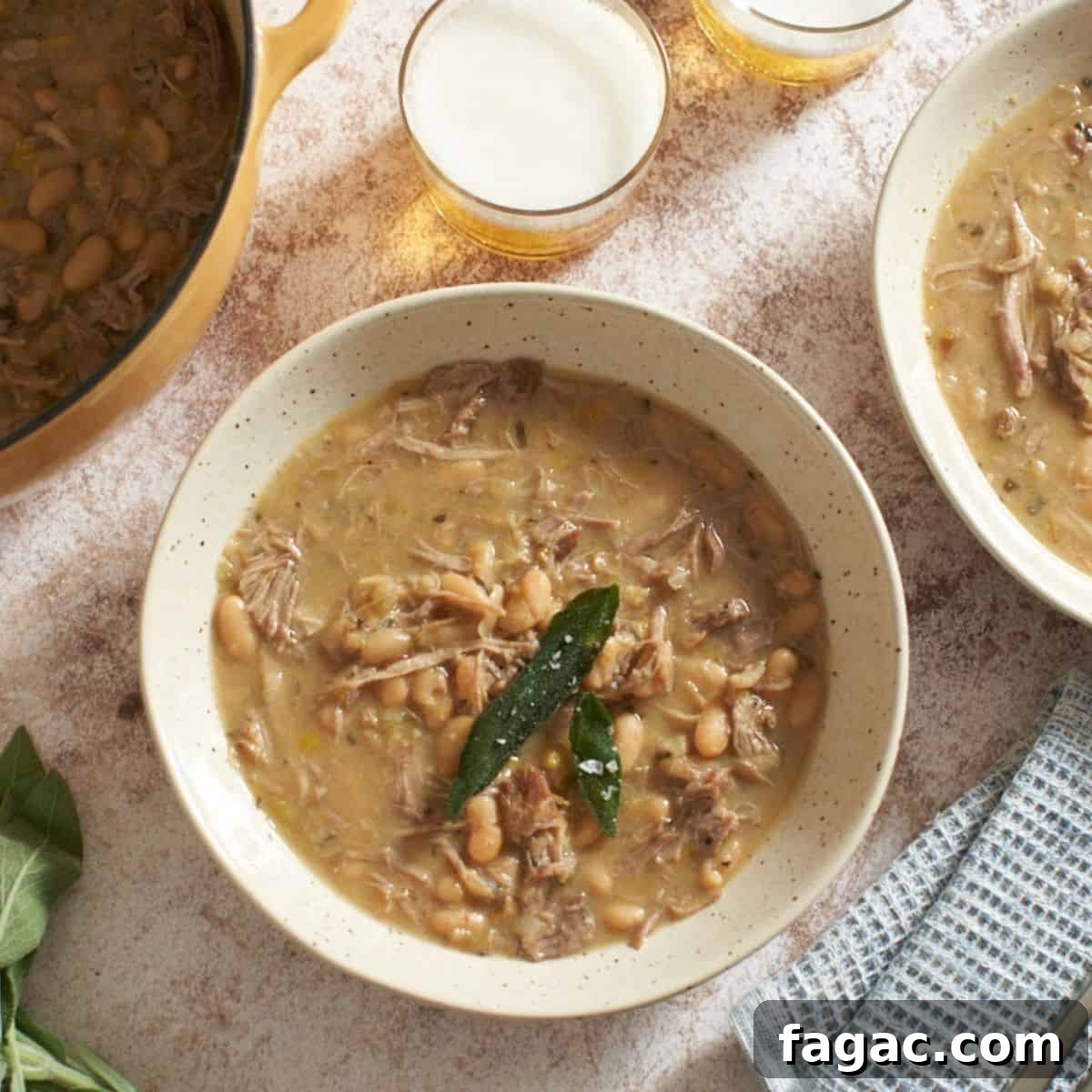
This pork stew combines pork shoulder, cannellini beans, and a full bottle of white wine for a rich, comforting one-pot meal. It’s simple to prepare and ideal for chilly days.
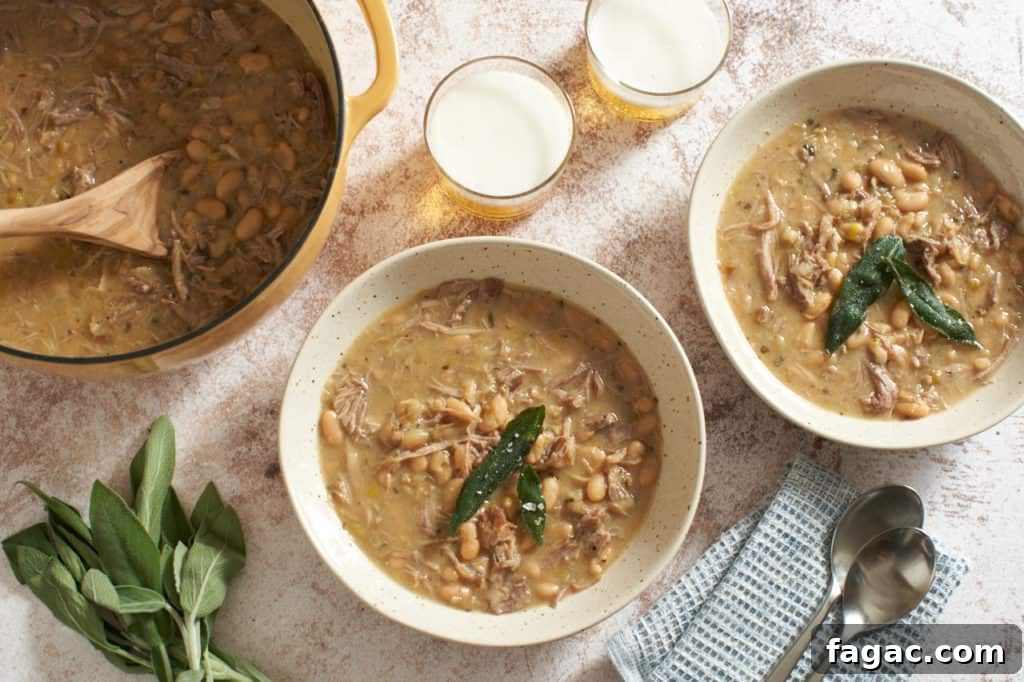
Pork and white beans are classic partners — here we lift the dish by using wine as the stew’s base. The wine adds brightness and acidity while leeks and shallots bring a subtly sweet, elegant flavor. The result is a stew that feels special but remains homey and satisfying without being heavy.
This recipe looks fancy but requires little hands-on effort: a bit of trimming, slicing, searing, and then slow simmering until the meat is tender and the flavors meld.
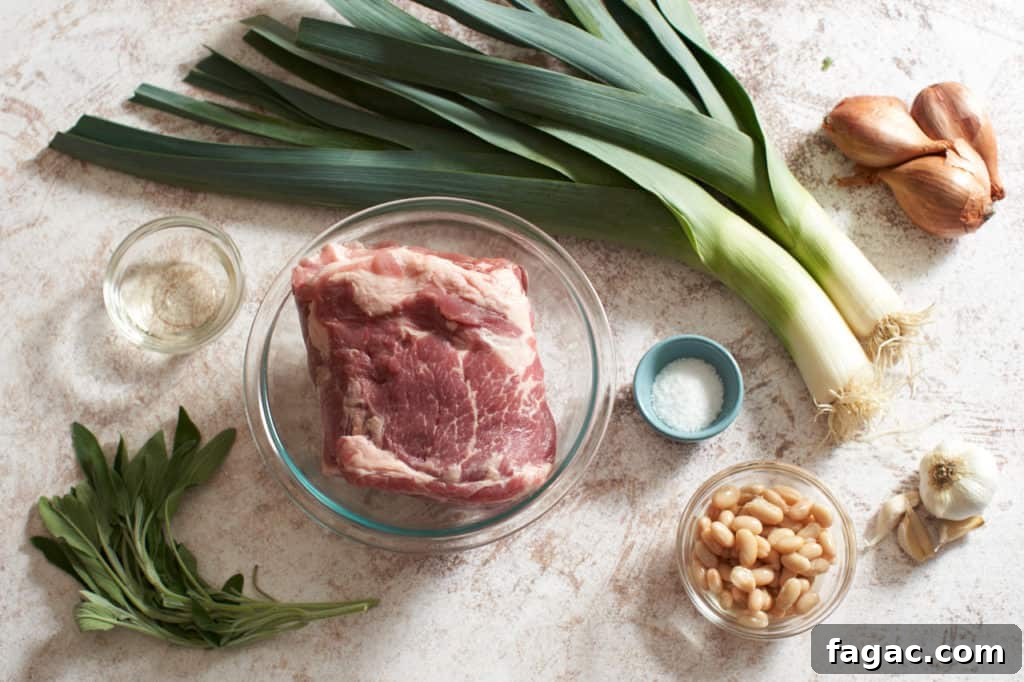
Ingredients you’ll need
- Pork shoulder: Boneless or bone-in pork shoulder works well. It’s the ideal cut for long, slow cooking because the connective tissue breaks down and yields tender, shreddable meat.
- Cannellini beans (canned): Canned cannellini beans provide a creamy texture and save prep time. Use the can liquid to enrich and thicken the stew.
- White wine: A dry, light white like Sauvignon Blanc or Pinot Grigio is best. Avoid very sweet or heavily oaked wines. Use something you’d enjoy drinking; poor-tasting wine will affect the final dish.
- Leeks: Mild and sweet when cooked, leeks soften into a silky texture. Choose medium-sized leeks and clean them well to remove sand.
- Shallots: Their delicate sweetness complements the wine and adds depth to the stew.
- Garlic: Grated garlic blends evenly through the stew for consistent flavor without large bites of raw garlic.
- Sage: Fresh chopped sage adds an earthy, cozy note; fried sage leaves make a crisp, aromatic garnish.
- Water: A cup or so to round out the liquid when simmering.
- Kosher salt and freshly ground black pepper: Season at each stage — the meat, the vegetables, and the broth — to build balanced flavor.
*Exact measurements are in the recipe card below.
How to make pork stew with white beans

Step 1: Trim and season the pork shoulder
Trim most of the thick fat cap, leaving enough to render and flavor the stew. Cut the shoulder into two or three large pieces and season generously with salt and pepper. Set aside.

Step 2: Prepare the aromatics
Trim the root ends and the dark green tops from the leeks, slice in half lengthwise, and rinse thoroughly under cold water, fanning the layers to remove sand. Slice into ½-inch rounds. Peel and thinly slice the shallots. Grate the garlic finely and chop the sage.
Pro tip
Leeks can trap grit between layers, so always split and rinse them well under running water until no sand remains.
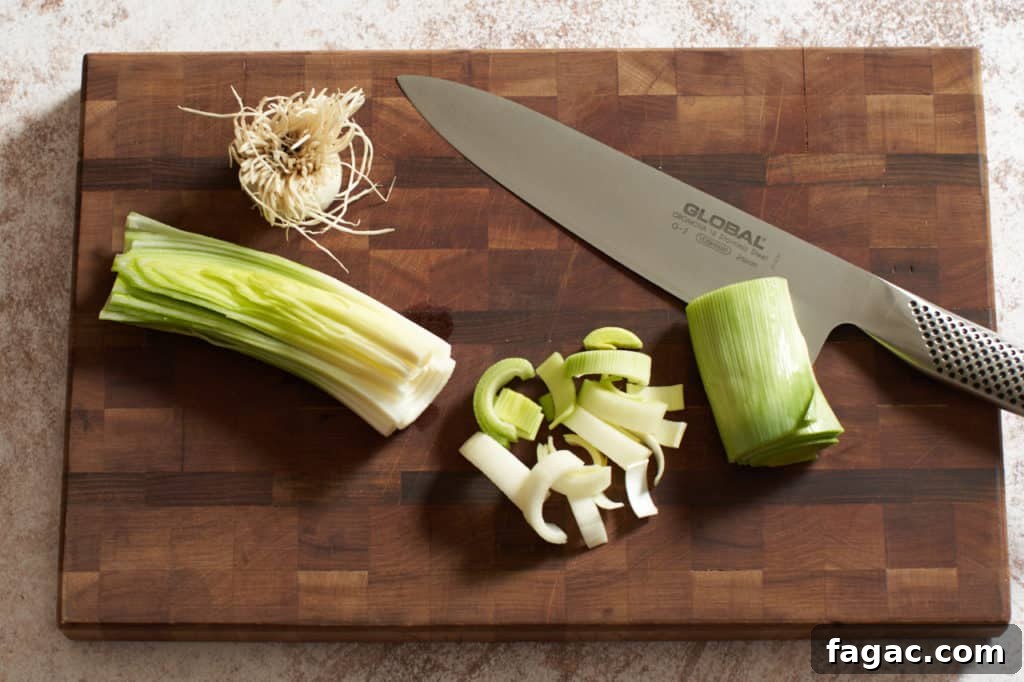
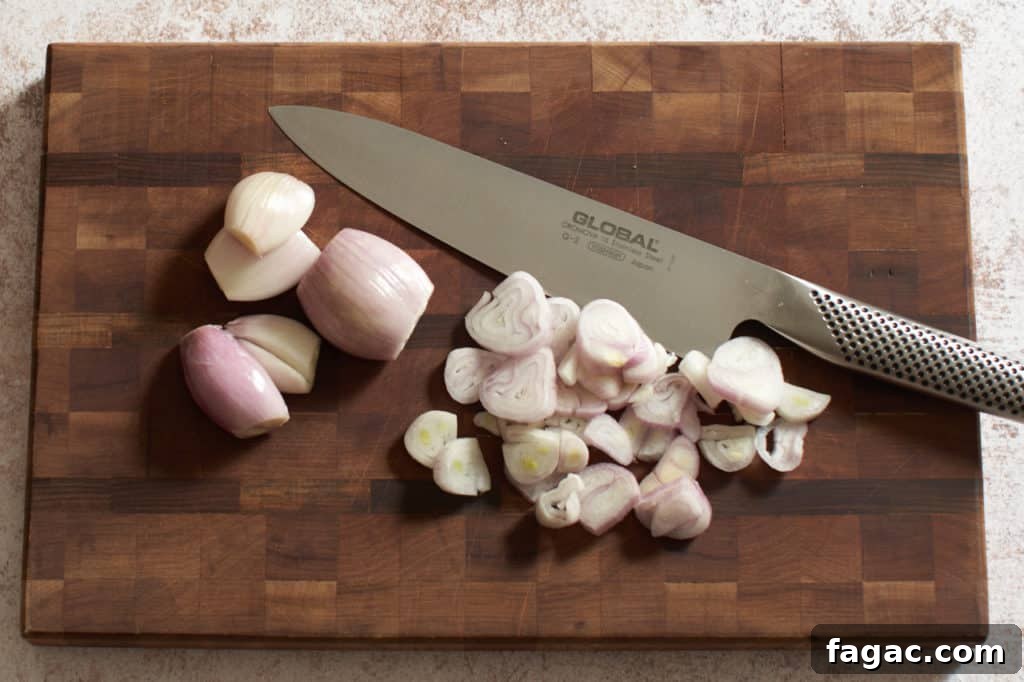
Thin shallot slices will caramelize in the pot and add layered sweetness and texture. Keep the garlic finely grated so it disperses evenly throughout the stew.
Step 3: Sear the pork shoulder
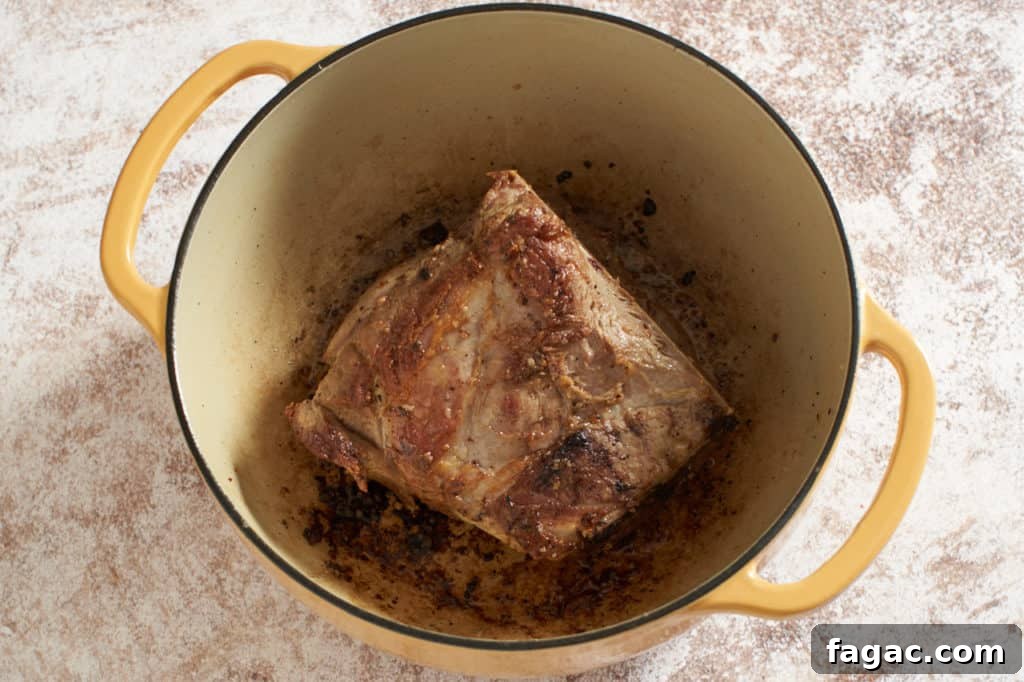
Heat a large Dutch oven over medium-high. Brown the pork pieces on all sides in the rendered fat or a little oil until a deep golden crust forms. Remove and set aside.

Step 4: Sauté the vegetables, herbs, and garlic
Add the leeks and shallots to the pot, season with a pinch of salt, and stir to release the browned bits from the bottom. Cook over medium heat until the vegetables are very soft and beginning to caramelize, about 8–10 minutes. Stir in the grated garlic and chopped sage and cook briefly until fragrant.
Step 5: Add the wine, beans, and pork, then simmer
Pour the entire bottle of white wine into the pot, scraping up any browned bits, and season with about 1 teaspoon salt. Add the canned beans with their liquid and one cup of water, then return the seared pork and any resting juices to the pot. Bring to a simmer, lower the heat, cover, and cook gently for 2 to 2½ hours, until the pork is very tender and easily pulls apart.
Step 6: Shred the pork and finish the stew
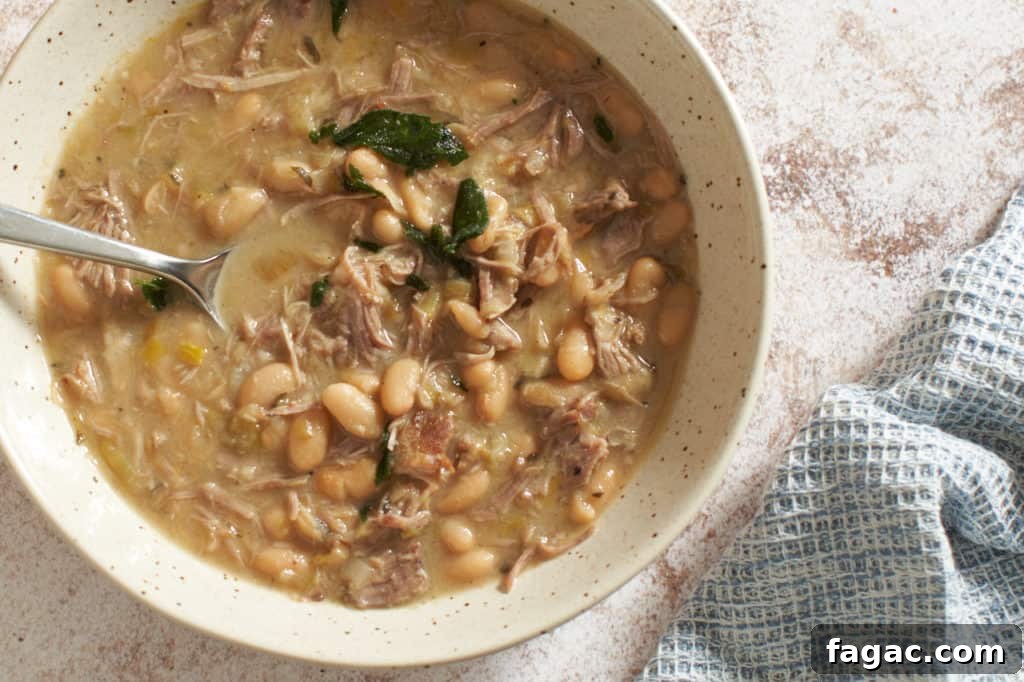
Remove the pork and continue simmering the stew uncovered for 15–30 minutes to reach your preferred thickness. Shred the pork with two forks or carefully with your hands, then return it to the pot and cook a few minutes to heat through. Taste and adjust seasoning before serving.
Step 7: Fry the sage leaves (optional)
For a crunchy garnish, heat enough olive oil in a small skillet to cover the bottom. When shimmering, fry individual sage leaves about 20–30 seconds until crisp. Drain on paper towels and sprinkle with sea salt.
Tips for the best pork stew
- If using bone-in pork shoulder, buy about ½ pound extra to account for the bone weight.
- A large (6-quart) Dutch oven is ideal for even cooking and plenty of room to simmer the stew.
- Keep the liquid from the canned beans — it adds flavor and helps thicken the stew.
- The easiest way to shred the pork is with your hands once it’s cool enough to handle; otherwise use two forks. The meat will continue to break down in the pot as you stir.
- If you prefer a looser consistency, add more water while simmering.
- When frying sage leaves, expect some popping as moisture hits the oil — proceed carefully.
- Substitute navy or great northern beans if cannellini aren’t available.
- Serve with a glass of the same white wine or a crisp pilsner for a cozy, alpine-style meal.
Make ahead and reheating instructions
- You can season the pork the day before and refrigerate it to deepen flavor.
- This stew stores well in the refrigerator for up to 3 days — flavors develop nicely overnight.
- To reheat, warm over medium heat until simmering, adding a splash of water if the stew has thickened too much.
FAQ
Pork shoulder is the best choice because it benefits from long, slow cooking. As connective tissue breaks down the meat becomes tender and shred-able. Avoid lean cuts like pork loin or tenderloin, which can become tough when braised.
If pork shoulder is still tough, it likely needs more cooking time. The meat is done when it easily shreds and falls apart; simmer longer until it reaches that stage.
Yes. Pork stew freezes well for up to three months in an airtight container. Thaw in the refrigerator before reheating.
More recipes with white beans
Cannellini beans are versatile — they work in light soups and hearty main dishes alike.
- Tuscan White Bean Soup — seasoned with sage and rosemary and enriched with a parmesan rind for deep umami.
- Easy White Chicken Chili — a smoky, comforting twist with roasted poblano peppers.
- Italian Sausage with Cannellini Beans — a satisfying Sunday supper with a classic flavor profile.
Pork stew that’s homey, comforting, and easy to make!
- Pork shoulder is an economical cut that becomes tender and flavorful with slow cooking.
- Thick and hearty — a stick-to-your-ribs meal for cold weather.
- Gluten-free and dairy-free.
- Simple prep: sear the pork, chop aromatics, then let the stew simmer until tender.
If you enjoy this recipe, please consider leaving a 5-star rating in the recipe card — it helps others find the recipe. Sign up for the newsletter to have recipes delivered to your inbox.
Recipe

Pork Stew with White Beans, Wine, and Sage
Ingredients
- 2.5 pounds boneless pork shoulder (or 3 pounds bone-in)
- 3 cans cannellini beans (15 ounces each), reserve the liquid
- 3 leeks, cleaned and sliced
- 5 shallots, thinly sliced
- 3 cloves garlic, grated
- 2 tablespoons chopped fresh sage
- 1 bottle Sauvignon Blanc or other dry white wine (750 ml)
- 1 cup water
- Kosher salt and freshly ground black pepper, to taste
Fried Sage Leaves (optional)
- Olive oil, enough to cover the bottom of a small skillet
- Fresh sage leaves
- Sea salt, to finish
Instructions
- Trim most of the fat cap from the pork, leaving some to render. Cut into 2–3 large pieces, season with salt and pepper, and set aside.
- Clean and slice the leeks into ½-inch rounds. Peel and thinly slice the shallots. Grate the garlic and chop the sage.
- In a large Dutch oven over medium-high heat, sear pork pieces on all sides until deeply browned. Remove and set aside.
- Add the shallots and leeks to the pot and season with a pinch of salt. Cook, stirring occasionally, until very soft and beginning to caramelize, about 8–10 minutes. Add garlic and sage and cook until fragrant, about 1 minute.
- Pour in the entire bottle of wine, scraping up browned bits, then add the beans with their liquid and one cup of water. Season with about 1 teaspoon salt and stir to combine.
- Return the pork and any accumulated juices to the pot. Bring to a simmer, reduce heat to low, cover, and cook 2–2½ hours until the pork easily falls apart.
- Remove the pork and simmer the stew uncovered for 15–30 minutes to thicken if needed. Shred the pork with two forks or carefully by hand, return it to the stew, and heat through for a few minutes. Adjust seasoning and serve.
Frying the sage leaves
- While the stew simmers, heat a thin layer of olive oil in a small skillet over medium until shimmering. Fry sage leaves 20–30 seconds until crisp, drain on paper towels, and sprinkle with sea salt. Garnish the stew with the crisp sage if desired.
Notes
- Do not discard the liquid from the canned beans — it adds flavor and body to the stew.
- Shred the pork carefully; it will continue to break down in the stew as you stir.
- Substitute navy or great northern beans if preferred.
- Add additional water if you want a thinner consistency.
- The stew freezes well for up to three months; thaw overnight in the refrigerator before reheating.
Nutrition
Carbohydrates: 35 g
Protein: 42 g
Fat: 5 g
Nutrition information is an estimate and not guaranteed exact.