Ingredients
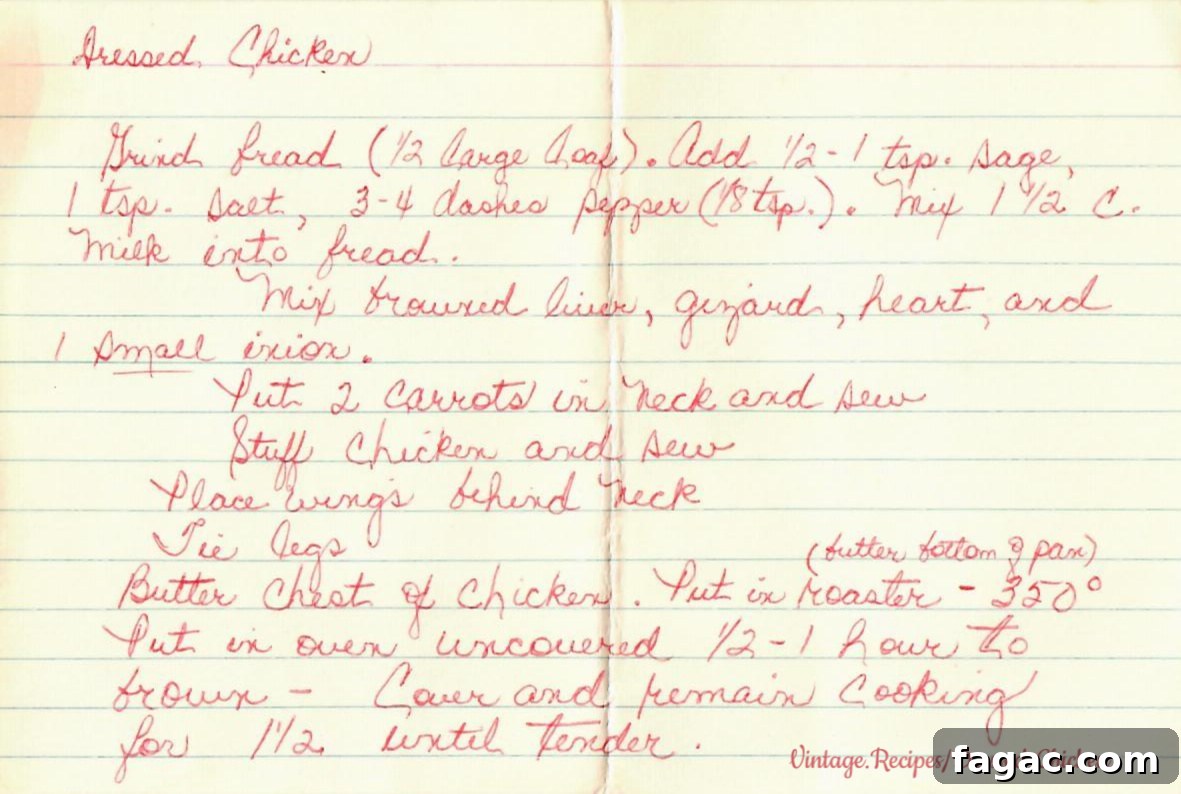
1/2 large loaf of bread
1/2–1 teaspoon dried sage (adjust to taste)
1 teaspoon salt
1/8 teaspoon ground black pepper (about 3–4 dashes)
1 1/2 cups hot milk
Browned chicken liver, gizzard, and heart (from the same bird or equivalent quantity)
1 small onion, browned with the giblets
2 carrots (for the neck cavity)
1 whole chicken
Butter (for rubbing the chicken and greasing the roaster)
Method
This classic stuffed roast chicken uses a simple bread-and-giblet stuffing that’s moist and flavorful. Prepare all ingredients before you begin so stuffing and roasting proceed smoothly.
1. Prepare the bread crumb base: Tear or cut the half loaf of bread into pieces and grind or pulse in a food processor until coarse crumbs form. Place the crumbs in a large bowl.
2. Season the crumbs: Add 1/2 to 1 teaspoon of dried sage to the crumbs, along with 1 teaspoon of salt and about 1/8 teaspoon ground black pepper (roughly 3–4 dashes). Stir to distribute the seasonings evenly. Use the smaller amount of sage if you prefer a milder herb presence, or the larger if you like a more pronounced sage flavor.
3. Add hot milk: Pour 1 1/2 cups of hot milk over the seasoned bread crumbs. Gently mix until the crumbs absorb the milk and reach a soft, cohesive texture suitable for stuffing. If the mixture seems too dry, let it sit a minute to fully absorb. If it becomes overly wet, add a little more ground bread or let it rest to firm slightly.
4. Prepare the giblets and onion: Brown the chicken liver, gizzard, heart, and the small onion in a skillet with a little butter or oil until they are cooked through and lightly caramelized. Browning develops flavor and helps reduce any strong off-notes from the giblets. Chop the browned giblets and onion finely, then fold them into the bread-and-milk mixture until evenly incorporated.
5. Prepare the chicken for stuffing: Pat the whole chicken dry with paper towels. Tuck the wings behind the neck or across the back to keep them from burning. Place the two carrots into the neck cavity to fill space and add a subtle aromatic touch, then sew or secure the neck opening closed to keep the carrots and stuffing inside.
6. Stuff and truss the bird: Spoon the bread-and-giblet stuffing into the main cavity of the chicken, filling it but not packing it tightly—allow some room for the stuffing to expand as it cooks. Sew or tie the opening closed, then tie the legs together with kitchen twine. Make sure the bird is evenly shaped for uniform cooking.
7. Butter and prepare the roaster: Rub butter over the chicken’s breast and any exposed skin to encourage browning. Grease the bottom of a roasting pan with butter to prevent sticking and to add flavor. Place the prepared chicken in the roaster, breast side up.
8. Roast the chicken: Preheat the oven to 350°F (175°C). Place the roaster in the oven uncovered and roast for 30 to 60 minutes to allow the skin to brown and develop a crisp exterior. After the initial browning period, cover the chicken with a lid or foil to keep moisture in and continue roasting for approximately 1 1/2 hours total cooking time, or until the chicken is tender and cooked through. Cooking time will vary with the bird’s size; ensure the internal temperature reaches a safe range and the juices run clear when the thickest part of the thigh is pierced.
9. Rest and serve: Remove the chicken from the oven and let it rest for 10–15 minutes before carving. Resting allows the juices to redistribute, making the meat more tender and the stuffing firmer. Carve the chicken and serve slices alongside portions of the stuffing. The browned giblets in the stuffing provide rich, savory notes that complement the roast chicken.
Tips:
- Adjust the amount of sage and pepper to suit your taste. A little sage goes a long way.
- If desired, reserve the giblets for a gravy: simmer them with stock and strain to enrich pan juices into a gravy.
- If you prefer, bake the stuffing separately in a small dish alongside the chicken to ensure both reach ideal doneness and to avoid any food safety concerns with stuffing cooked inside poultry.