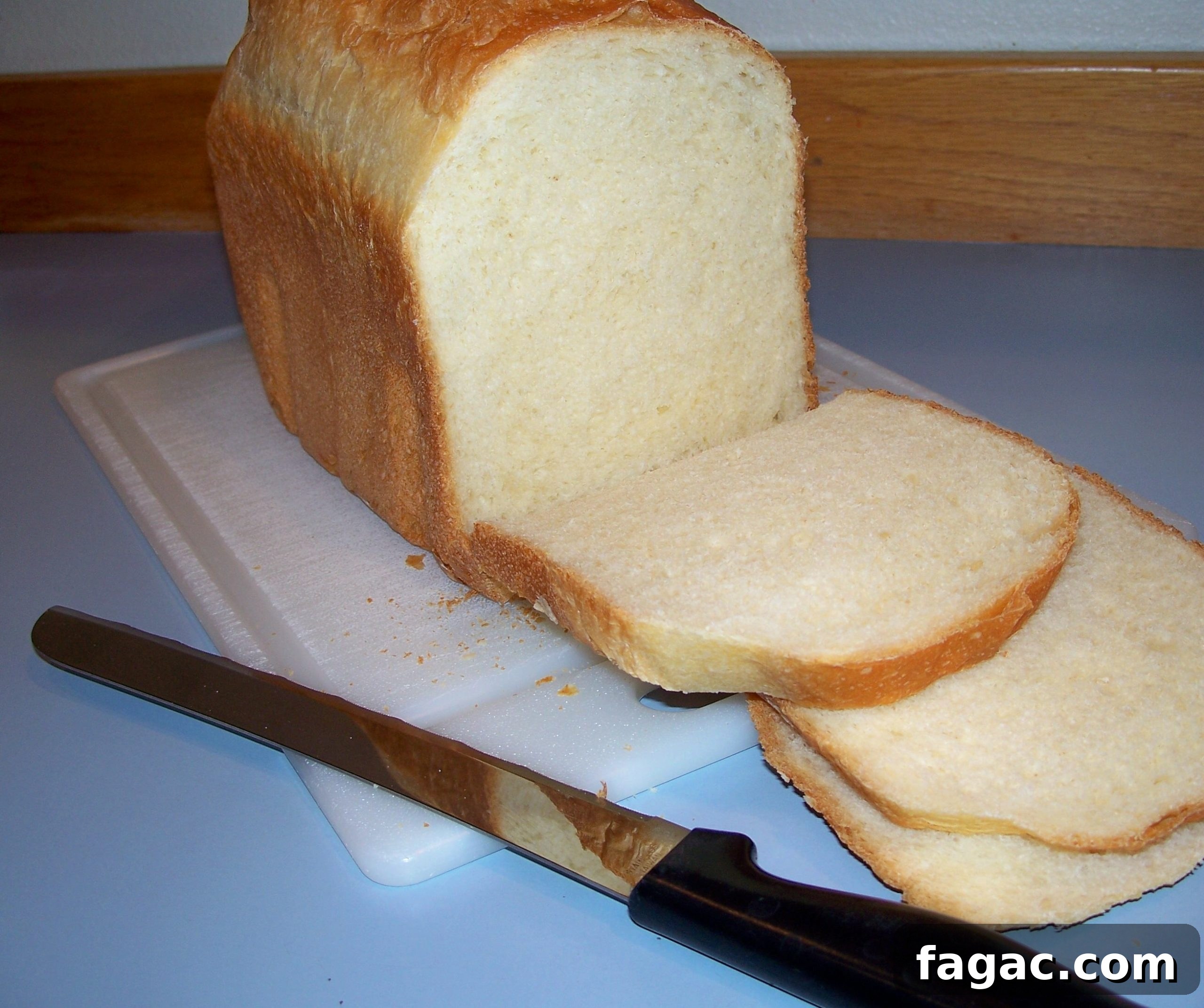
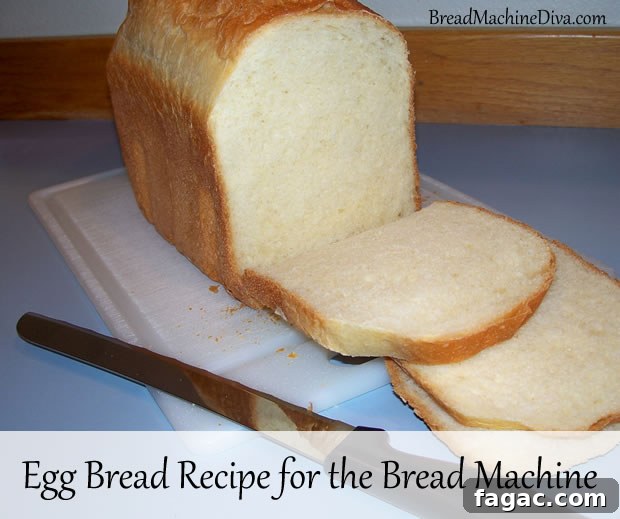
This homemade egg bread recipe is a winner! The crust is soft, the top is slightly flaky, and the loaf has enough structure to make excellent sandwiches.
Last Updated on December 19, 2024 – Originally posted November 1, 2014
Featured Comment
OK, Diva, so I made this bread. Question: when are you going to post a recipe that doesn’t make me want to eat the whole loaf in one sitting? This is some fantastic bread. ~ John
It Started With A Few Extra Eggs
I had a few extra eggs in the refrigerator, so I decided to try an egg bread. It turned out wonderfully. The crust stays soft, the top develops a pleasant flakiness, and the interior is tender yet sturdy.
This loaf is soft enough for everyday eating but firm enough to hold up in sandwiches—your sandwich won’t fall apart. I used a bread machine to make the process quick and reliable, and it produced consistent results.
Raising Chickens
As a small aside about eggs: when I was a child we kept a handful of chickens. I remember gathering warm eggs from the nest for the first time and being surprised they weren’t cold—farm-fresh eggs are often still warm from the hen.
We even had a hen that laid light-green eggs. Certain breeds produce shells in a variety of colors. Back then I took those fresh eggs for granted, but they really do make a difference in flavor and texture.
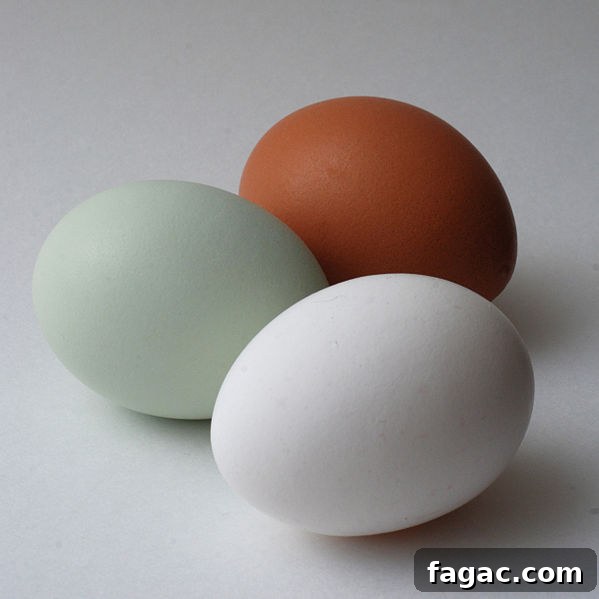
Here’s a photo of a blue-green egg (from an Araucana chicken) with brown and white eggs for comparison.
Do Eggs Add to A Bread Recipe?
Eggs contribute color, extra nutrition, and subtle flavor to bread. They contain lecithin, a natural emulsifier that helps ingredients blend more evenly and improves crumb structure. Because whole eggs are mostly water, you should reduce other liquid in a recipe if you add eggs so the dough consistency remains correct.
FAQ for This Recipe
Yeast types: There are several common yeast varieties—active dry yeast, instant yeast, bread machine yeast, and quick-rise yeast. Each behaves a bit differently; consult manufacturer guidance or a yeast comparison resource if you need to convert between types.
Bread machine sizes: Machines come in different loaf sizes. If you need to adapt a recipe to a different size bread machine, scale the ingredient amounts proportionally and follow your machine’s instructions for maximum and minimum capacities.
Flour choices: Bread flour and all-purpose flour will yield different results because of their protein content. Bread flour gives more chew and better structure; all-purpose flour produces a slightly softer crumb.
Homemade Egg Bread Instructions
This recipe is written for a two-pound machine. Use the basic or white cycle with medium crust.
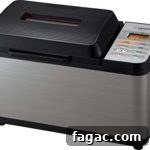
Follow the order recommended by your bread machine’s manual for adding ingredients. On many machines, including the Zojirushi BB-PAC20 Virtuoso, liquid ingredients go in first, then dry ingredients, with yeast added last.
After the machine has been kneading for five to ten minutes, open the lid and check the dough. It should form a smooth, round ball. Adjust with a little flour or liquid if the dough looks too sticky or too dry.
Homemade Egg Bread Ingredients
For a two-pound loaf, medium crust.
- 1/3 cup water
- 3/4 cup milk (2% or whole milk recommended; whole milk may give a slightly better rise)
- 2 eggs, beaten
- 4 cups bread flour
- 2 Tablespoons olive oil
- 3 Tablespoons sugar
- 1 teaspoon salt
- 1 1/4 teaspoons active dry yeast
Metric measurements and nutrition details are provided below in the recipe block.
Homemade Egg Bread Recipe
Recommended Equipment
Ingredients
- 1/3 cup (78.9 ml) water
- 3/4 cup (177.4 ml) milk I usually use 2% or whole milk; whole milk can give a slightly better rise.
- 2 eggs Beaten
- 4 cups (500 g) bread flour
- 2 Tablespoons olive oil
- 3 Tablespoons sugar
- 1 teaspoon salt
- 1 1/4 teaspoons active dry yeast
Instructions
-
This recipe is formulated for a two-pound machine. Select the basic or white cycle with medium crust.
-
Add ingredients to the bread pan in the order your machine recommends. On many machines the liquids go first, then dry ingredients, and yeast last.
-
Check the dough after five to ten minutes of kneading. Open the lid and confirm the dough forms a smooth, round ball. If needed, adjust by adding a small amount of flour or water to reach the correct consistency.
Notes
Measured in US customary units; metric conversions are provided automatically where shown.
Nutrition
All information presented within this site is intended for informational purposes only. I am not a certified nutritionist and any nutritional information should be used as a general guideline. These figures are estimates and may vary.