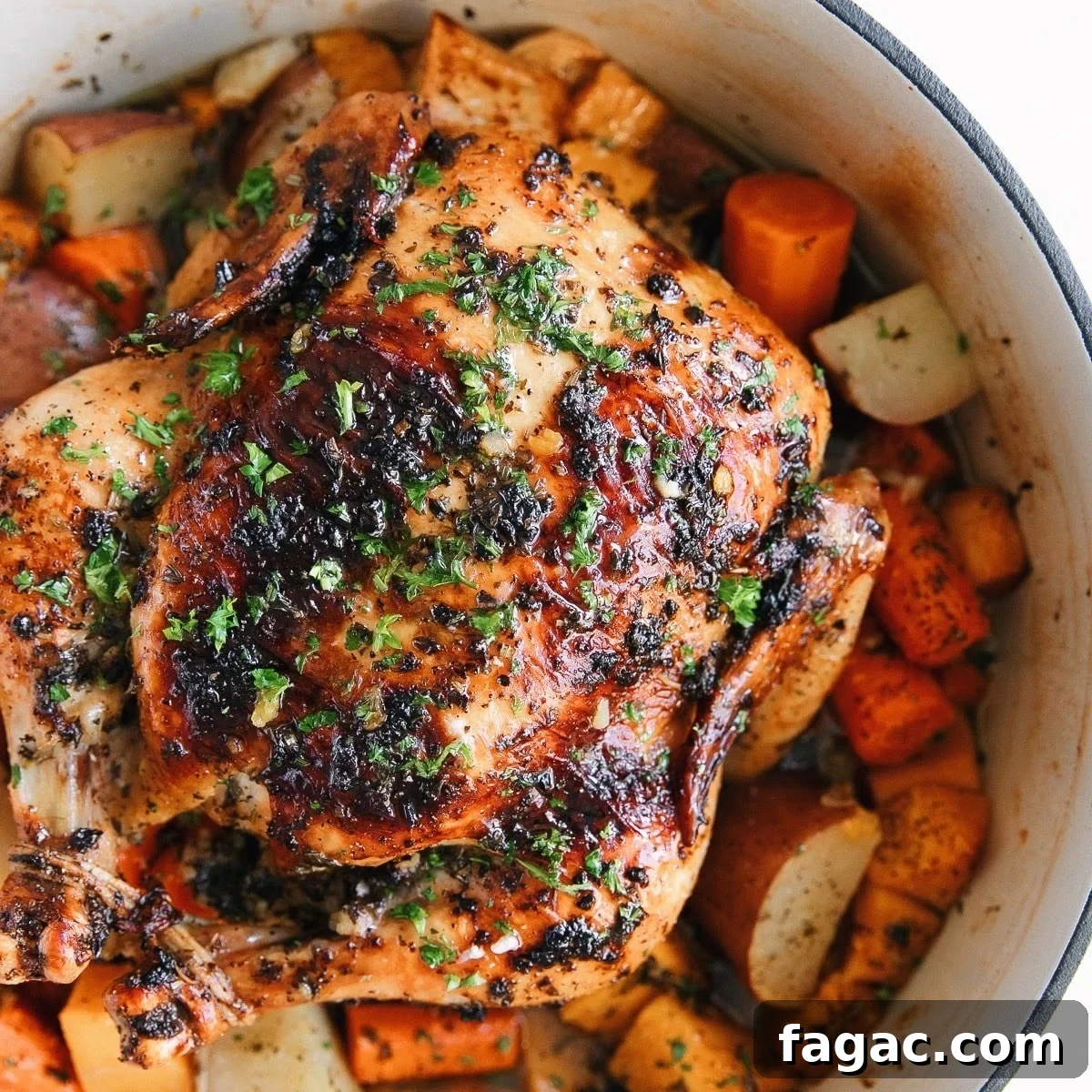
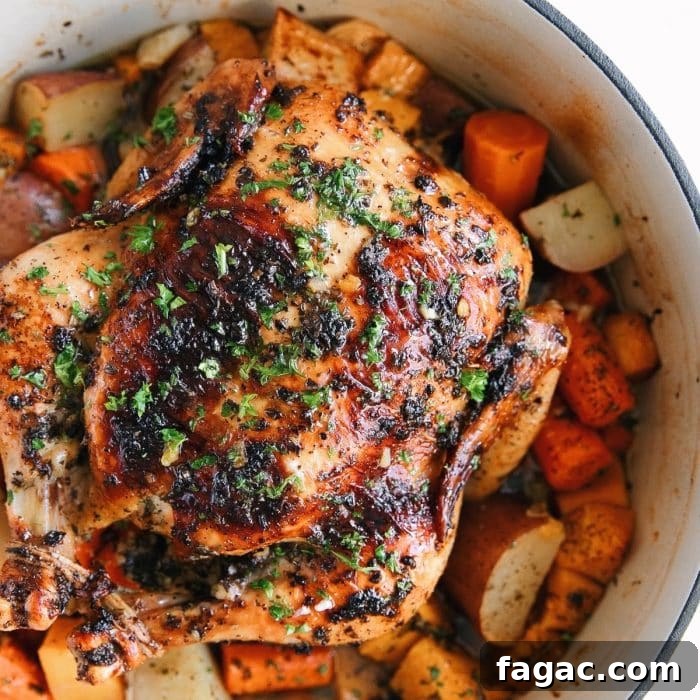
This Roast Chicken is coated with garlic-herb butter and roasted on a bed of tender root vegetables for a juicy, flavorful bird with crisp, golden skin. It’s an easy one-pan roast the whole family will enjoy.
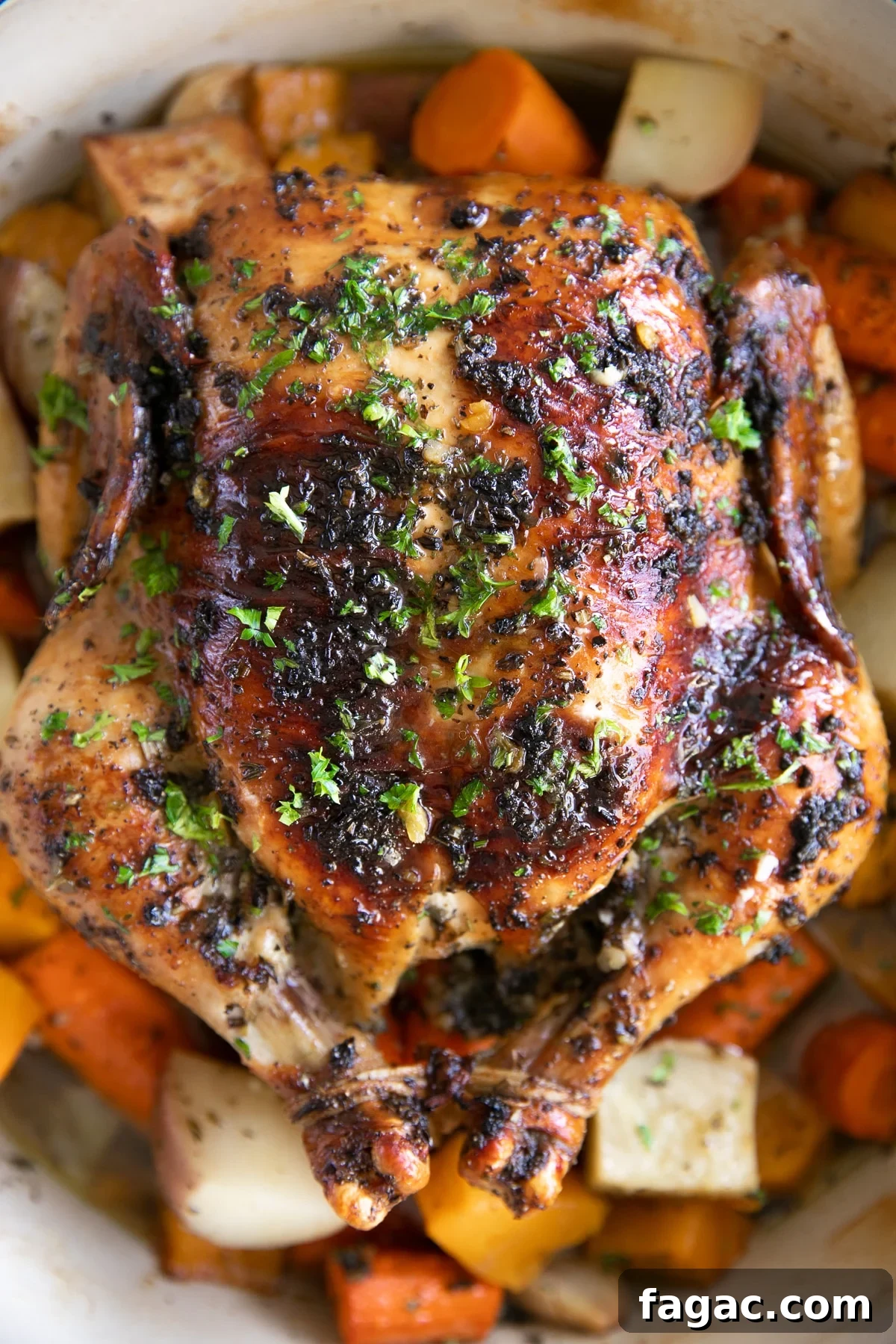
Simple to prepare, this roast chicken is a step up from plain baked chicken breasts. The bird roasts alongside a mix of vegetables—onion, potatoes, carrots, and butternut squash—so you get a complete, flavorful meal with minimal fuss.
If you’ve never roasted a whole chicken before, don’t worry. The method is straightforward and not nearly as intimidating as it seems.
Table of Contents
- Why This Recipe Works
- Roasted Chicken Ingredients
- How to Roast Chicken
- Ideal Oven Temperature For Roast Chicken
- What to Serve with Roast Chicken
- Storage and Leftovers
- Roast Chicken Recipe
Why This Recipe Works
- Rubbing the chicken with butter, garlic, and herbs adds deep flavor, encourages even browning and crisp skin, and helps retain juiciness during roasting.
- Roasting the chicken with vegetables creates an easy, satisfying one-pan meal, but you can omit the vegetables if you prefer to roast the chicken alone.
- Starting at a high temperature and lowering it partway through helps develop crispy skin while ensuring the meat stays tender and cooks evenly.
- Using a digital meat thermometer is the most reliable way to check doneness and avoid overcooking.
- Save the leftover carcass to make homemade chicken stock for soups and sauces.
Roasted Chicken Ingredients
Below are the key ingredients and suggested substitutions. The full printable recipe with measurements appears in the recipe card below.
- Whole chicken: A 4–5 pound bird works well, though any size can be used—adjust cooking time accordingly.
- Salt and pepper: Pat the chicken dry and season generously for the best flavor and crisping.
- Garlic herb butter: A mixture of butter, olive oil, lemon juice, minced garlic, and fresh herbs (oregano, rosemary, parsley, thyme). If fresh herbs aren’t available, a tablespoon of dried Italian seasoning works as a substitute.
- Additional butter: Adding butter under the skin keeps the breast meat especially moist and flavorful.
- Vegetables (optional): Potatoes, carrots, onions, and butternut squash are excellent roasted with the chicken. You can also use beets, celery, turnips, or parsnips.
Cooking tip: This roast chicken can be cooked in any oven-safe pan. A Dutch oven, cast-iron skillet, roasting pan, or rimmed baking sheet all work well—choose what you have on hand.
How to Roast Chicken
1. Preheat the oven. Start at 475°F (245°C) for 10 minutes, then lower to 375°F (190°C) for the remainder of the cooking time. If you prefer a single temperature, set the oven to 375°F (190°C) and roast throughout.
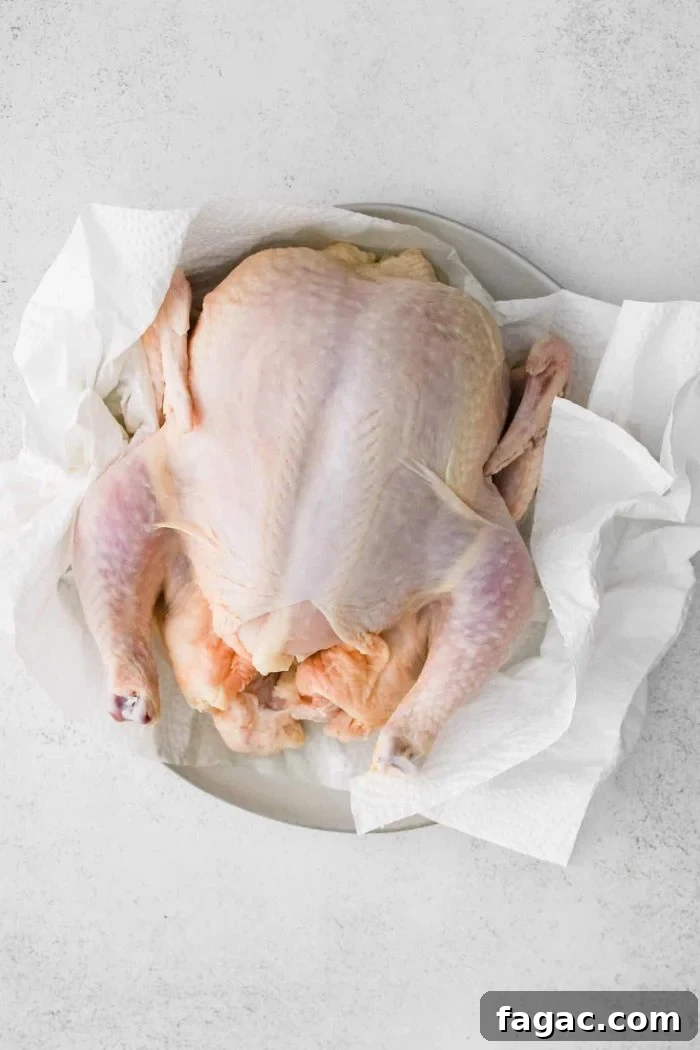
2. Season the chicken. Let the chicken sit at room temperature for up to 30 minutes if time allows. Remove neck and giblets, pat the chicken dry, then season generously with salt and black pepper.
3. Make the garlic herb butter. Melt four tablespoons of butter in a small bowl. Stir in olive oil, juice from one lemon, three tablespoons of fresh minced herbs (a mix of oregano, rosemary, thyme, and parsley), and three cloves of minced garlic.
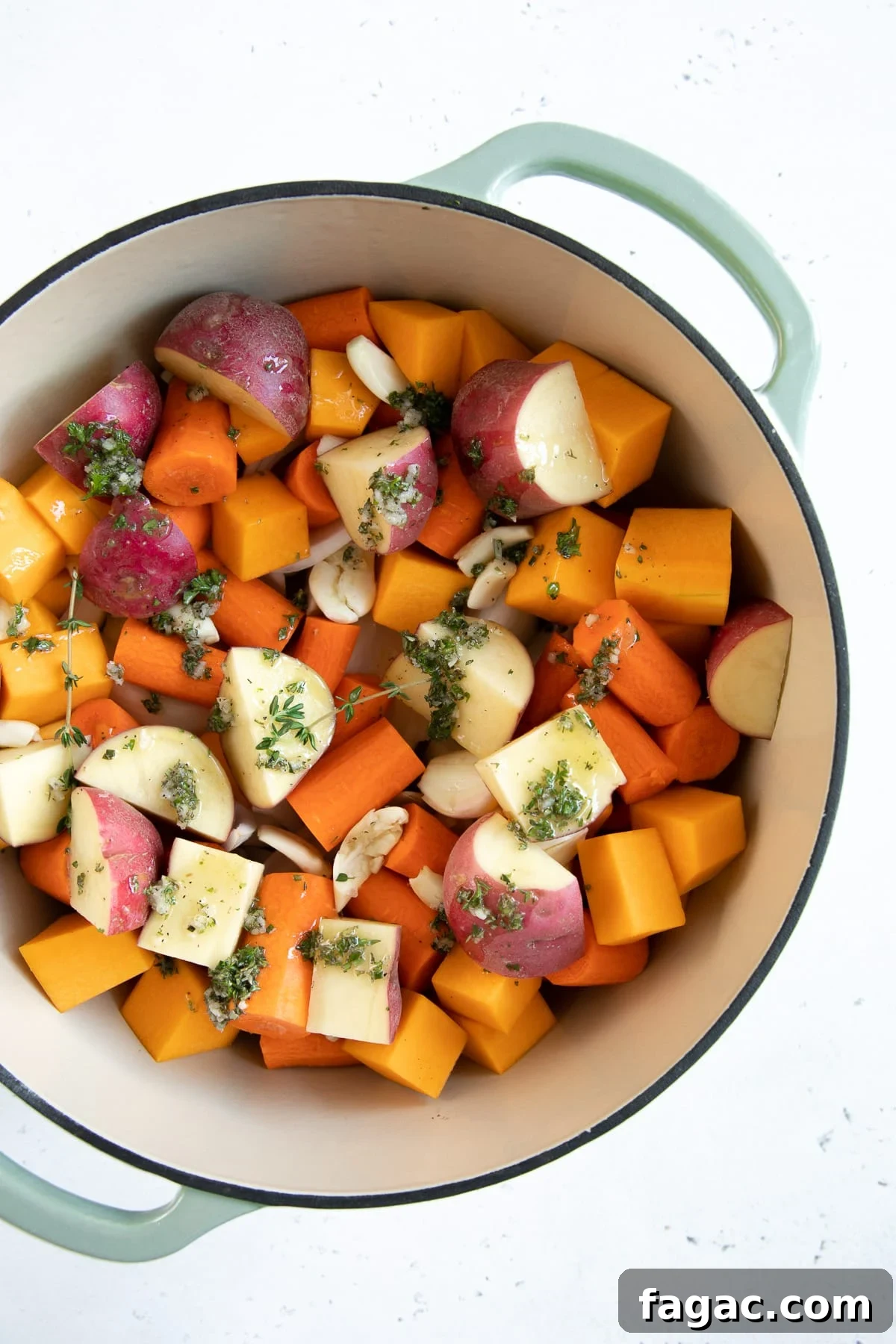
4. Prepare the vegetables. Chop the vegetables and place them in a large Dutch oven, roasting pan, or cast-iron skillet. Smash the remaining garlic cloves and add them to the vegetables. Season with salt and pepper and drizzle with 1–2 tablespoons of the garlic herb butter.
5. Coat the chicken. Pour about half of the garlic herb butter over the chicken and rub it all over the surface and inside the cavity. If the butter solidifies on contact, continue to rub it in by hand so it’s evenly distributed.
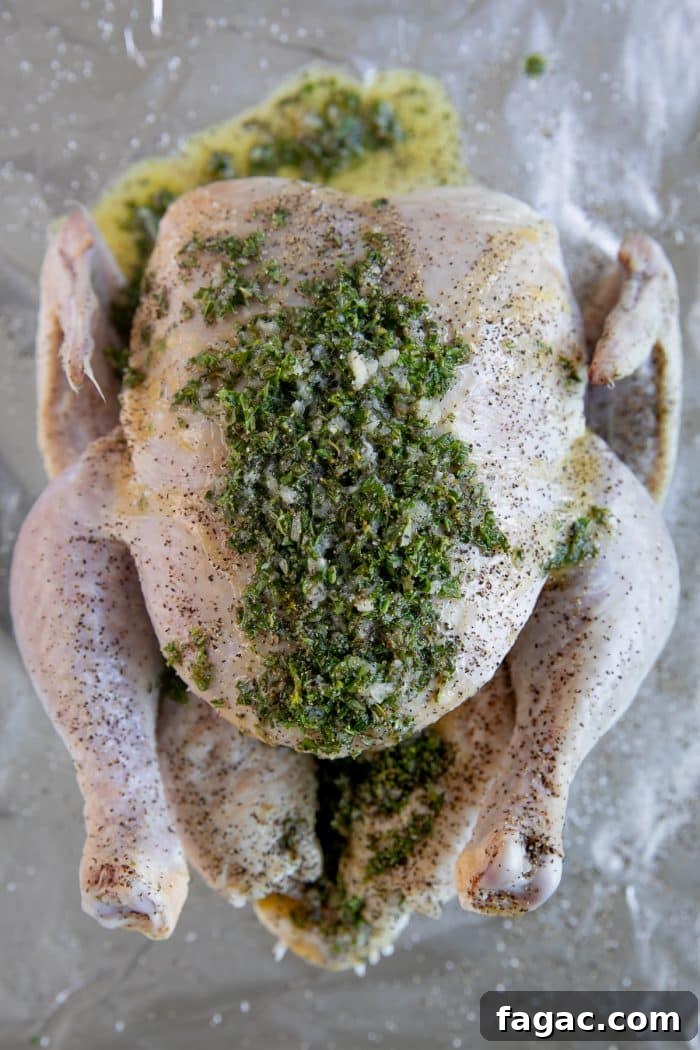
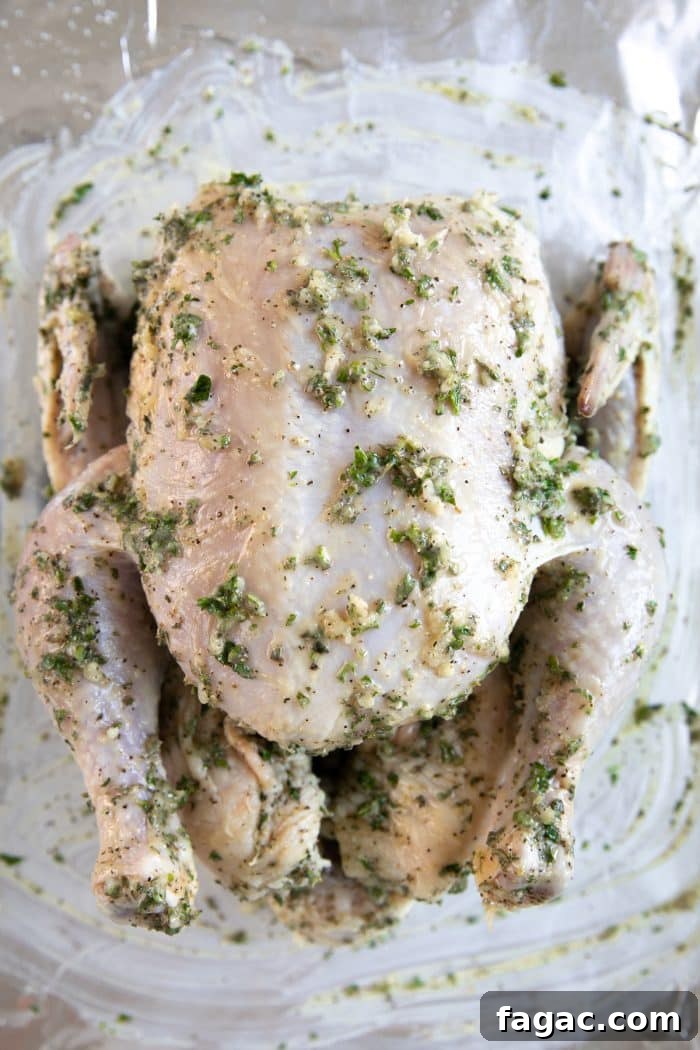
6. Stuff and truss. Place a few carrot pieces and the quartered lemon inside the cavity. Gently separate the skin from the breast and tuck the remaining butter underneath. Tie the legs together with kitchen twine.
7. Position and finish. Set the chicken breast-side-up on top of the vegetables. Pour any remaining garlic herb butter over the vegetables and bird.

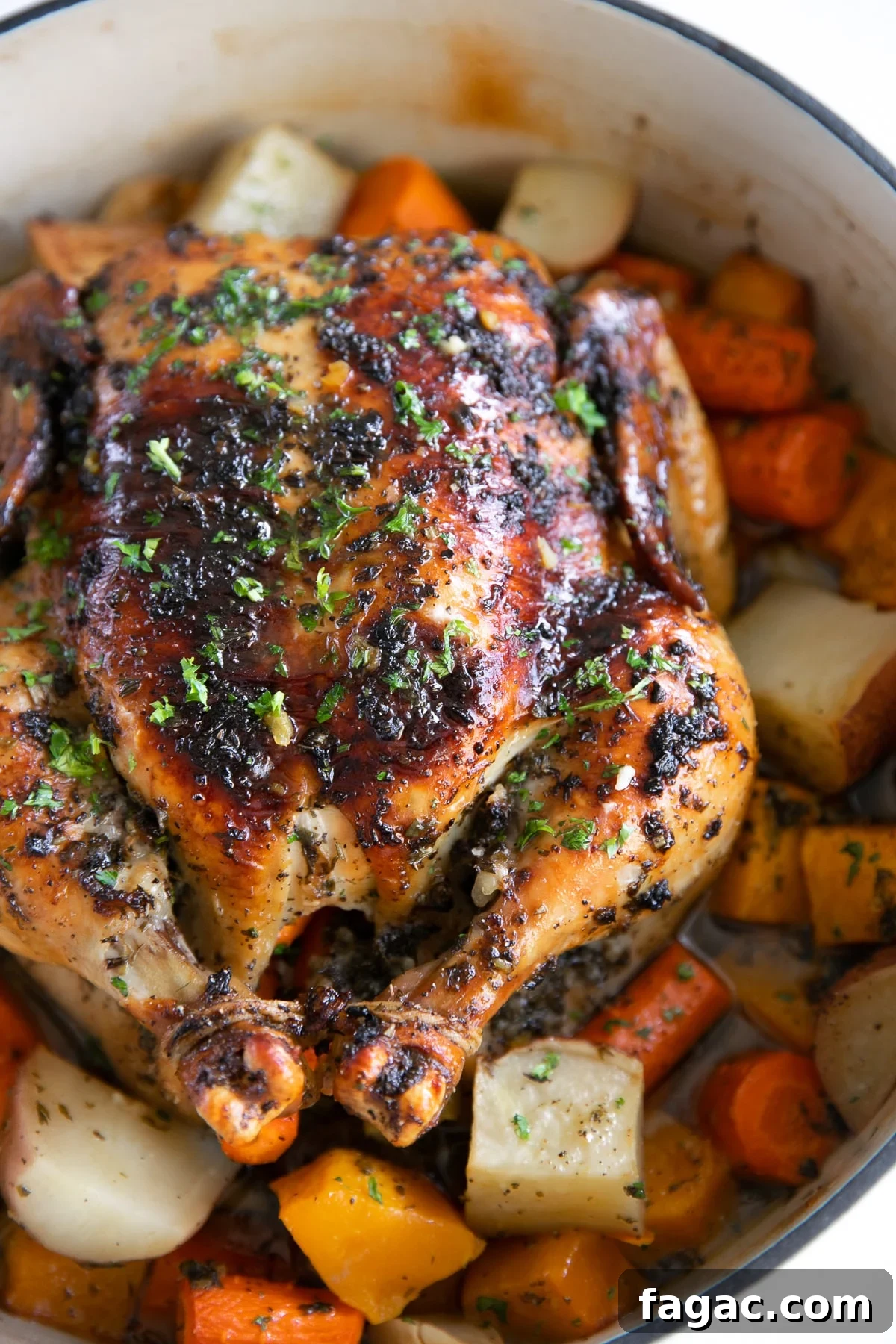
8. Roast the chicken. Roast uncovered at 475°F (245°C) for 10 minutes, then lower to 375°F (190°C), tent with foil, and continue cooking for roughly 1 hour 20 minutes, basting once or twice. Remove the foil for the last 15–20 minutes to crisp the skin.
9. Check for doneness. The chicken is done when the thickest part of the thigh reaches about 155°F on a digital thermometer; it will rise another 5–10°F while resting.
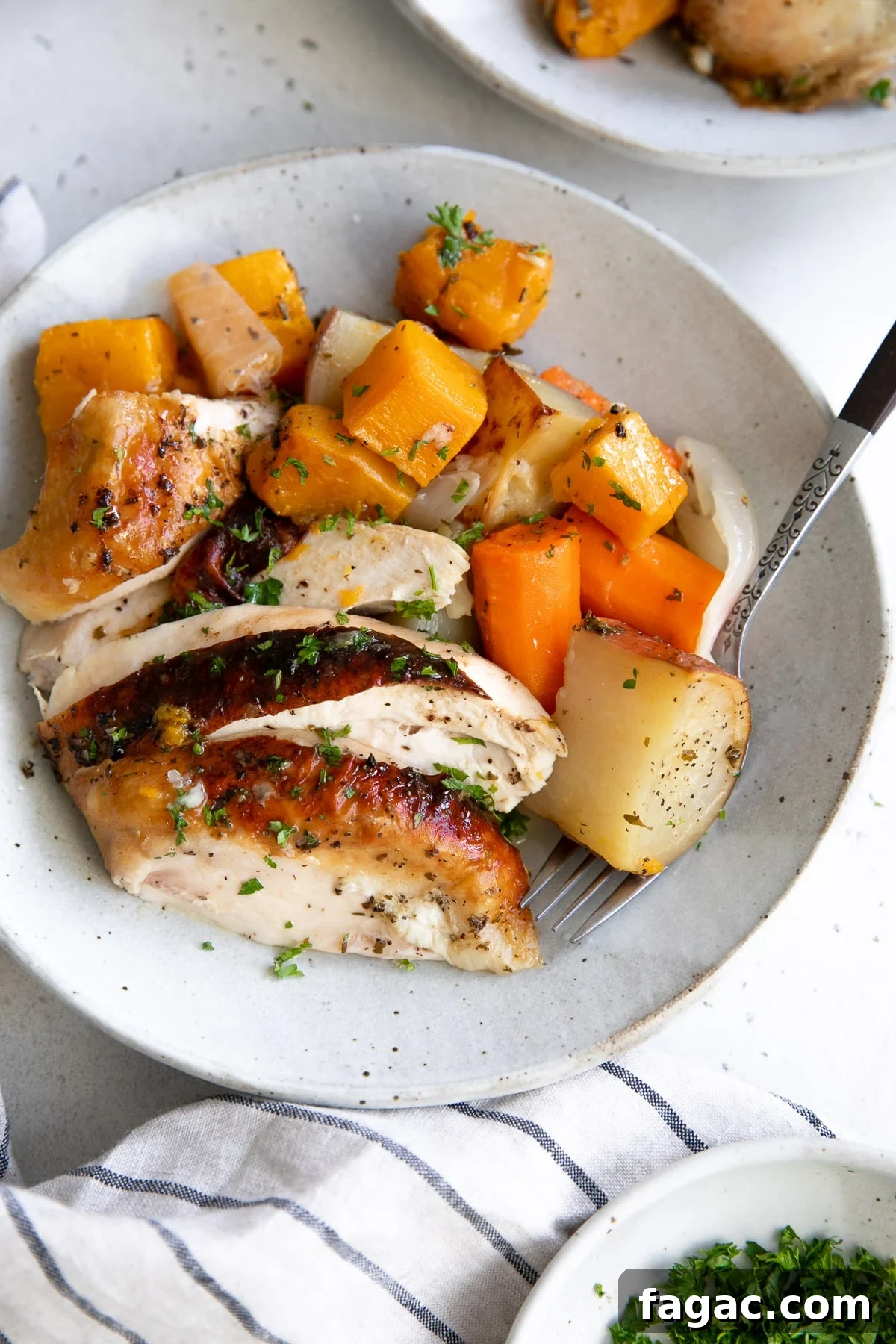
10. Rest and serve. Tent the bird with foil and rest for 10 minutes before carving. Serve with pan juices and a sprinkle of fresh parsley if desired.
Ideal Oven Temperature For Roast Chicken
Your choice of oven temperature depends on time and how crispy you want the skin:
- 350°F (175°C) for about 1 hour 30 minutes for very tender meat and softer skin.
- 425°F (220°C) for about 1 hour to achieve firmer, juicy meat with crisp skin.
- Start at 475°F (245°C) for 10 minutes, then reduce to 375°F (190°C), tent the bird, and roast until done for a balance of crisp skin and juicy meat; remove foil near the end to re-crisp.
The most reliable test for doneness is a digital meat thermometer inserted into the thickest part of the thigh, avoiding the bone.
What to Serve with Roast Chicken
Roast chicken is versatile and pairs with many sides. Serve with the roasted vegetables from the pan and classics like mashed potatoes, biscuits, or dinner rolls. If you roast the chicken without vegetables, try roasted Brussels sprouts, sautéed zucchini, or green beans on the side.
Storage and Leftovers
Store leftovers in an airtight container in the refrigerator for up to 4 days. Use the remaining meat and vegetables in soups, salads, or sandwiches. The carcass makes a rich homemade chicken stock.
Roast Chicken Recipe
 Jessica Randhawa
Comment
Ingredients
- 1 4-5 pound chicken, brought to room temperature with neck and giblets removed
- Salt and pepper, to season
- ½ cup butter, divided (1 stick)
- 3 tablespoon olive oil
- 2 lemons (1 juiced, 1 quartered)
- 3 tablespoon fresh herbs, minced (mix of oregano, rosemary, parsley, thyme)
- 10-15 cloves garlic, divided
- Red chili flakes (optional)
- 2 large yellow onions, peeled and quartered
- 5 large carrots, peeled and cut into 2-inch segments
- 4 cups butternut squash, peeled and cubed
- 3 large red potatoes, chopped into 1-inch pieces
Instructions
- Preheat the oven: Start at 475°F (245°C) for 10 minutes, then reduce to 375°F (190°C) for the remainder of the cook time.
- Remove chicken from the fridge and let it sit up to 30 minutes if possible. Remove neck and giblets, pat dry, and season well with salt and pepper.
- Melt four tablespoons of butter. Mix in olive oil, juice of one lemon, three tablespoons of minced fresh herbs, and three cloves of minced garlic.
- Chop the vegetables and place them in a large oven-safe pan. Smash the remaining garlic cloves and add to the vegetables. Season and drizzle with 1–2 tablespoons of the garlic herb butter.
- Spread half of the garlic herb butter over the chicken, rubbing it over the skin and inside the cavity. Tuck the remaining butter under the breast skin and stuff the cavity with a few carrots and the quartered lemon. Tie the legs with kitchen twine.
- Place the chicken breast-side-up on top of the vegetables. Pour any remaining butter over the bird and vegetables.
- Roast uncovered 10 minutes at 475°F, then reduce to 375°F and continue roasting, tented with foil, for about 1 hour 40 minutes total (or roughly 20 minutes per pound), basting once or twice. Remove foil for the final 15–20 minutes to crisp the skin.
- Check the internal temperature in the thickest part of the thigh; remove the chicken when it reaches about 155°F, allowing carryover to bring it to a safe final temperature.
- Tent the chicken and rest 10 minutes before carving. Serve with pan juices and fresh parsley if desired.
Notes
- This roast chicken can be cooked in any oven-safe pan such as a Dutch oven, cast-iron skillet, roasting pan, or rimmed baking sheet.
- If you prefer one oven temperature, set the oven to 375°F (190°C) and roast for the full time without the high-to-low method.
- Use a digital meat thermometer and insert it into the thickest part of the thigh, avoiding the bone, to confirm doneness.
Nutrition
Nutrition information is an estimate and should be used as a guide only.
Did you make this? Leave a comment below!