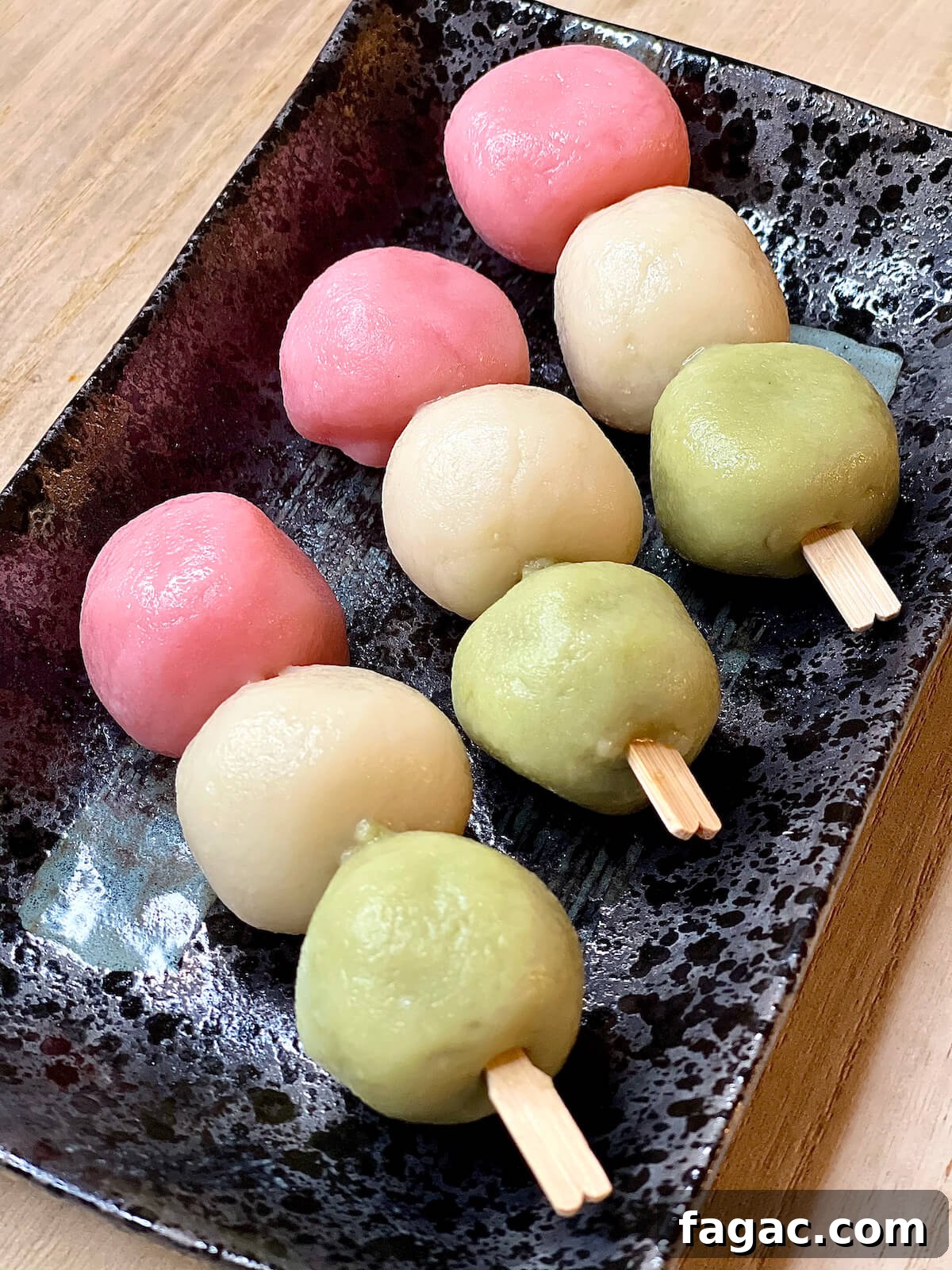
Hanami dango is a chewy Japanese sweet recognized by its three-layered colors: green, white, and pink. Traditionally enjoyed during hanami (flower viewing) in cherry blossom season, it’s simple enough to make and delightful year-round.
Hanami means “flower viewing” in Japanese, and hanami dango is a popular treat to enjoy while admiring sakura. Cherry blossom season in Japan typically runs from mid-March through early May, making this dessert a seasonal favorite, though it’s equally enjoyable any time of year.
Taste
Silken tofu
Silken tofu gives the dango a soft, smooth texture that balances the chewiness of the rice flour. When I tried omitting tofu, the result was too doughy. You only need a small amount of silken tofu for this recipe, so leftover tofu can be used in smoothies, soups like soondubu-jjigae, or other dishes.
Mochiko
Mochiko is finely milled glutinous rice flour that yields an ideal texture for dango. The package often labels it as sweet rice flour, but that is just another name for glutinous rice flour. Any brand of glutinous rice flour will work, but Mochiko is a reliable choice because it is processed to a very fine consistency that produces smooth, tender mochi-like treats.
Iconic colors
Hanami dango is traditionally arranged in the order green, white, then pink. The three colors are widely recognized and even appear in emoji form. To color the dango, I use matcha (green tea powder) for the green and a small amount of red gel coloring for the pink. Coloring is optional and mostly for presentation — it doesn’t significantly change the flavor, but it makes the dango more festive.
How to make this without a scale
A kitchen scale is recommended for consistent results, especially with doughs that require a precise texture. If you don’t have a scale, you can still make hanami dango by adjusting ingredients by feel. Start with what you think are equal parts mochiko and silken tofu, then mix and assess the texture. The dough should be very soft — similar to a soft earlobe — but not so sticky that you can’t shape it. If the dough feels too firm, add more tofu a little at a time. If it’s too soft to form into balls, sprinkle in a bit more mochiko. The aim is a soft but shapable dough.
Watch my video tutorial below!
Hanami Dango
Author: Jasmine and Tea
Yield: 4 skewers 1x
Ingredients
Scale
- 100g Mochiko (glutinous rice flour)
- 100g silken tofu
- 50g granulated sugar
- matcha and red gel coloring (optional)
Instructions
- Weigh the ingredients with a scale for best results. If you don’t have a scale, estimate equal volumes of mochiko and silken tofu and adjust by feel so the dough is very soft but still manageable.
- Divide the dough into three portions. Add matcha to one portion and a tiny amount of red gel to another to achieve the green and pink colors; leave the middle portion plain for white.
- Roll each portion into small balls, about 20g each. If the dough is too firm, add a touch more silken tofu. If it’s too sticky to shape, fold in a little more mochiko. Aim for a soft, slightly yielding texture.
- Bring a pot of water to a boil. Gently drop the dango balls into the boiling water. After about 1 minute of boiling, reduce heat, cover, and simmer for roughly 4 minutes. When the dango float, transfer them immediately to an ice bath to stop cooking, then skewer three colors onto bamboo sticks.
Notes
Mochiko produces a smooth texture I prefer, but any glutinous rice flour will work. If adding gel color softens the dough too much, incorporate a little extra mochiko until the dough can be shaped easily.
Once cooked and skewered, hanami dango can be served plain, lightly brushed with a sweet syrup, or enjoyed with other seasonal treats during hanami gatherings.