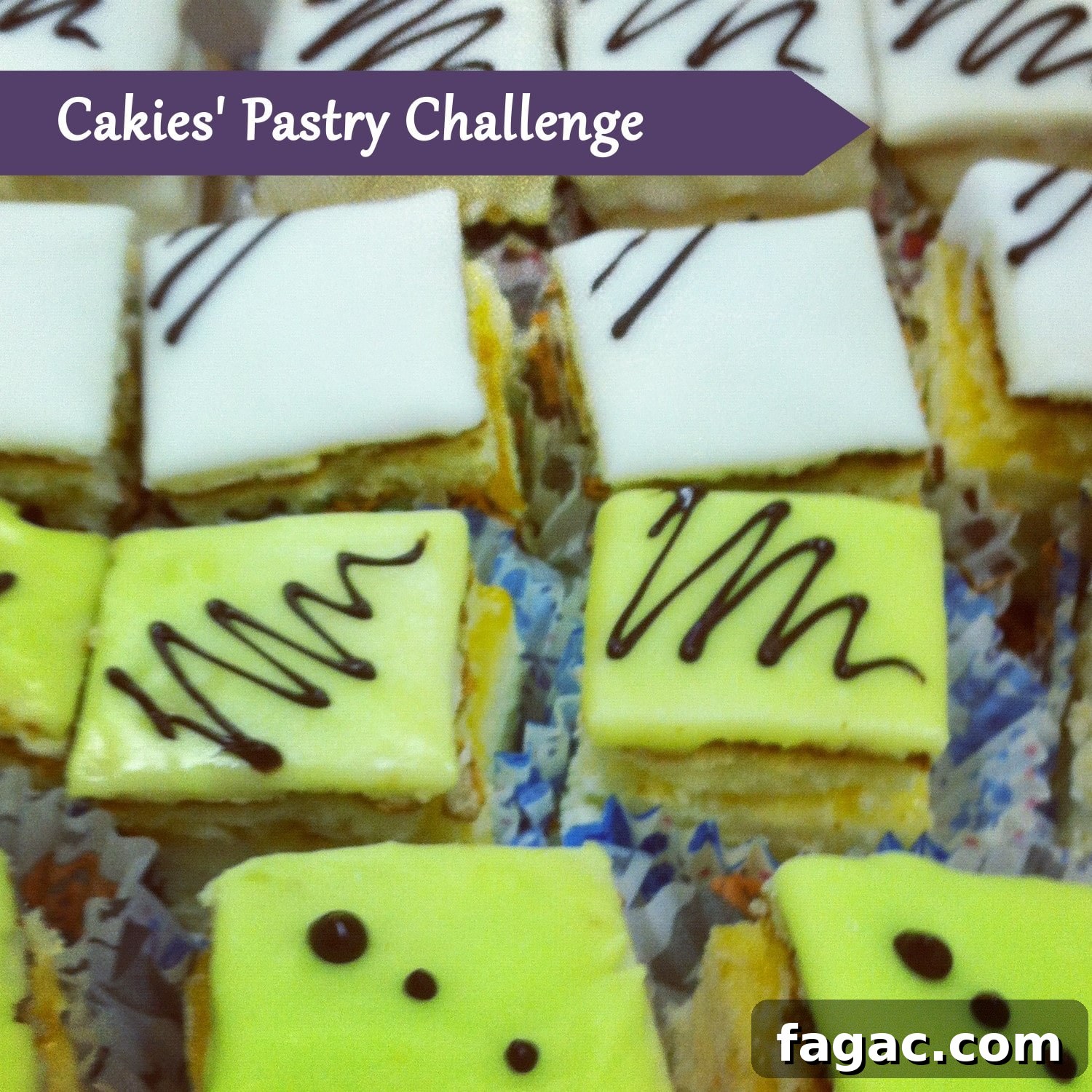
The 23rd day of the course was exceptionally busy. We prepared petit fours, macarons, and croquettes, each requiring its own techniques and attention to detail.
Assembling petit fours is straightforward in principle. You start with a sponge cake, slice it into thin layers, add a layer of filling, and spread a thin coat of buttercream on top. A very thin sheet of marzipan is laid over the buttercream, and then the cake is cut into the desired petit four shapes. The tricky part comes with the finishing: each petit four must be dipped upside down into fondant icing. Using a slightly bent fork to hold and dip the pieces is the traditional method, and it takes a steady hand to get a smooth, even coating. Although it requires practice, I was pleased with my results and enjoyed the process of refining the finish.
We also started on macarons, which are always fun but demand patience. One of the most important steps is allowing the piped shells to dry for a specific amount of time so that a thin skin forms before baking. This helps develop the classic smooth top and the characteristic “feet.” I chose to make green shells filled with a fresh lime buttercream. They didn’t gain as much height as I hoped, but the flavor was spot on. Macarons are a skill that improves with repetition, so I plan to practice more at home until I can achieve the ideal rise and texture.
Finally, we made croquettes. You might wonder why croquettes appear in a pastry course, but historically croquettes were developed by pastry chefs and are a classic component of patisserie training. It’s a neat piece of culinary history to keep in mind. The filling turned out well, though I didn’t finish the final assembly during class. I took the remaining steps home and completed them there. For a first attempt, they were surprisingly good—crispy on the outside with a well-seasoned, creamy interior.