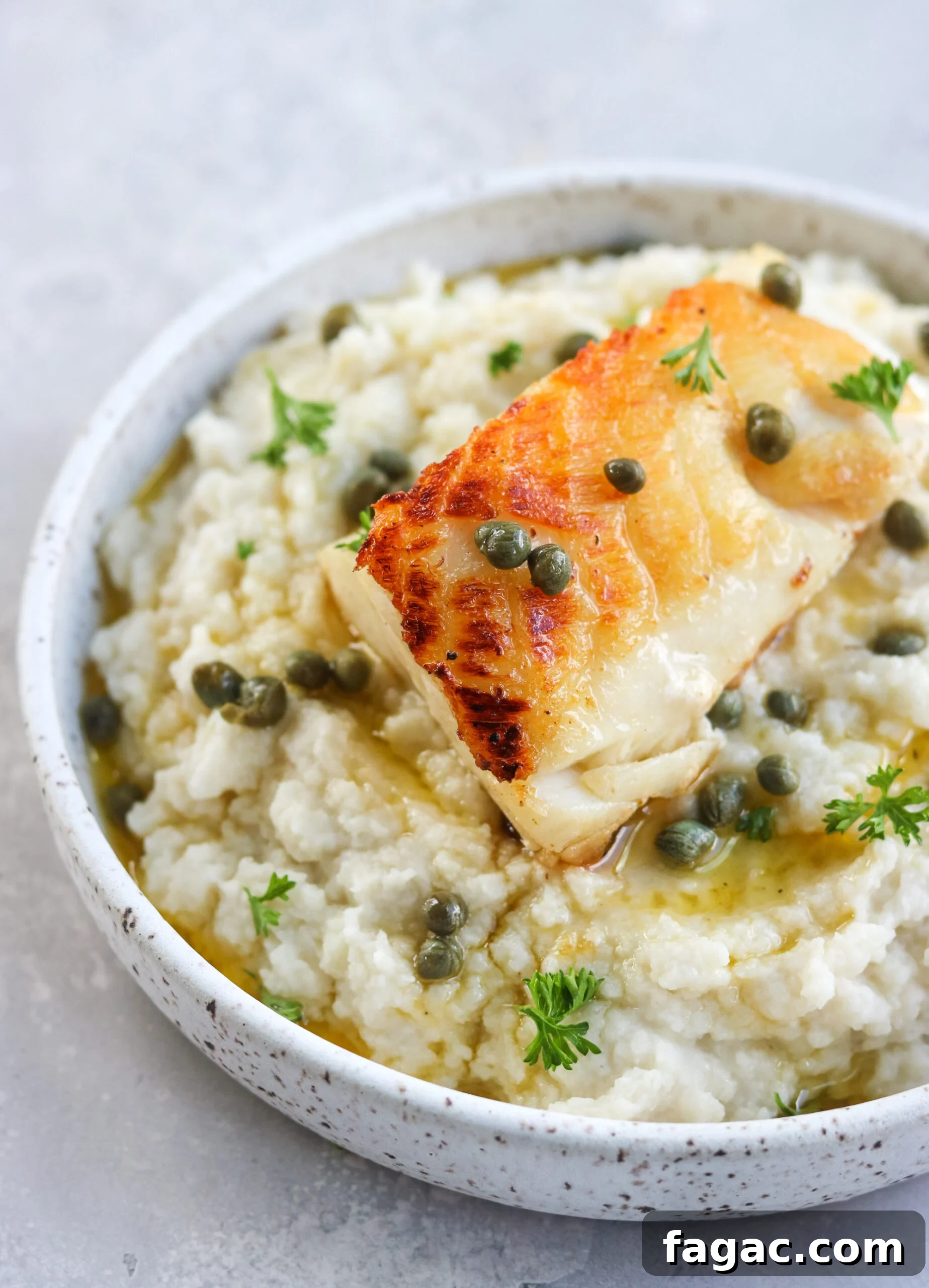
This Chilean sea bass recipe may sound elegant, but it’s one of the most forgiving fish to cook at home. A hot skillet gives a quick, sizzling sear that locks in its natural richness, a few hands-off minutes in the oven finish the center, and a bright lemon-caper butter brings everything together. You’ll have a restaurant-quality meal on the table in about 20 minutes.
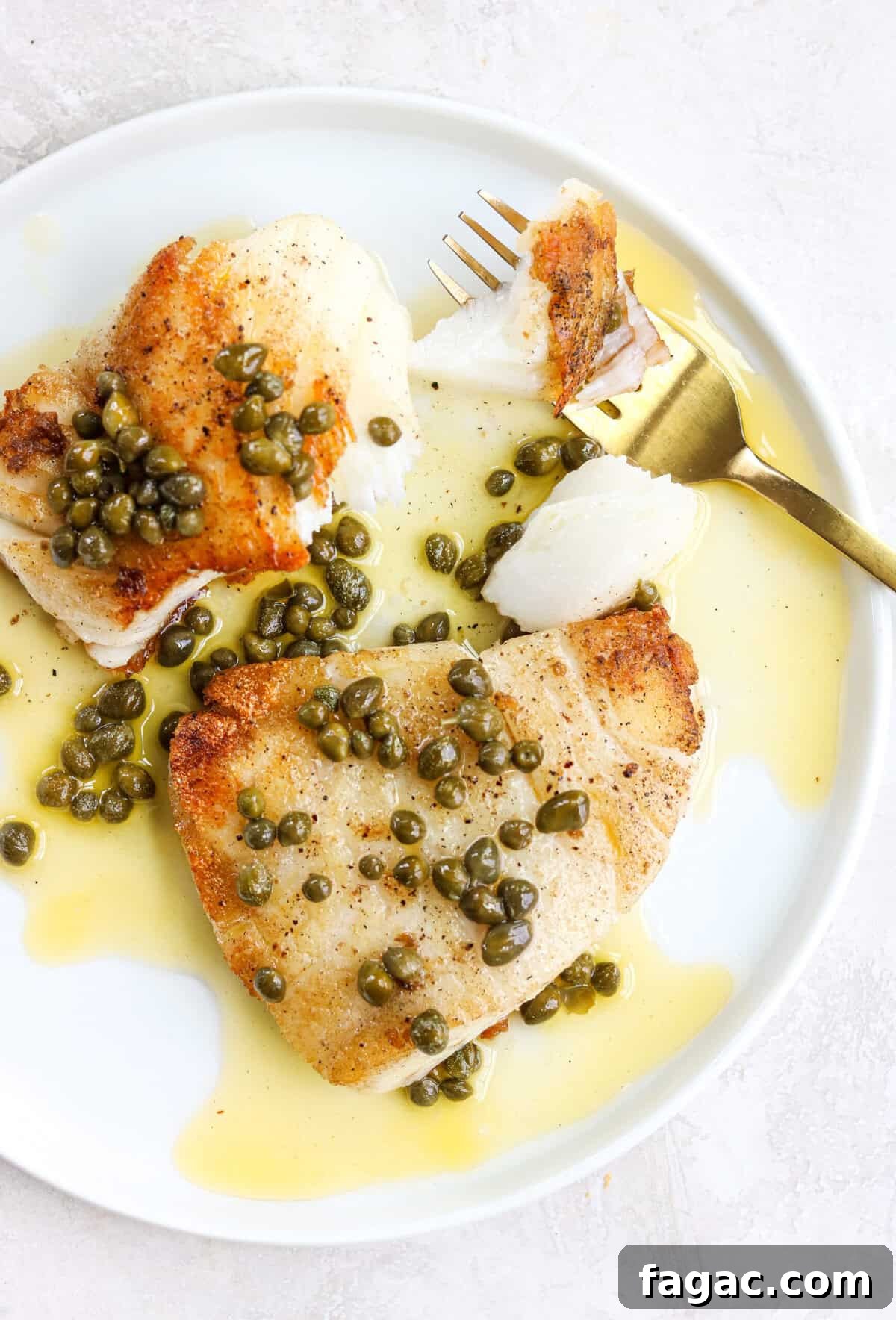
Why You’ll Love This Chilean Sea Bass Recipe
Patagonian toothfish—sold in restaurants as Chilean sea bass—has a naturally buttery texture thanks to its healthy fats, so it stays moist even if you’re still getting comfortable at the stove. The sear-then-bake method makes flaky, tender fillets every time without special tools.
The sauce is pantry-friendly: a knob of butter (or ghee), a squeeze of lemon, and briny capers form a quick pan sauce that tastes far more complex than the few minutes it takes to make. Serve a fillet with risotto, mashed potatoes, or a simple vegetable side for a meal that’s perfect for company or a weeknight.
Ingredients You’ll Need
Below are the core ingredients for this recipe. Exact amounts are in the recipe card further down.
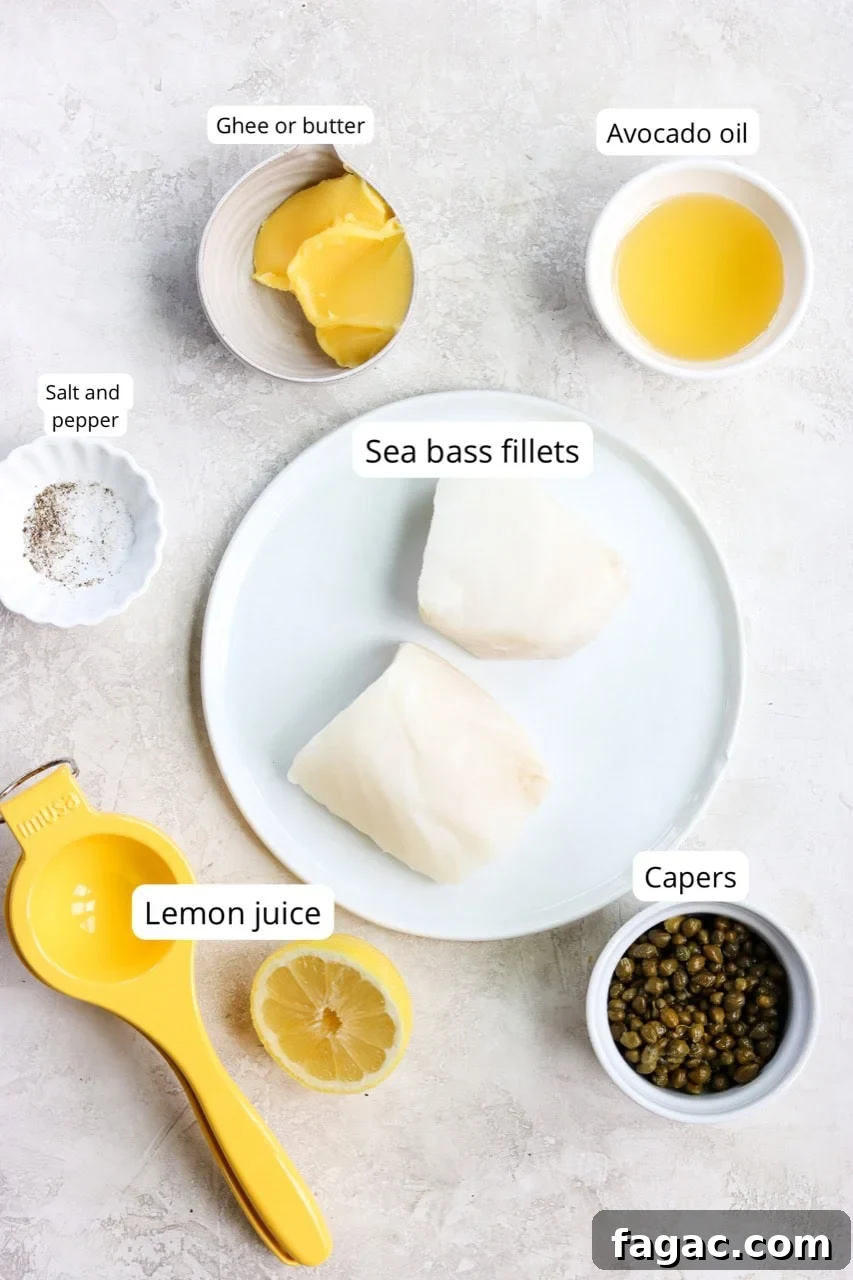
- Chilean sea bass fillets – rich, buttery flesh; look for responsibly sourced fish.
- Avocado oil – high smoke point for a clean sear.
- Ghee or butter – creates a silky lemon-caper sauce; vegan butter works too.
- Fresh lemon juice – brightens the sauce and balances the richness.
- Capers – add briny bursts of flavor.
- Dry white wine (optional) – a splash builds acidity and depth in the sauce.
- Fresh parsley or oregano – a final herb garnish for color and freshness.
- Sea salt & black pepper – simple seasoning to let the fish shine.
Fish-Buying Tip: Frozen fillets are fine—thaw overnight in the fridge and blot dry before cooking.
How to Cook Chilean Sea Bass
This recipe follows a simple sear-then-bake method for consistently buttery, flaky results.
Pat the fillets dry, season, sear skin-side down in a hot skillet, flip briefly, then finish in the oven until the center reaches 135–140 °F. Finish with lemon-caper butter and chopped herbs.
Step-By-Step Instructions
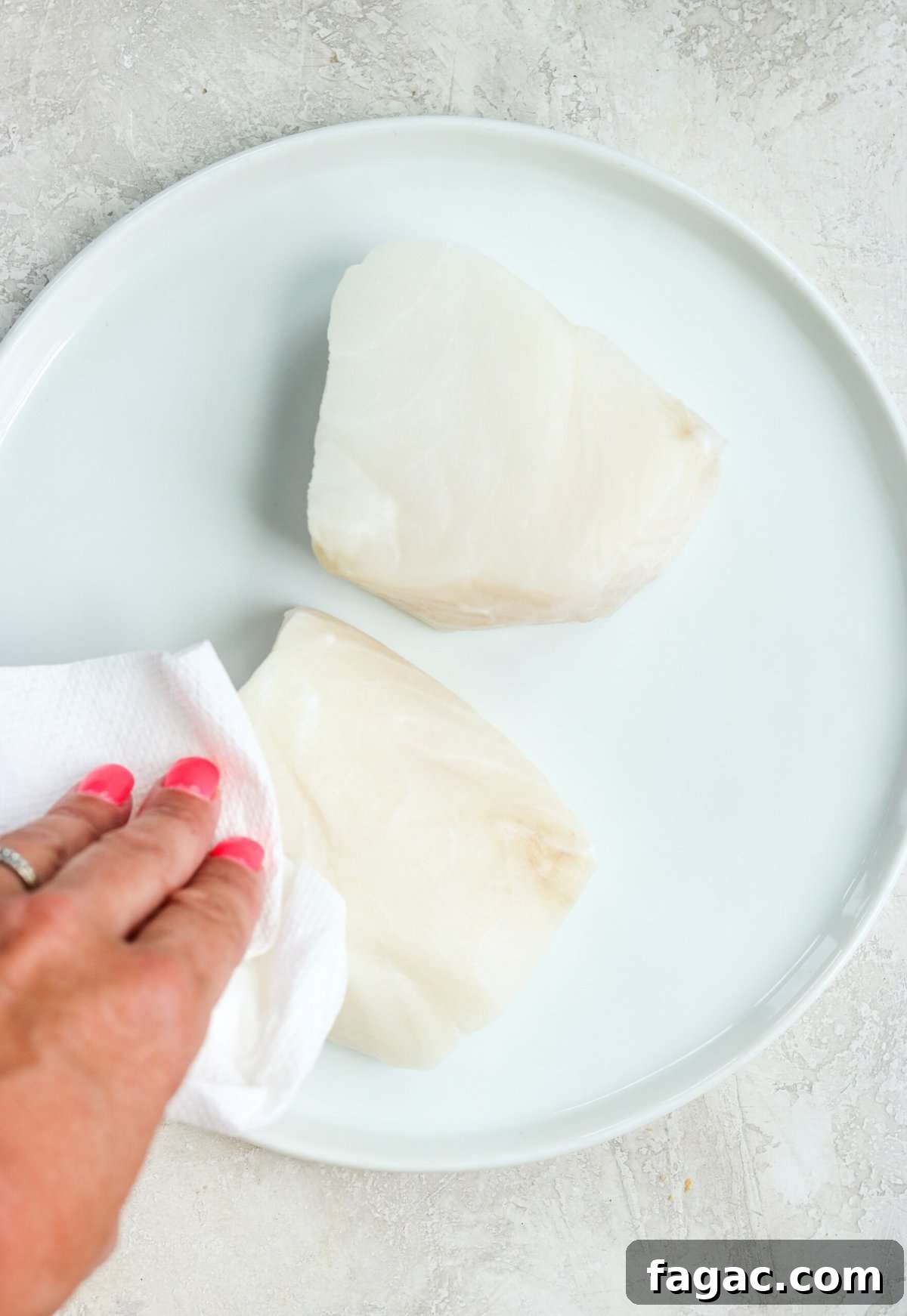
Step 1: Pat fillets completely dry.
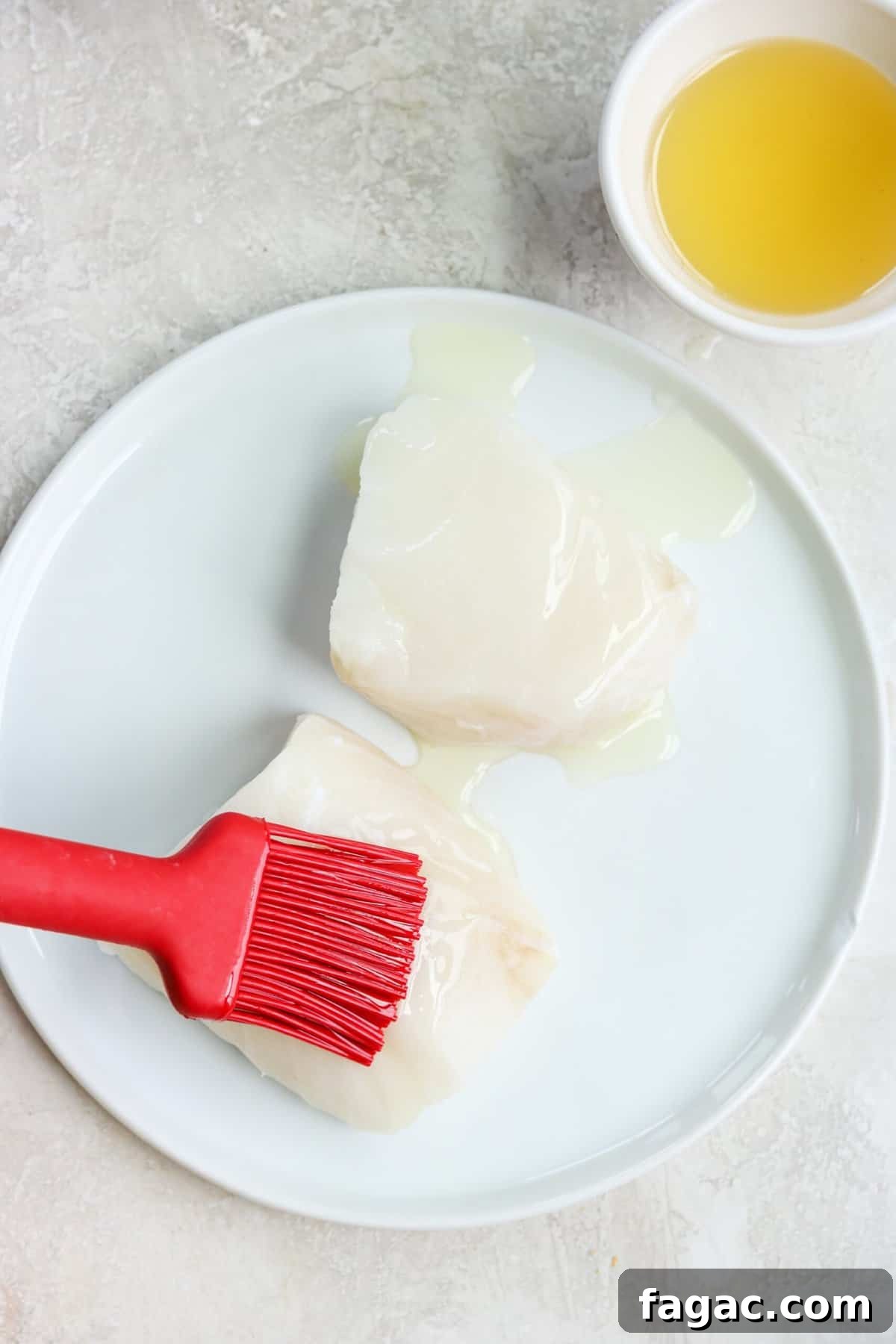
Step 2: Brush fillets with oil and season with salt and pepper.
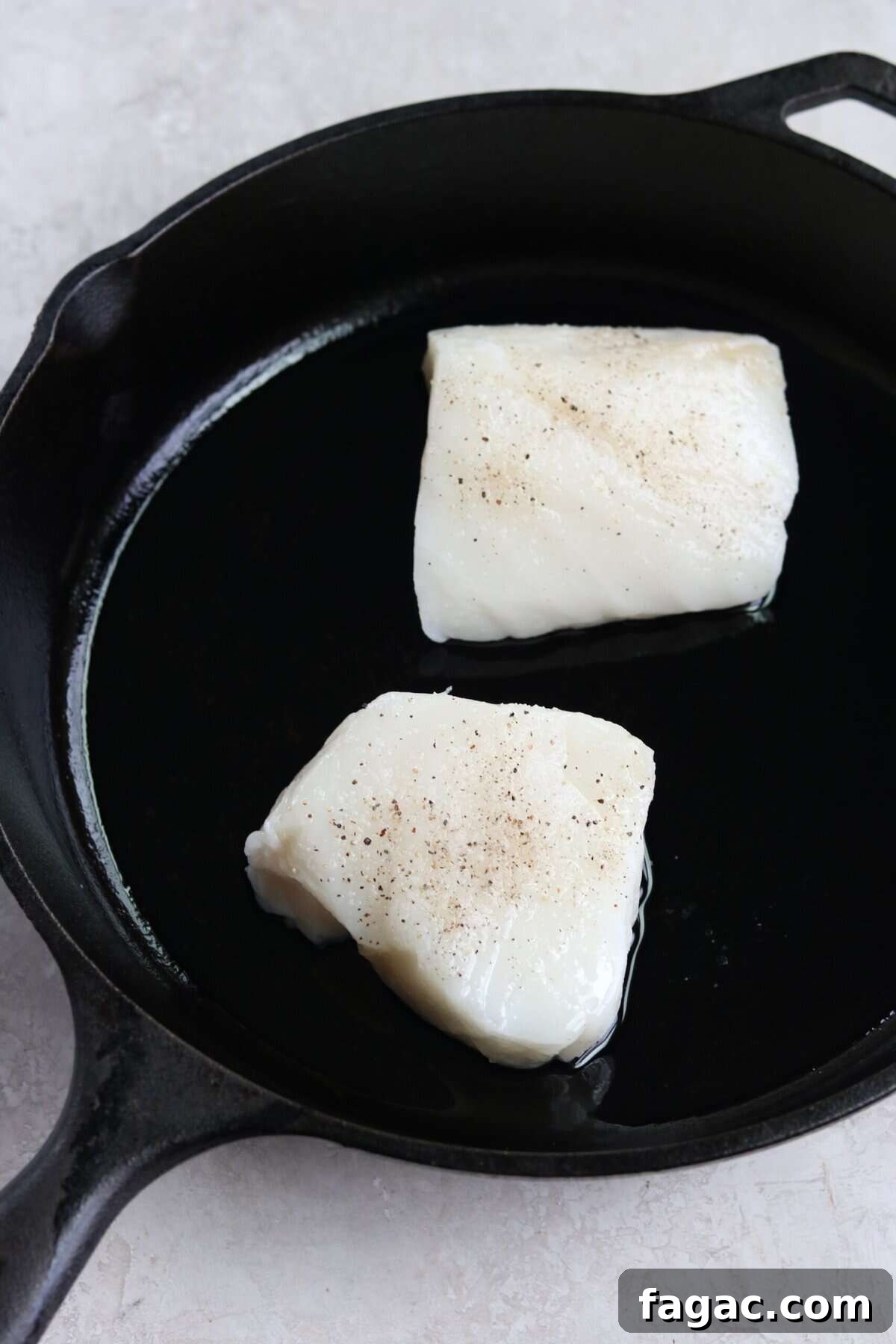
Step 3: Heat a cast-iron skillet over medium-high for 3 minutes. Add avocado oil and place fillets skin-side down. Sear 5 minutes without moving.
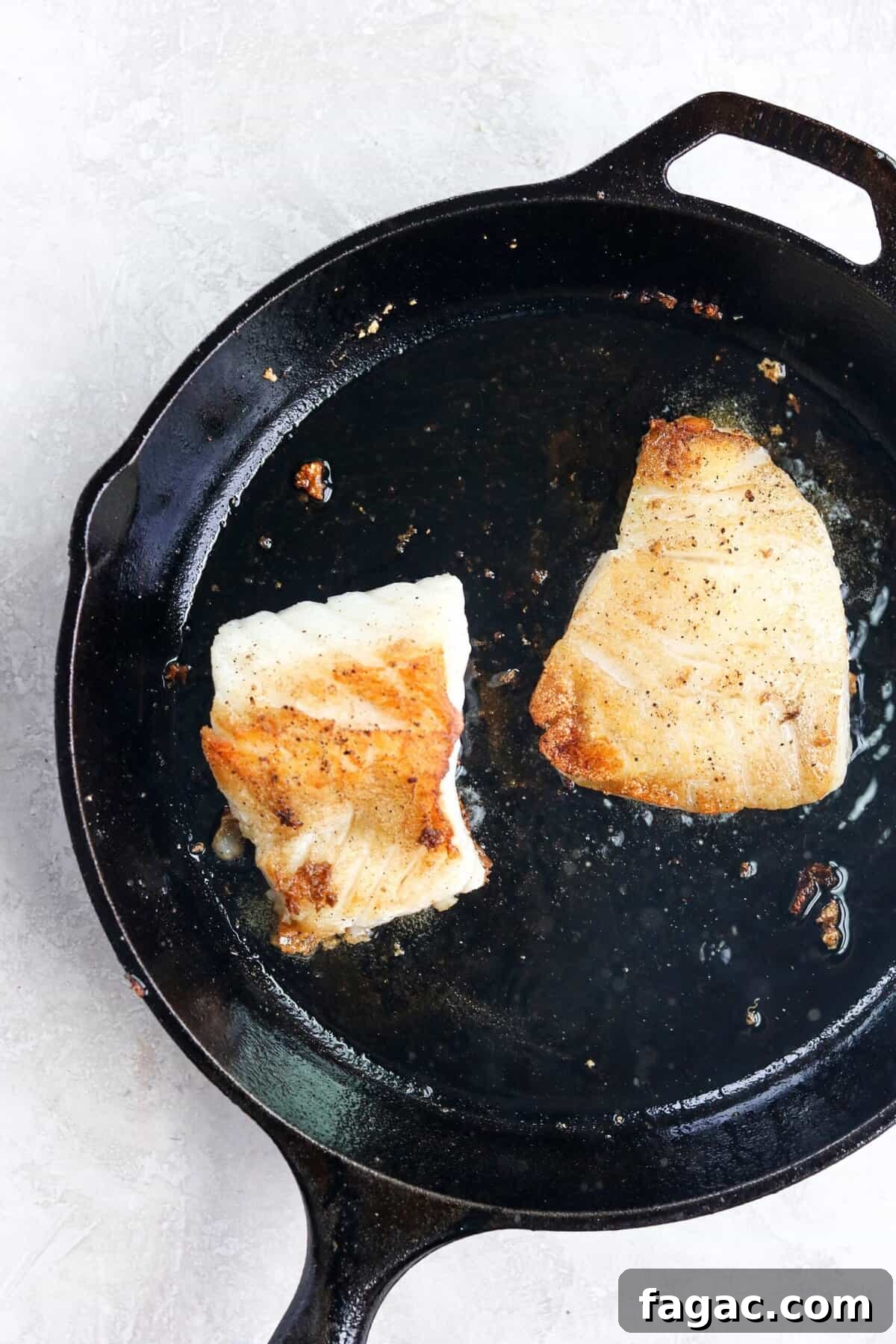
Step 4: Flip the fillets and transfer the skillet to a 425 °F oven. Bake about 5 minutes, or until an instant-read thermometer registers 135–140 °F at the thickest part.
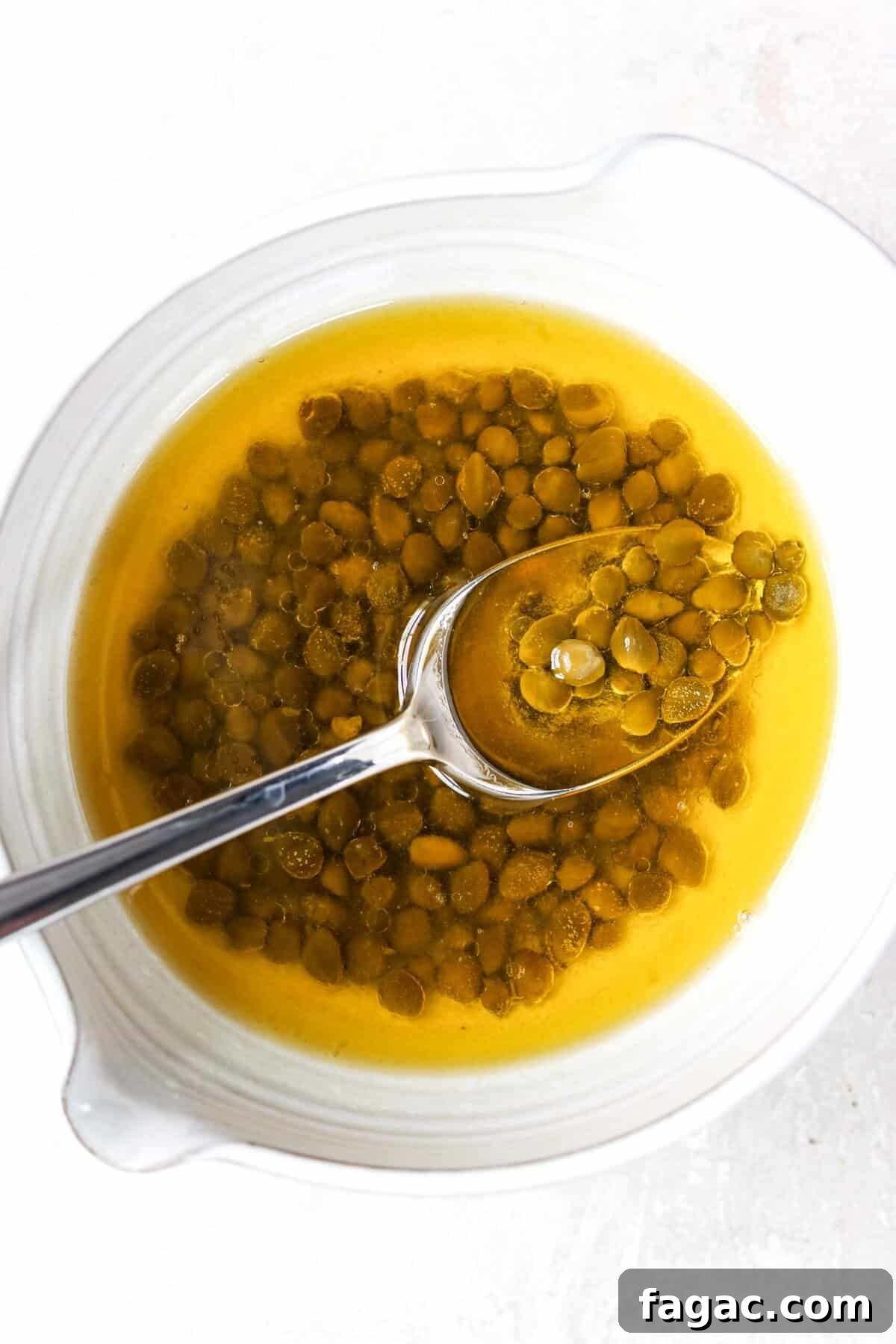
Step 5: While the fish cooks, melt ghee or butter in a small saucepan. Stir in lemon juice, capers, and a splash of white wine (if using). Simmer 1 minute to meld flavors.
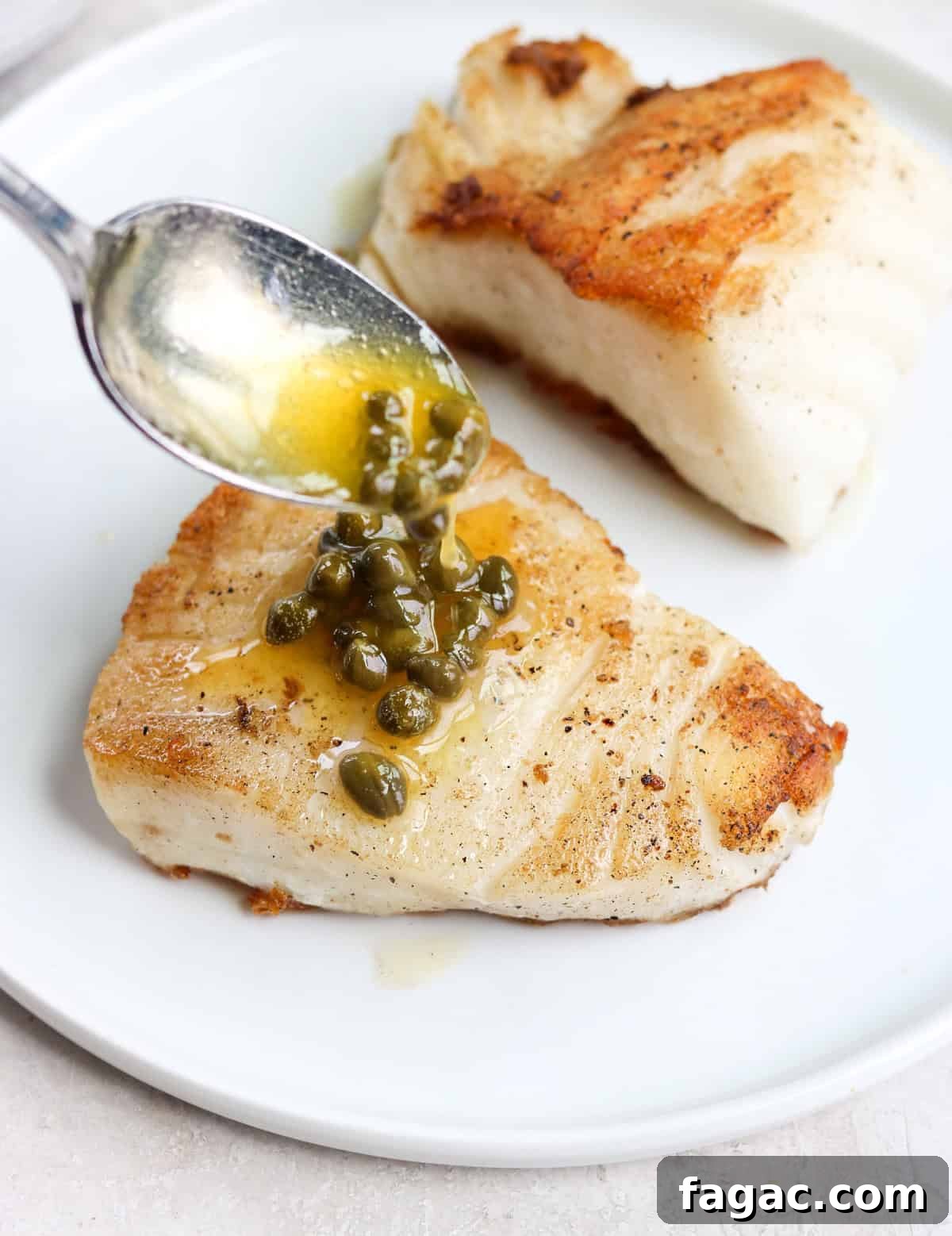
Step 6: Plate the fish, spoon the lemon-caper butter over the top, and finish with chopped parsley.
Mary’s Tips
- Preheat the pan. Let the skillet heat for a few minutes so the fillets develop a golden crust without sticking.
- Use a fish spatula. Its thin edge slips under delicate fillets without tearing the skin.
- Manage smoke. If your stove is powerful, start at medium and raise the heat once the oil shimmers.
- Make it dairy-free. Swap vegan butter or olive oil 1:1 for ghee.
Alternative Cooking Methods
| Method | Temp & Time | Good to Know |
|---|---|---|
| Air Fryer | 400 °F, 8–10 min, flip halfway | Lightly oil the basket; no skillet needed. |
| Oven-Roasted | 400 °F, ~15 min | Place on a parchment-lined sheet; baste with melted ghee halfway through. |
| Grill | Oiled grates, 2–3 min per side | A fish basket helps keep fillets intact. |
Serving Ideas
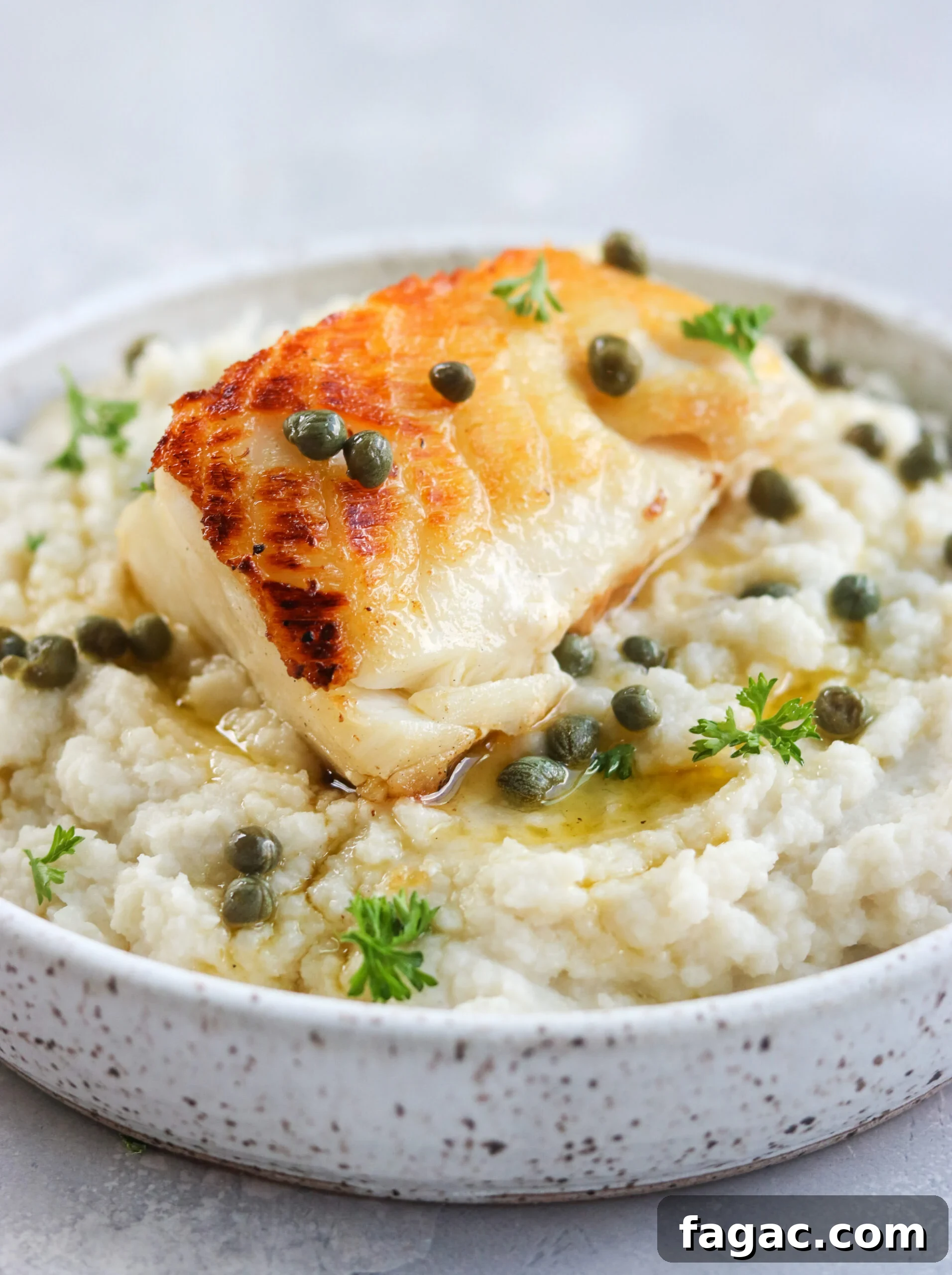
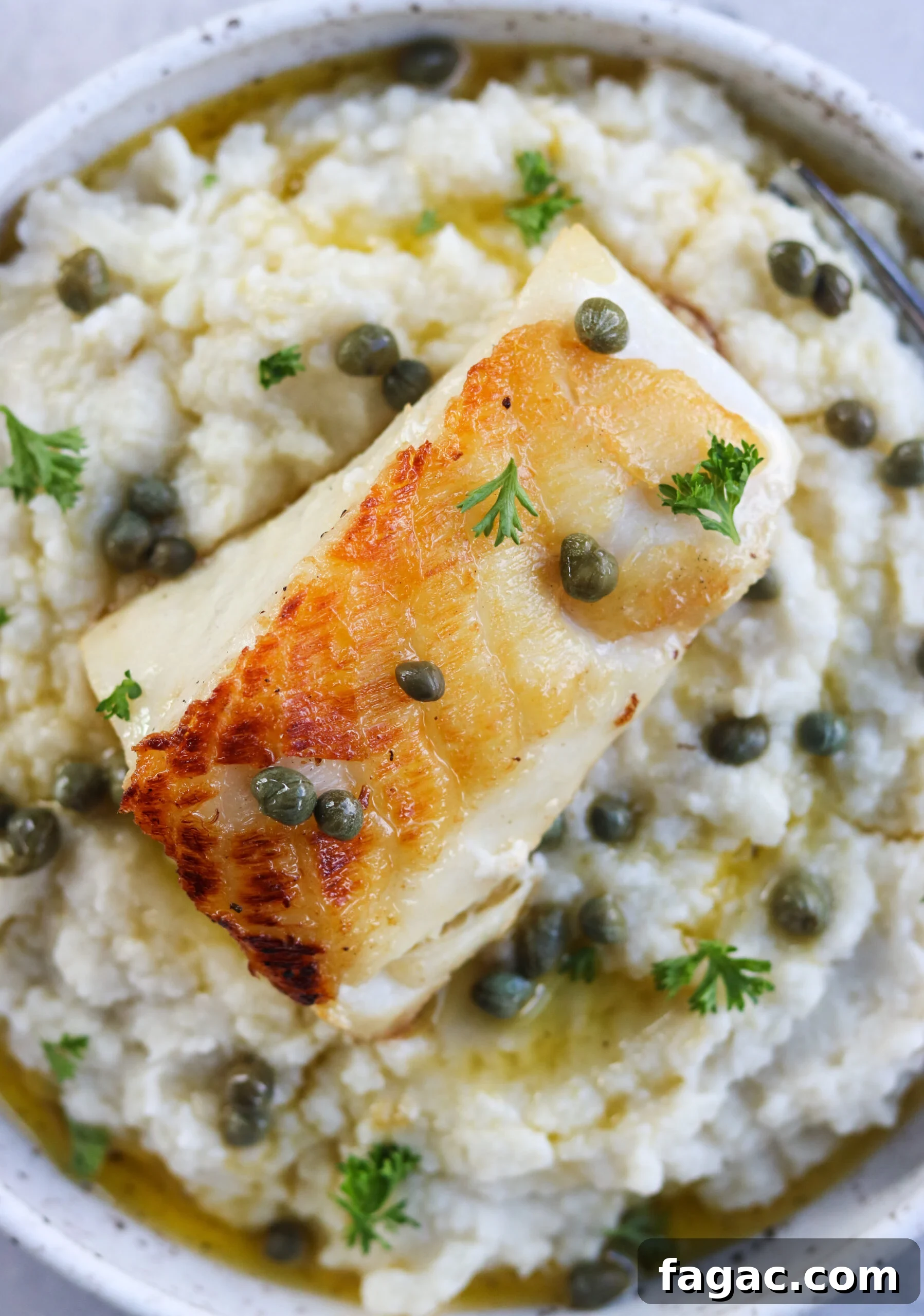
- Spoon extra sauce over risotto or creamy mashed potatoes for a comforting plate.
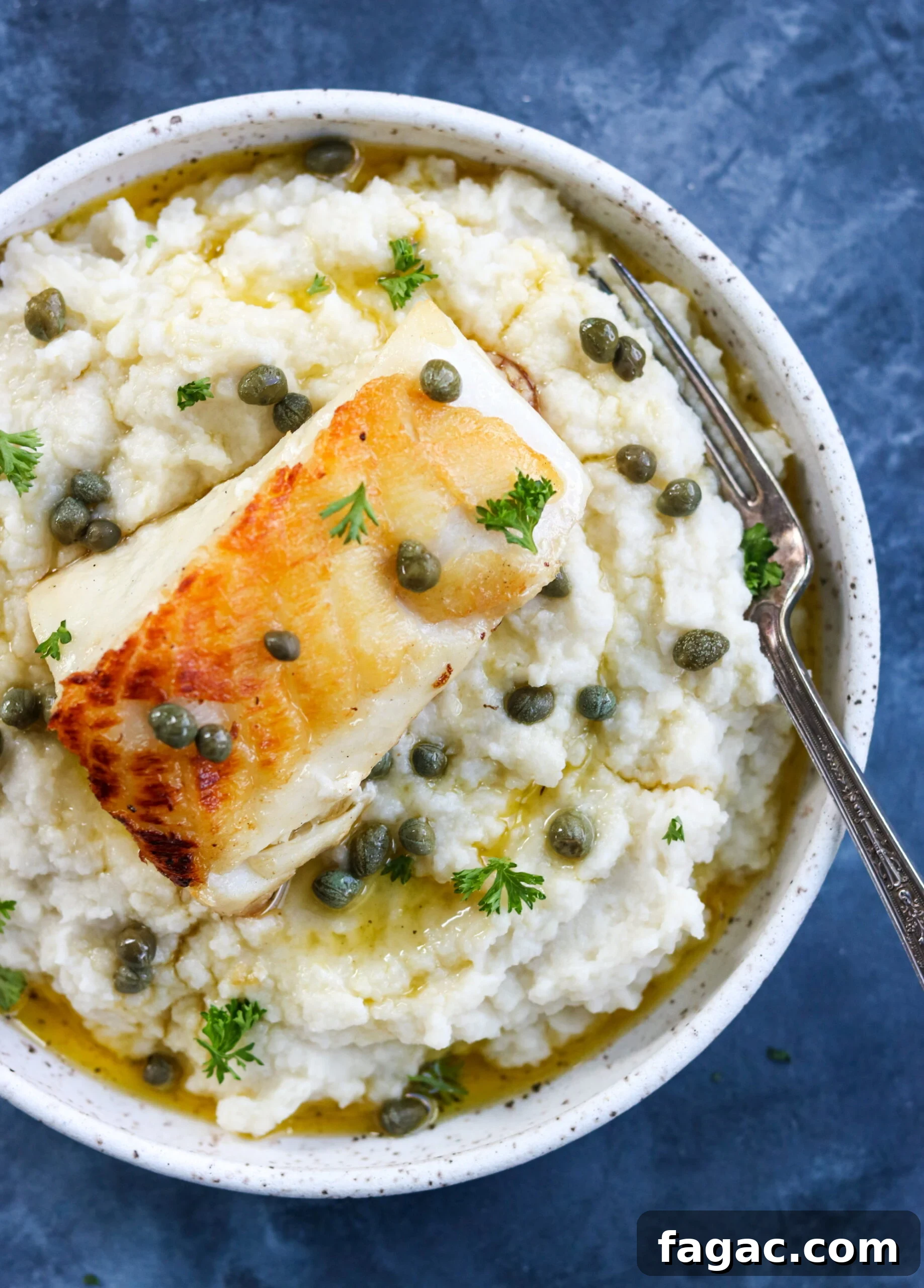
- Keep it low-carb with garlic cauliflower mash and a quick sauté of baby spinach or roasted squash.
- A chilled Sauvignon Blanc or an unoaked Chardonnay pairs nicely.
Storage & Reheating
- Fridge: Store leftovers in an airtight container up to 4 days. Reheat gently in a skillet over medium heat.
- Freezer: Freeze cooked fish up to 3 months. Thaw overnight and re-crisp the skin in a hot pan before serving.
Recipe FAQs
When you choose MSC-certified Patagonian toothfish, it is considered responsibly managed. Look for certification when buying.
The flesh should flake easily with a fork, and an instant-read thermometer should read 135–140 °F in the thickest part.
Yes. Sablefish (black cod), halibut, or thick cod loins are good substitutes—use the same timing.
Yes. Mix butter (or ghee), lemon, and capers up to a day ahead and warm gently when ready to serve.
I can’t wait for you to try how simple restaurant-quality seafood can be. If you make this Chilean sea bass, leave a comment and rating to help other home cooks.
More Delicious Seafood Recipes
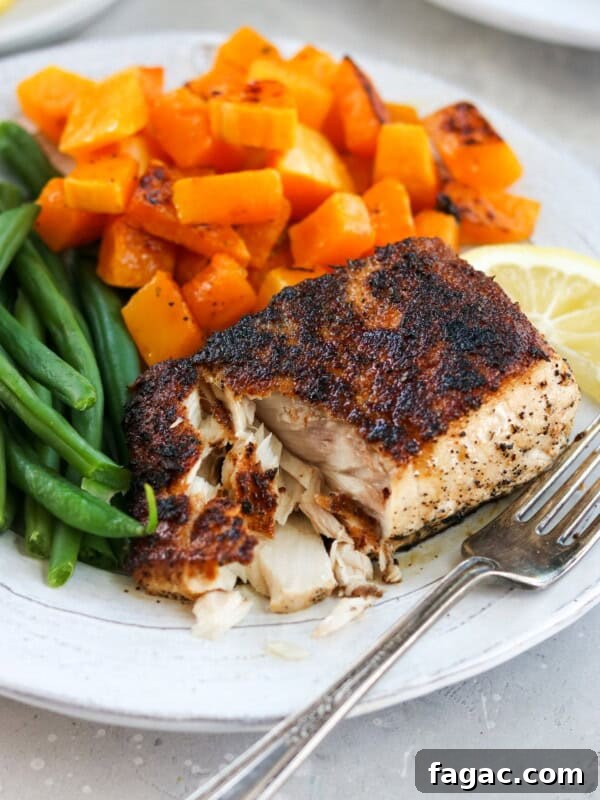
The Best Blackened Mahi Mahi (Stovetop or Air Fryer)
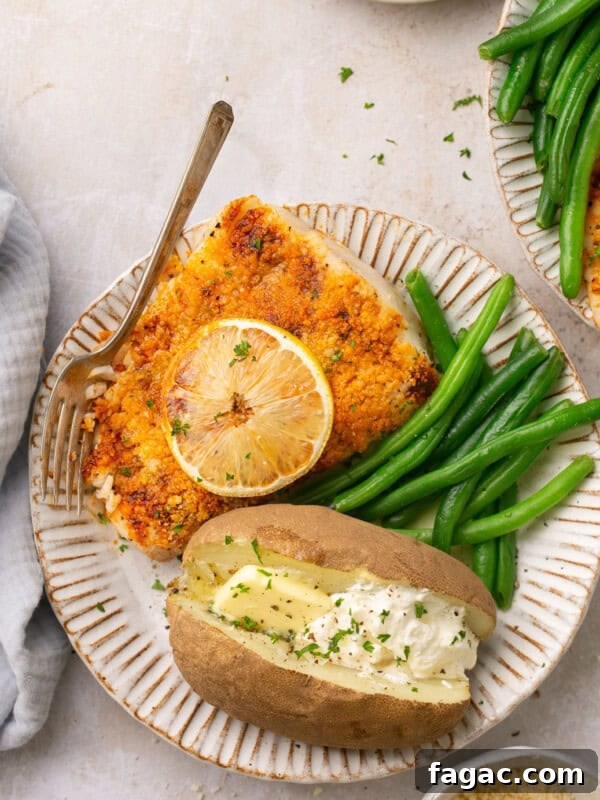
15-Minute Air Fryer Halibut
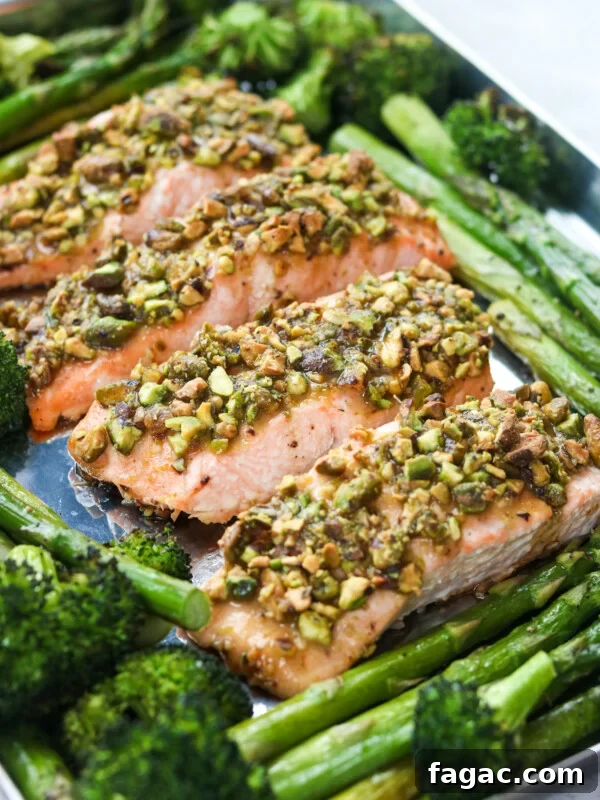
Maple Dijon Pistachio Crusted Salmon with Spring Veggies
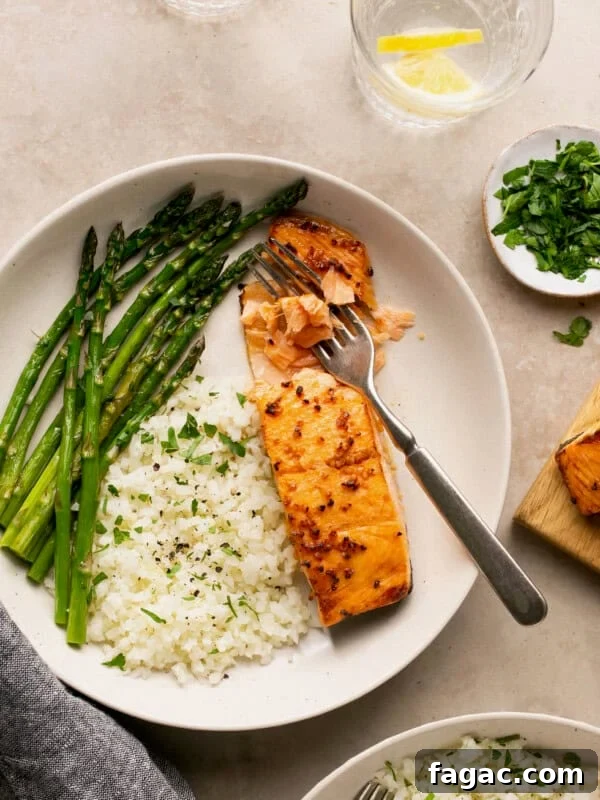
Easy Air Fryer Frozen Salmon (No Thaw Method)
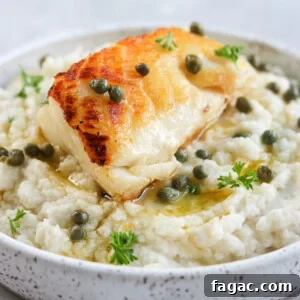
20-Minute Chilean Sea Bass with Lemon-Caper Butter
Video
Ingredients
- 2 — 6 oz Chilean sea bass fillets, thawed if frozen
- 2 tbsp avocado oil, divided
- Salt & pepper, to taste
- 2 tbsp ghee, vegan butter, or regular butter
- Juice from ½ lemon
- 2 tbsp capers
Optional: Creamy Garlic Cauliflower Mash
- 32 oz frozen cauliflower (or fresh florets)
- ¼ cup chicken broth
- ¼ cup ghee or vegan butter
- ¼ cup full-fat coconut cream
- 1 tsp sea salt
- 1 tsp garlic powder
- ½ tsp black pepper
Instructions
- Pat fillets dry and coat both sides with 1 tbsp avocado oil. Season with salt and pepper.
- Preheat oven to 425 °F. Heat the remaining 1 tbsp oil in an oven-safe skillet over medium-high. When hot, add fillets skin-side down (if present) and cook, untouched, 5 minutes. Flip and sear briefly.
- Transfer the skillet to the oven and bake 5 minutes, or until the fish flakes easily and reaches 135–140 °F at the thickest part.
- While the fish cooks, make the cauliflower mash (if using): boil cauliflower until tender, drain well, then blend with chicken broth, coconut cream, ghee, garlic powder, and salt until smooth.
- Melt ghee or butter for the sauce, stir in lemon juice and capers, and simmer briefly. Spoon over plated fillets and garnish with chopped parsley.
Notes
Preheat the pan. Let the skillet heat to build a golden crust without sticking. Use a fish spatula for delicate handling. If you want dairy-free, swap vegan butter or olive oil 1:1 for ghee.
Nutrition
All nutrition facts are estimates. For the most accurate results, weigh ingredients and divide by servings.
This post was originally published March 6, 2021 and updated with new copy and photos on June 26, 2022.